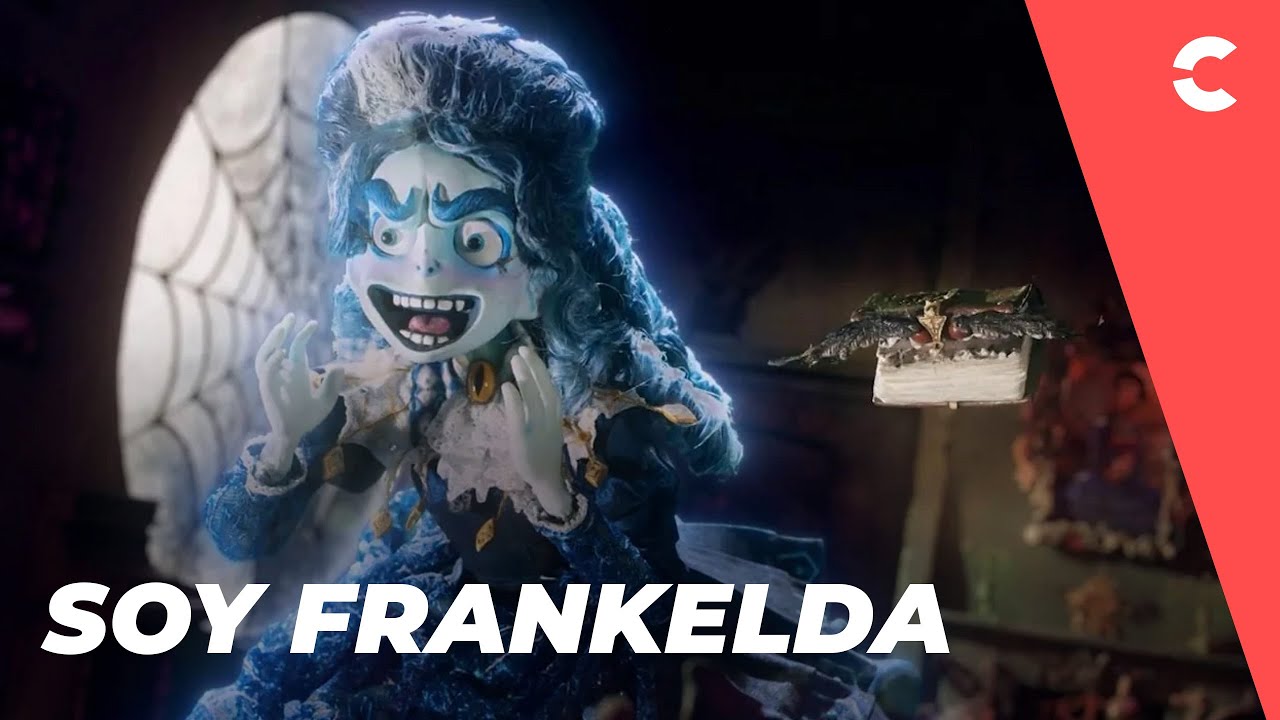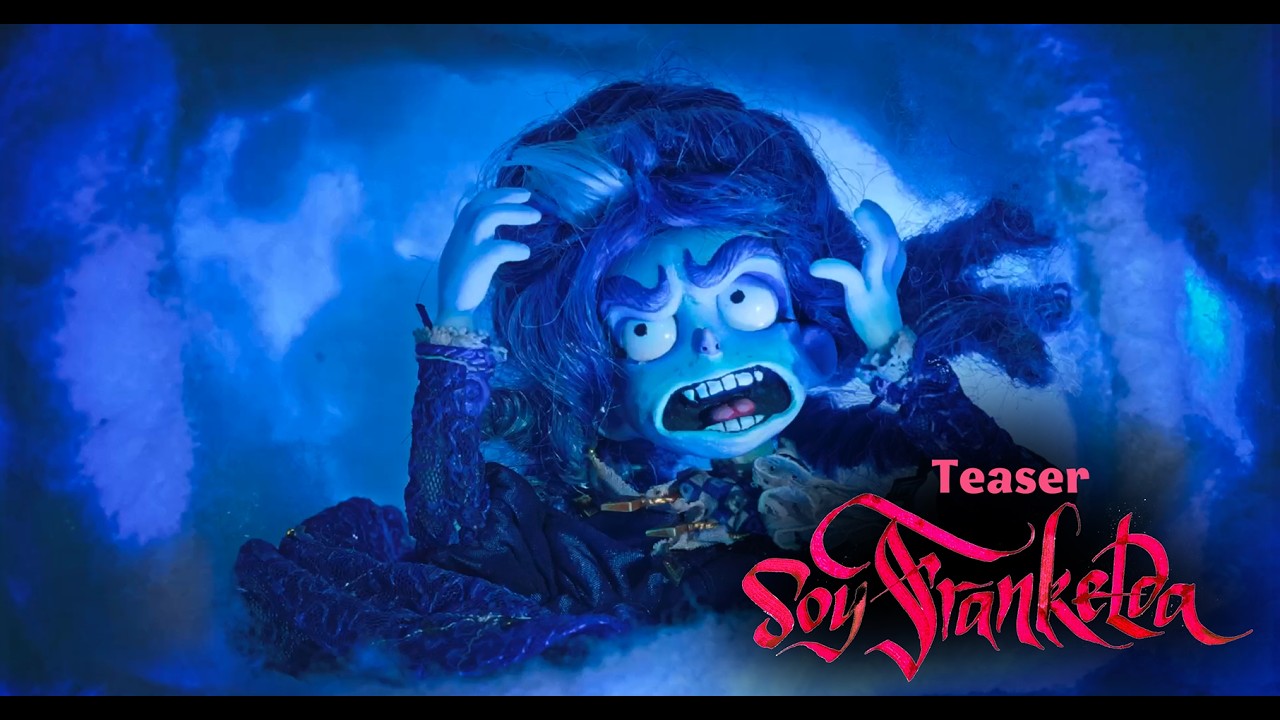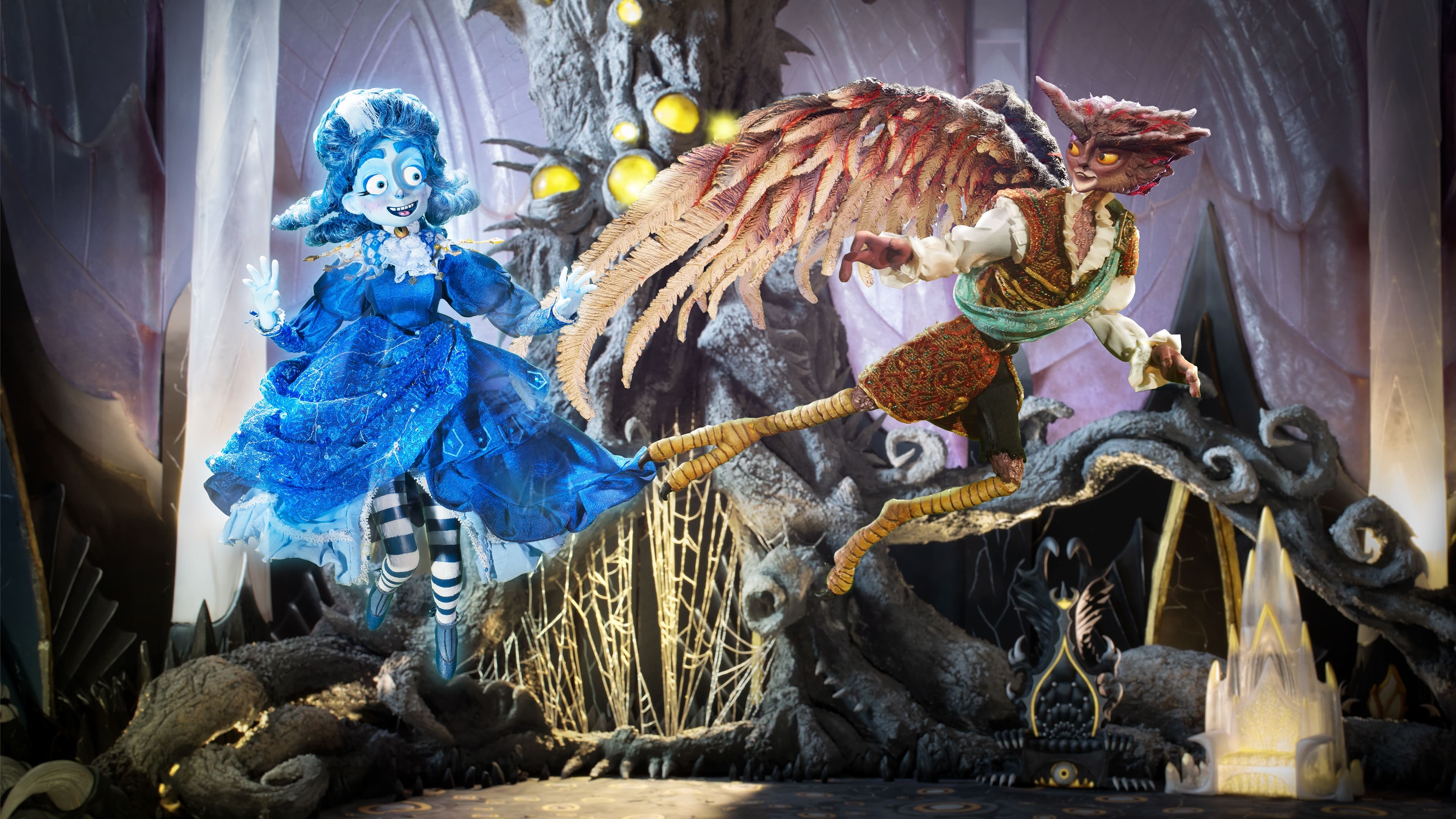
When I Am Frankelda premiered at the Guadalajara International Film Festival in June 2025, something quietly monumental happened in animation history. Director Roy Ambriz didn’t just make a film—he created Mexico’s first stop-motion feature, and he did it in a way that has genuinely stuck with audiences long after the credits rolled. The tagline says it all: “What you imagine has long been imagining you.” It’s the kind of premise that sounds pretentious on paper but becomes genuinely unsettling once you’re watching Mireya Mendoza’s voice work anchor this gothic, utterly enchanting world.
The most remarkable thing about I Am Frankelda is how it arrived. At 1 hour and 44 minutes, it’s deliberately lean—no wasted moments, no padding. This isn’t accidental. Everything Roy Ambriz brought to the project speaks to an artist acutely aware of how to pace a fantasy-horror experience. The script moves with the precision of a stop-motion rig itself, each frame deliberate and weighted. For a debut feature in an entirely new medium for an entire nation’s film industry, that kind of control is extraordinary.
> What makes this collaboration between Cinema Fantasma, Cine Vendaval, and Woo Films so compelling is their willingness to embrace genuine strangeness rather than sand it down for broader appeal.
The box office numbers tell part of this story. With an unknown budget but $2,709,440 in revenue (hitting approximately MXN $50.4 million domestically), I Am Frankelda proved something crucial: there’s an audience for Mexican animation that doesn’t need to apologize for being weird. The film broke attendance records at Guadalajara—no small feat at a major international festival. That’s not just commercial success; it’s validation that audiences were hungry for something this specific, this culturally rooted, this unapologetically dark.
The cast brought something equally important to the table. Mireya Mendoza carries the emotional weight as Frankelda, but the ensemble—Arturo Mercado Jr. and Luis Leonardo Suarez included—creates a vocal landscape that feels lived-in and real. Voice acting in animated features often gets overlooked, but listen closely and you’ll hear actors treating this material with the gravity it deserves. They’re not winking at the camera; they’re inhabiting this gothic mythology with absolute conviction.
Here’s what really distinguishes I Am Frankelda in the broader animation landscape:
- A distinctly Mexican sensibility: This isn’t American animation with a Spanish dub, nor is it trying to be. The mythology feels rooted, the darkness feels culturally specific, and that specificity is precisely what gives it power.
- Stop-motion as storytelling choice: In an era when CGI dominates, the decision to work in stop-motion wasn’t retro nostalgia—it was the only way to tell this story. There’s a tactile quality to Frankelda’s world that digital work couldn’t replicate.
- Horror as family entertainment: The film occupies a rare space where genuine scares and genuine heart coexist. This isn’t Coraline adjacent—it’s its own beast entirely.
- Musical structure: Calling it a “musical” almost undersells it. The songs function as world-building, character development, and thematic statements all at once.
The critical reception—an 8.3/10 rating from 60 voters—reflects something interesting. That’s not a “consensus masterpiece” number, but it’s something better: it’s a number that suggests passionate, divided engagement. Some people connected deeply; others found elements that didn’t quite land. That’s the mark of a film with a genuine perspective, not a committee-designed product.
What’s already becoming clear is that I Am Frankelda has fundamentally changed the conversation around Latin American animation. When the film received its nomination at the 53rd Annie Awards, it wasn’t just recognition of a single film—it was the animation industry finally acknowledging that important work is happening outside established centers. Future filmmakers from Mexico, from Latin America, now have a roadmap. That matters more than any individual box office figure.
The film’s runtime actually becomes significant when you think about legacy. Roy Ambriz could have padded this out, added subplots, expanded character arcs unnecessarily. Instead, he trusted his material enough to let it breathe within tight constraints. I Am Frankelda does in 104 minutes what other films labor to accomplish in 120. That discipline will age well. Ten years from now, people won’t remember the runtime—they’ll remember how alive the film felt, how it never overstayed its welcome.
> The real innovation here isn’t technical; it’s emotional. Ambriz and his collaborators found a way to make something genuinely strange feel essential.
What you’re seeing with I Am Frankelda is the beginning of something. Not a trend—filmmaking is too mercurial for that—but a reopening of possibility. It’s proof that animation doesn’t need to fit predetermined categories. It can be Mexican and gothic and musical and terrifying and tender all at once. It can premiere at a major festival and still feel like a complete surprise.
The film will likely continue building its reputation as more people discover it, and that gradual word-of-mouth validation feels appropriate for a movie about imagination turning real. Roy Ambriz has made a film that refuses to be neatly categorized, and maybe that’s the highest compliment you can pay any artist—that they’ve created something so specific, so thoroughly itself, that you can’t quite shake it even after it’s ended.