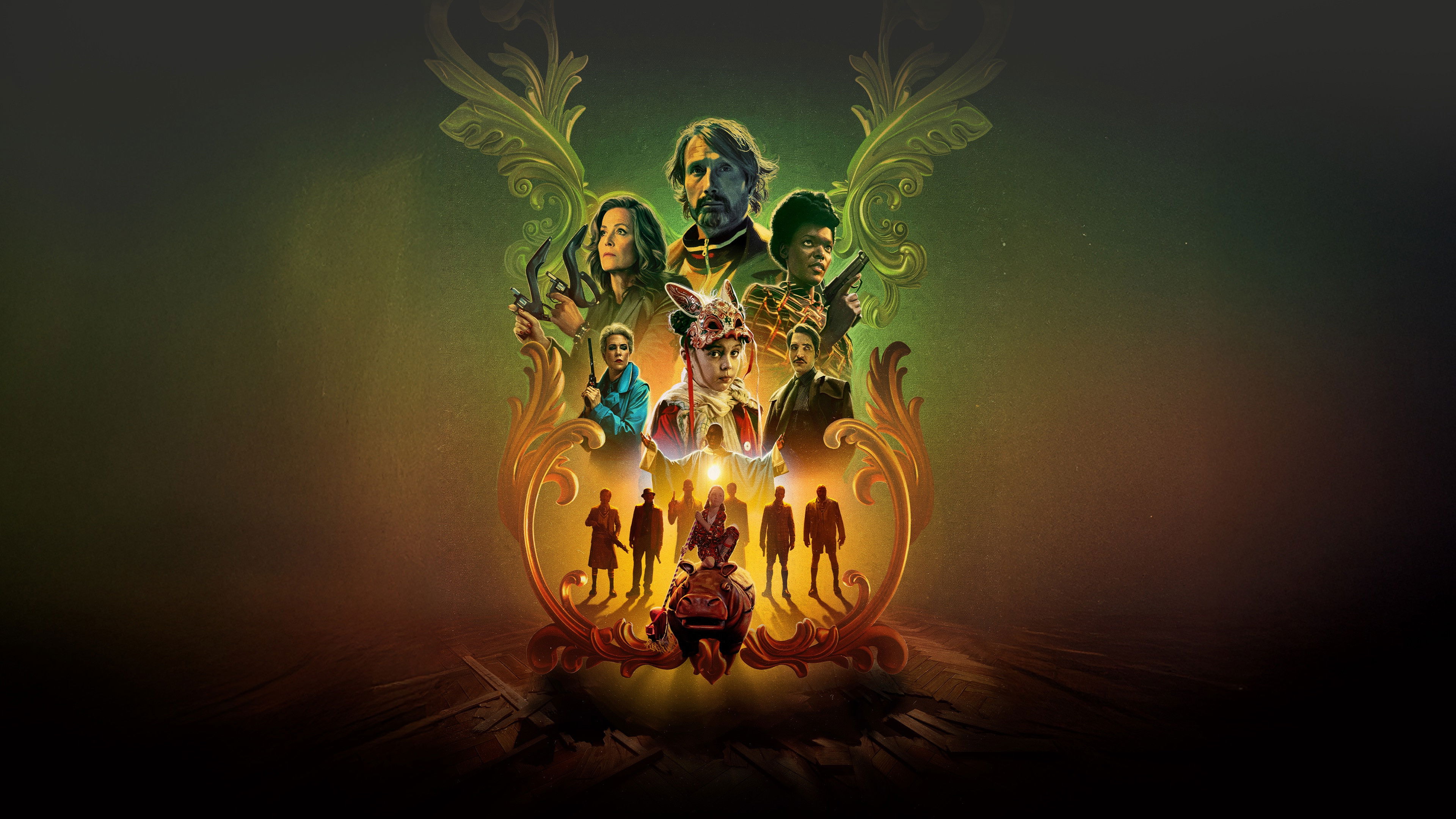
When Bryan Fuller’s Dust Bunny premiered at Toronto’s Midnight Madness program back in September 2025, few could have predicted it would become one of the year’s most talked-about genre experiments. Here was a filmmaker known for his meticulous visual storytelling and darkly whimsical sensibilities taking on something deceptively simple: a film about monsters under the bed.
But as anyone who’s seen it knows, Dust Bunny is far more than a straightforward creature feature. It’s a meditation on childhood fears, family trauma, and the things we refuse to acknowledge that lurk just out of sight.
In the months since its release, the film has quietly established itself as a significant marker in contemporary genre cinema—not because it conquered the box office, but because it dared to be genuinely weird when the market demanded it.
Let’s address the elephant in the room: at $928,164, Dust Bunny didn’t exactly set multiplexes on fire. With an undisclosed budget, the exact financial picture remains murky, but it’s clear this wasn’t a film chasing blockbuster returns.
That’s precisely what makes it matter. In an era where studios pour hundreds of millions into franchises and IP, Fuller managed to create something that feels completely original—a project backed by the collaborative efforts of Entertainment One, Thunder Road, Hero Squared, and Living Dead Guy Productions. This constellation of producers suggests a filmmaker working with people who understood his vision and trusted him to execute it, financial returns be damned.
What Dust Bunny demonstrates is that mid-budget genre cinema still has room to breathe, to experiment, and to challenge audiences without needing to become a cultural phenomenon first.
The 1 hour 46 minute runtime proves to be one of the film’s greatest strengths. Fuller resists the contemporary tendency toward bloat, instead crafting something lean and purposeful.
There’s no wasted motion here—every frame contributes to an atmosphere that manages to be both intimate and deeply unsettling. The critical reception of 7.1/10 on IMDb (based on 46 votes at the time of writing) tells an interesting story: this isn’t a film that everyone will connect with, and that’s by design.
Genre enthusiasts, Fuller devotees, and those willing to meet the film on its own strange terms tend to champion it passionately, while more conventional audiences may find it bewildering.
- The Creative Trinity at the Heart of Dust Bunny
The casting of Mads Mikkelsen alongside Sophie Sloan and Sigourney Weaver represents a fascinating creative choice. Mikkelsen, with his ability to project both menace and melancholy, grounds the film in an emotional reality that keeps it from devolving into pure horror spectacle. There’s something particularly effective about watching an actor of his caliber navigate the absurdist logic of this world—he brings gravitas to material that could easily become campy if handled carelessly.
What makes this collaboration remarkable involves several key elements:
- Mikkelsen’s restraint — He never winks at the camera, never signals that any of this is ridiculous, which is exactly what the material needs
- Sloan’s vulnerability — Her performance anchors the human stakes that keep the fantastical elements grounded
- Weaver’s gravitas — Her presence adds an unexpected layer of credibility to the film’s more outlandish narrative turns
- Fuller’s direction — Creating a visual language that honors the mundane (suburban homes, ordinary furniture) while introducing the extraordinary
“Sometimes there really are monsters under your bed,” the tagline promised, and Fuller delivers on that promise in ways both literal and metaphorical.
The film’s place within contemporary genre cinema becomes clearer when you consider what it’s attempting. Fuller has never been interested in straightforward storytelling—his previous work, whether in television or film, always contains layers of meaning beneath the surface.
Dust Bunny functions simultaneously as a creature feature, a family drama, and an exploration of how we weaponize childhood imagination against our own trauma. It’s the kind of film that improves on repeat viewings, revealing new thematic threads and visual details that enhance rather than complicate the initial experience.
The Cultural Resonance of Personal Horror
While Dust Bunny may not have achieved massive commercial success, its cultural significance lies in what it represents: a filmmaker with a distinct vision finding the resources and collaborators to realize it without compromise.
In a landscape where studio films increasingly resemble algorithmic outputs, there’s something genuinely courageous about making a film that refuses easy categorization.
The film’s legacy will likely unfold gradually, as these things tend to do:
- Initial critical reassessment as the film finds its audience beyond theatrical release
- Recognition of Fuller’s visual craftsmanship and thematic ambition among genre historians
- Influence on subsequent filmmakers willing to blend family drama with fantastical elements
- Appreciation for casting choices that bring unexpected depth to what could be stock characters
The awards recognition may have been limited at major ceremonies, but within genre circles and among critics invested in distinctive filmmaking, Dust Bunny has already begun to establish itself as a film worth revisiting and discussing.
This is the kind of movie that builds reputation through word-of-mouth, through late-night conversations between film enthusiasts, through the gradual accumulation of admiration from people who recognize craft when they see it.
What endures about Dust Bunny, ultimately, is its refusal to explain itself away or apologize for its strangeness. Fuller trusts his audience, trusts his cast, and trusts the power of images and atmosphere to convey meaning beyond dialogue. In an industry increasingly obsessed with metrics and measurable returns, that kind of trust feels like its own form of rebellion.