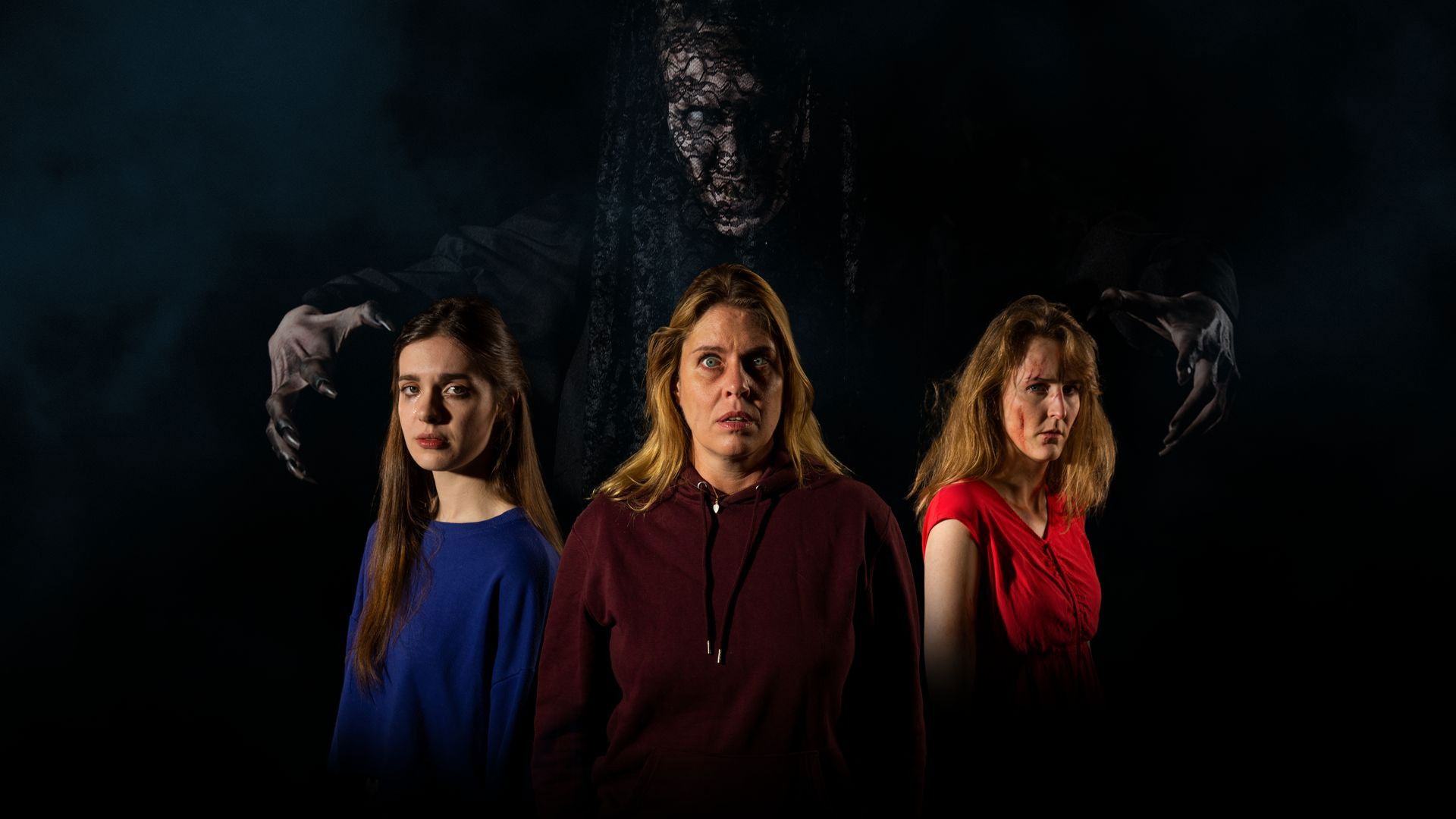
When Diabolical premiered in September 2025, it arrived as a quiet disruption to the horror landscape—the kind of film that doesn’t announce itself with bombast but instead settles under your skin through meticulous craft and atmospheric precision. Director Tristan van Doorn, working through his production company Doorn Eden Films, created something that feels increasingly rare in contemporary horror: a film where every creative decision appears deliberate, from the drained color palette to the ritualistic soundscapes that layer tension throughout its lean 95-minute runtime.
The film’s modest international box office of $875,171 tells you something important about its trajectory. This wasn’t a wide tentpole release designed to dominate multiplexes. Instead, Diabolical carved out its path as a specialty horror offering, finding its audience through word-of-mouth and the kind of passionate advocacy that matters far more than opening weekend numbers. In an era where horror is increasingly commodified and trend-chasing, there’s something genuinely significant about a film that proves you don’t need massive financial machinery to create something that resonates.
What makes Diabolical matter within horror’s broader conversation is its commitment to restraint. With Caroline Lichtenberg, Elske Stout, and Paul Schaareman anchoring the narrative, van Doorn constructs a story around a bloodline curse that feels grounded in genuine dread rather than jump-scare mechanics. The performances carry a quiet intensity—these aren’t actors reaching for scenery or melodrama, but rather inhabiting characters caught in something fundamentally wrong. Lichtenberg especially brings a haunted quality to her role, suggesting layers of family trauma and supernatural entanglement without ever overplaying the hand.
The production’s South African origins, with support from the South African Film Commission, also position Diabolical within an interesting context of international horror cinema. There’s a particular sensibility emerging from filmmakers working outside traditional Hollywood centers—a willingness to trust atmosphere over spectacle, to let scenes breathe, to understand that the most effective horror often lives in what remains unseen. Van Doorn taps into this sensibility masterfully.
> “Every element of Diabolical feels intentional, from the muted colour palette to the ritualistic chanting that builds the tension scene by scene.”
That critical observation captures what elevates Diabolical beyond the standard possession-horror template. The sound design becomes a character itself—those ritualistic chantsaren’t background decoration but active participants in the film’s psychological unraveling. Similarly, the visual restraint creates space for genuine unsettledness. In a cinematic moment dominated by elaborate set pieces and CGI spectacle, van Doorn’s choice to work with muted colors and careful framing feels almost radical.
The rating of 7.0/10 from early voters, modest as it appears numerically, actually reflects something encouraging about the film’s reception. This isn’t a number dragged down by disappointed mainstream audiences expecting conventional thrills. Rather, it suggests a film that’s finding its true audience among horror enthusiasts—people who understand the difference between accessibility and artistic merit. These are the viewers who’ll champion Diabolical in years to come, who’ll point to it as an example of horror cinema that trusted its audience’s intelligence.
Key elements that distinguish Diabolical‘s approach:
- A commitment to atmospheric dread over cheap scares
- Strategic use of sound design as a narrative tool
- Restrained visual language that amplifies psychological horror
- A focus on family dysfunction and generational trauma as the true horror’s source
- An understanding that what’s implied often terrifies more than what’s shown
What’s particularly worth noting is how Diabolical positions itself within the current horror landscape. We’re living through an era of elevated horror, certainly, but also of increasingly formulaic “elevated horror”—films that mistake pretension for substance. Van Doorn’s film doesn’t fall into that trap. It’s genuinely about something: the ways trauma moves through families, how violence begets violence, how curses (literal or metaphorical) shape destinies. The supernatural elements serve the emotional core rather than overwhelming it.
The legacy of Diabolical will likely grow over time rather than peak immediately. These are the films that find new audiences through streaming platforms, through festival rediscoveries, through passionate cinephiles introducing friends to something quietly brilliant. The financial performance, while modest, doesn’t diminish the artistic achievement. In fact, it underscores something important about contemporary cinema: the most interesting work often happens outside the traditional blockbuster machinery.
For filmmakers and critics paying attention, Diabolical demonstrates that horror remains fertile ground for serious artistic expression. It shows that you can make something genuinely unsettling without enormous budgets, that restraint and precision matter more than spectacle, and that audiences—the right audiences—will find films made with genuine vision and craft. In an industry often fixated on the next trend, that’s a quiet revolution worth celebrating.