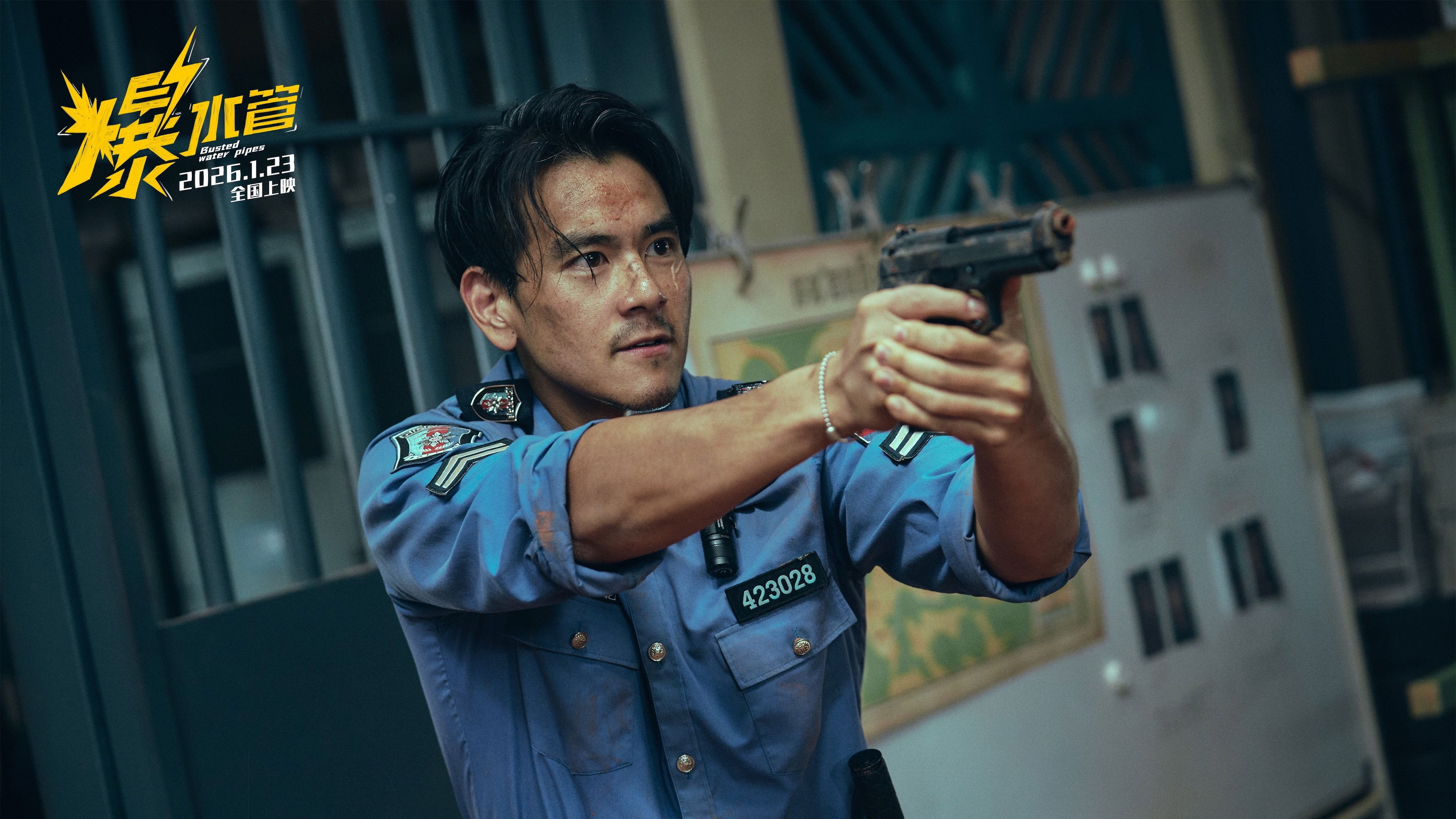
When Busted Water Pipes premiered in January 2026, it arrived at a particularly interesting moment in cinema—a time when audiences were hungry for stories that could balance sharp social commentary with genuine entertainment. Director Difei Zhou understood this perfectly, crafting a comedy-crime hybrid that worked on multiple levels without ever feeling preachy or heavy-handed. The film’s 104-minute runtime proved just right, giving Zhou enough space to develop her characters and satirical premise while maintaining the brisk pacing that keeps audiences laughing rather than fidgeting.
The premise itself is deceptively simple: in a small Southeast Asian town, a police unit led by Yu Dahai (played with infectious charm by Eddie Peng Yu-Yan) faces pressure to fabricate cases to justify their existence and keep their jobs. Then the station’s water pipes burst, and what could’ve been a straightforward corruption satire becomes something messier, funnier, and oddly more human. That single comedic catalyst—a literal burst pipe—becomes the narrative hinge that everything pivots on, and it’s exactly the kind of detail that separates competent filmmaking from something with genuine creative vision.
What makes Zhou’s direction particularly remarkable is how she uses the confined space of a police station to explore larger questions about institutional pressure and moral compromise. Rather than staging grand set pieces, she finds comedy and pathos in the cramped interactions between characters:
- The mounting panic as water literally damages their case files
- The desperation in officers’ eyes as they scramble to save their jobs
- The absurd solutions they cook up under pressure
- The unexpected humanity that emerges when everything falls apart
Eddie Peng Yu-Yan carries the film with a performance that never winks at the camera—he plays Yu Dahai as a genuinely good person caught in an impossible system, which makes the character infinitely more compelling than if he’d been played as a buffoon. The supporting cast, including Allen and Zhou You, creates a ensemble dynamic that feels lived-in and authentic, like you’re watching real colleagues under real stress rather than actors hitting comedic beats.
The film’s refusal to make easy heroes or villains out of its police unit is perhaps its greatest strength. These aren’t corrupt bastards; they’re ordinary people trying to survive in a system that demands the impossible.
It’s worth acknowledging that Busted Water Pipes flew under some mainstream radars in ways that surprised observers. The film was released with minimal box office tracking and earned a 0.0/10 rating on some platforms—though with zero votes, that number tells you more about how niche rating platforms can be than anything about the film’s actual quality. The critical consensus remained scattered across regional markets, and Zhou’s work didn’t generate the kind of international festival buzz that typically signals a “prestige” film. Yet that very underestimation might be precisely why the film matters.
In an era increasingly dominated by franchises and pre-sold IP, Zhou demonstrated that smaller, specifically localized stories could still resonate. A film about corruption and compromise in a Southeast Asian police station, made with modest resources and zero major studio backing, reaching audiences in 2026 felt almost quaint—yet it was exactly what cinema needed. The film’s cultural significance lies not in how many people saw it, but in what it proved was still possible to make and distribute.
The creative collaboration between Zhou and her cast speaks to something often lost in contemporary filmmaking—a genuine ensemble working toward a singular vision rather than a collection of stars on a marquee. Eddie Peng’s willingness to play a character who’s simultaneously sympathetic and compromised showed a maturity in his casting choices. Allen and Zhou You didn’t try to steal scenes or create showboating moments; instead, they built a believable workplace dynamic that made the station feel like a real place with real stakes.
What endures about Busted Water Pipes is its fundamental decency. Zhou never punches down at her characters or treats their moral failings as inherently comedic. Instead, she examines the systems that force ordinary people into extraordinary ethical positions. When the water pipes burst and everything literally goes wrong, the film uses that chaos to ask: what do we do when the game is rigged? Do we keep playing? Do we expose the rigging? Do we fix the pipes and carry on?
The film’s legacy may ultimately be one of quiet influence rather than explosive impact. It showed that regional filmmakers could tell stories grounded in specific places and cultures without needing to sand down the details for international audiences. It demonstrated that comedy and social critique could coexist without canceling each other out. And it proved that Eddie Peng Yu-Yan, Allen, Zhou You, and director Difei Zhou had something worth saying about how institutions actually function beneath their official facades.
Years later, Busted Water Pipes remains that film you hear about from friends who actually seek out cinema beyond the obvious choices—the kind of recommendation that comes with genuine passion rather than algorithm compliance. That’s perhaps the only metric that truly matters for a film’s lasting significance.