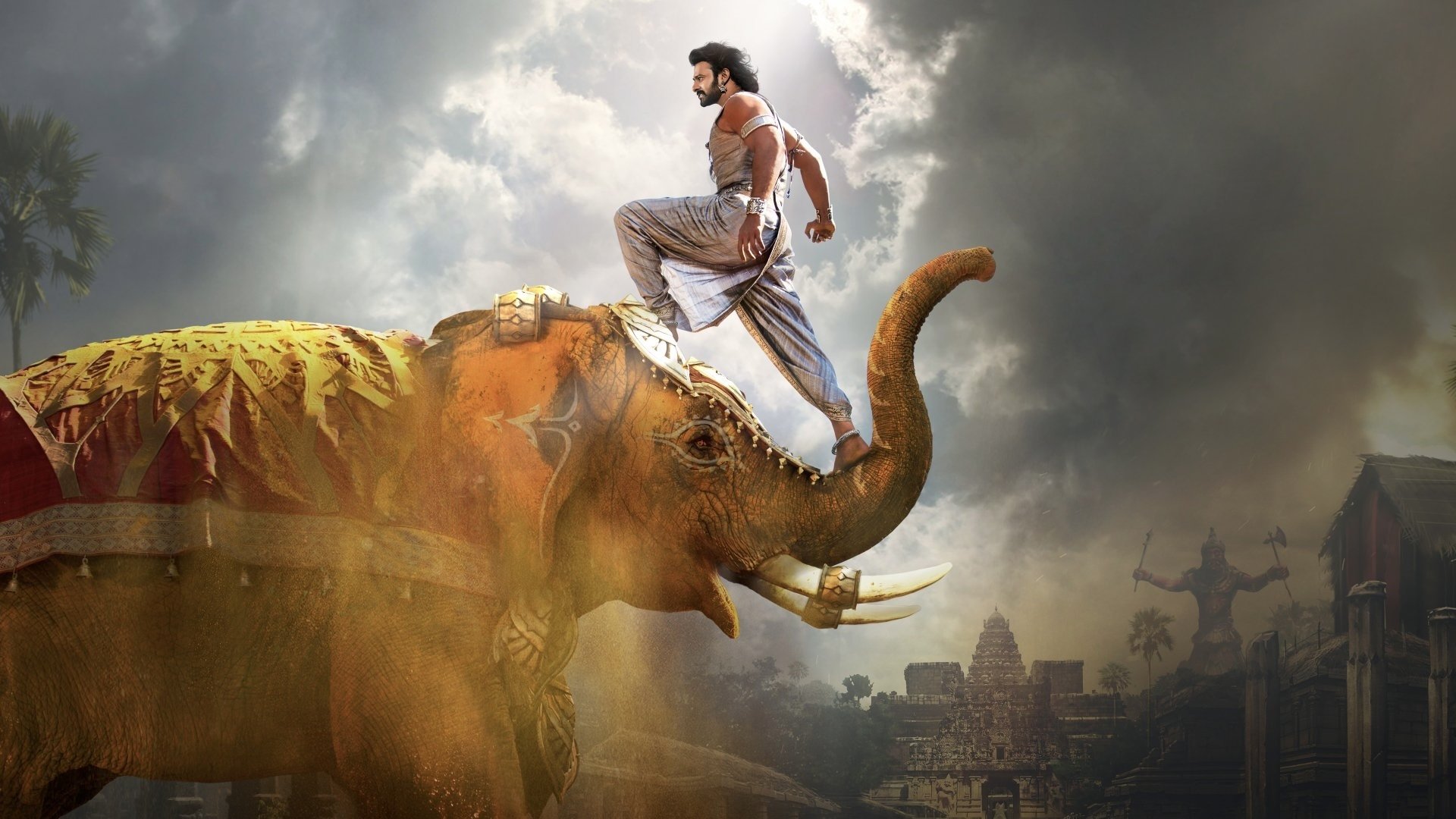
So here’s the thing about S. S. Rajamouli – after absolutely demolishing the global box office and critical consensus with RRR, he made a decision that felt both audacious and deeply personal: he went back to the project that made him an international name in the first place.
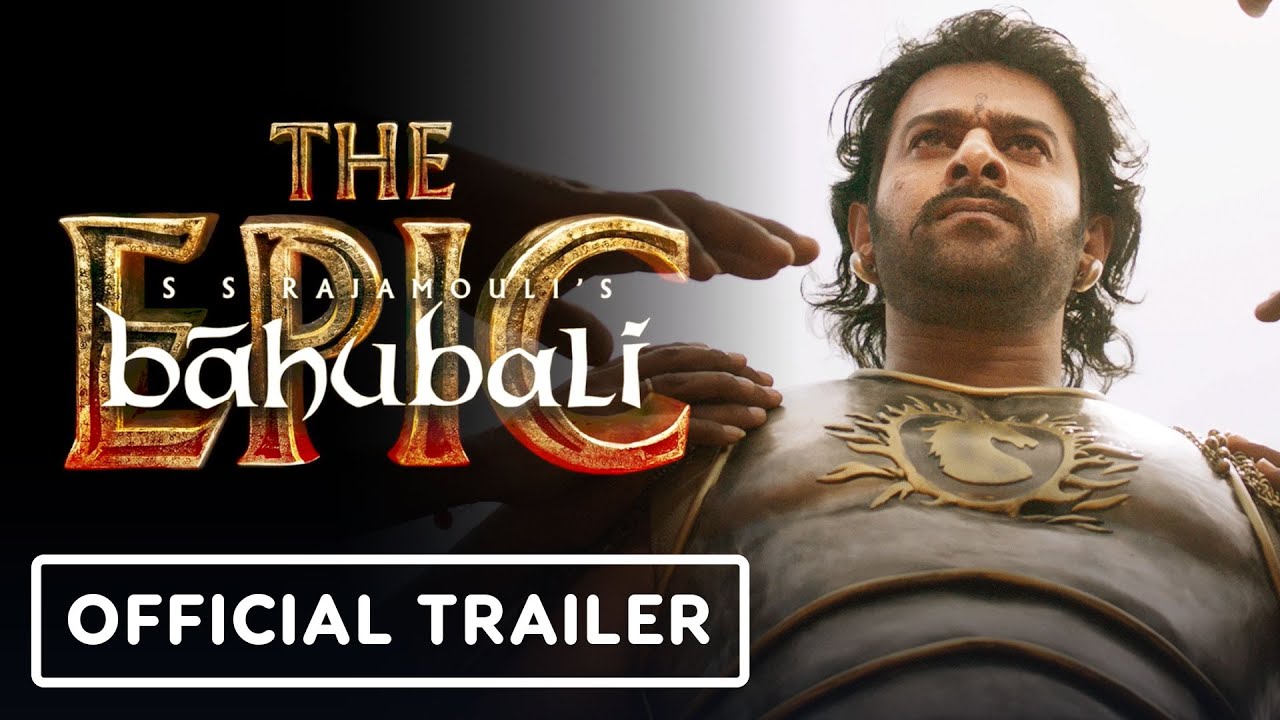
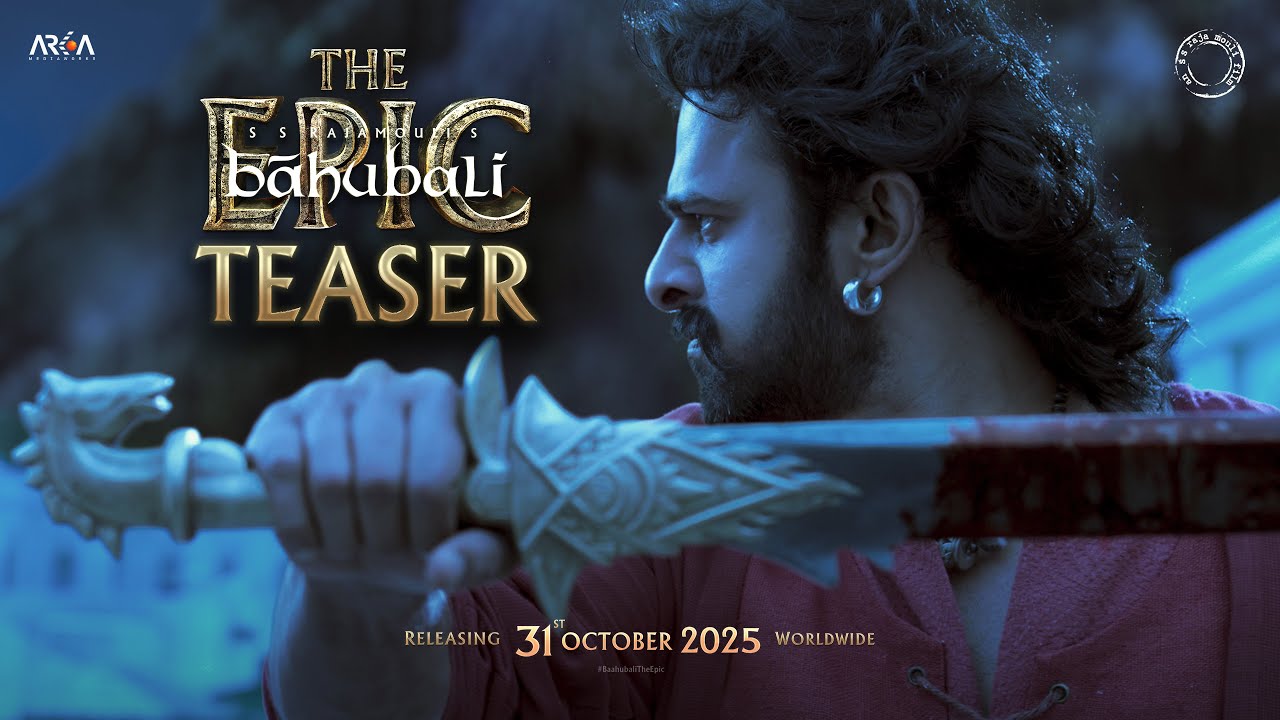
In 2025, he released Baahubali: The Epic, a remastered and re-cut fusion of his original two-part saga Baahubali: The Beginning (2015) and Baahubali 2: The Conclusion (2017), compressing nearly eight hours of cinema into a single, concentrated 3 hour 44 minute experience. It’s the kind of move only a confident filmmaker makes – and it tells you something important about how he views his own legacy.
What makes this project significant isn’t just the technical audacity of stitching two massive films together. It’s about understanding what Baahubali actually meant to global cinema. When these films originally premiered, they shattered assumptions about where blockbuster spectacle could come from.
Here was Indian cinema – specifically Telugu-language cinema – creating action sequences and visual worldbuilding that rivaled anything Hollywood was producing, with a fraction of the resources and a fraction of the ego. Baahubali didn’t ask for permission to be epic. It just was.
The original two films had already carved their place in cinema history:
- They proved that regional Indian films could command international box office attention
- They demonstrated that Prabhas could carry a franchise with the gravitas of a true action hero
- They showcased Rana Daggubati’s range as both antagonist and actor of genuine depth
- Anushka Shetty delivered a performance that made audiences rethink what strength looks like on screen
- They established Rajamouli as a visionary capable of scale, emotion, and intelligence in equal measure
The original Baahubali films grossed over $200 million globally – an astronomical figure for Indian cinema at the time. They weren’t a regional phenomenon; they were a genuine global event.
Now, about the elephant in the room: the 2025 re-cut didn’t replicate that commercial momentum. Released on October 29, 2025, Baahubali: The Epic faced a fundamentally different landscape than its predecessors.
The theatrical experience had shifted, audience expectations had evolved, and frankly, the novelty of Indian action cinema commanding global attention was no longer novel – it was expected. The film earned approximately $5 million globally in its theatrical run, which sounds substantial until you remember the $65 million production budget. On paper, that’s a devastating box office story.
But here’s where we need to be careful about confusing financial metrics with artistic or cultural significance.
The critical reception – a 5.9/10 on IMDb from 23 votes – tells you something equally important: audiences were divided, and not necessarily in the way you’d expect. Some viewers came expecting a streamlined greatest-hits version and felt the compression lost narrative nuance.
Others experienced it as a tightly edited masterwork that finally nailed the pacing its original iterations sometimes struggled with. Rajamouli’s choice to re-cut rather than simply re-release was deliberately provocative – he was asking audiences to experience his story through a new lens, and not everyone was ready for that reinterpretation.
The broader context matters here. In 2025, the global film industry was in a state of genuine flux. Theatrical releases were increasingly selective. International audiences had developed streaming expectations.
And there’s something bittersweet about a $65 million passion project earning $3.5 million back – it speaks to the real challenges even legendary filmmakers face when the cultural moment has shifted. But Rajamouli wasn’t making this film for 2025’s box office. He was making it for cinema’s future memory.
What the re-cut accomplished was something quieter and more lasting:
- It demonstrated a filmmaker willing to revisit and reimagine his own work at the height of his powers
- It created a definitive version of the Baahubali narrative – consolidated, intentional, and distinctly Rajamouli’s final word
- It proved that Baahubali’s thematic architecture – about dynasty, identity, righteousness, and the weight of legacy – remained genuinely potent a decade after initial release
- It gave Prabhas and Rana Daggubati an opportunity to be re-experienced by audiences encountering these characters for the first time
The casting of these films was always genius because it wasn’t about importing international stars or chasing Hollywood validation. Prabhas brought a mythological dimensionality to Baahubali – he moved like a classical dancer trained in action, every gesture weighted with purpose.
Rana Daggubati created one of modern cinema’s most complex villains, a man whose cruelty felt like tragedy. And Anushka Shetty, even in a role that could have been purely decorative, delivered a performance that shaped how action cinema portrayed female characters in the region.
The real legacy of Baahubali: The Epic isn’t measured in box office returns or critical scores. It’s measured in the filmmakers who saw what Rajamouli accomplished and thought, “Indian cinema can do that.”
What’s genuinely remarkable is that this re-cut, arriving in 2025 with modest commercial returns, still carries cultural weight. It exists as a statement – proof that a filmmaker of Rajamouli’s stature would invest heavily in revisiting his own mythology, that he believed these characters and this story were worth reclaiming, that cinema’s job isn’t always to chase the next audience but sometimes to deepen the experience for those who truly want it.
Baahubali: The Epic may not have been the commercial triumph its budget suggested it needed to be, but it was exactly the artistic statement its director wanted to make. And honestly? That’s more interesting than any box office number could ever be.