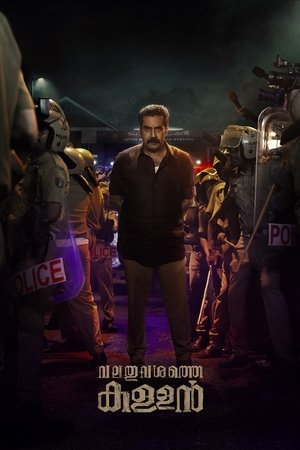
There’s something intriguing about a film that arrives without fanfare, yet quietly builds anticipation through carefully crafted reveals and strategic delays. Anomie, the upcoming Malayalam thriller directed by Riyas Marath, is one such project—a film that’s generating genuine curiosity in the industry before it will be released on February 6, 2026. What makes this particularly compelling isn’t just the cast or the genre, but the deliberate way the creative team has positioned this work as something worthy of our attention in an increasingly crowded cinematic landscape.
The journey to this February release date tells us something about the film’s perceived importance. Initially scheduled for an earlier window, Anomie was postponed—a decision that speaks volumes. In an era where studios often rush films to market, a strategic delay suggests confidence rather than panic. The filmmakers believe they have something substantial here, something that deserves the right moment and the right conditions for audiences to discover it properly. That kind of intentionality is becoming rarer, and it’s worth noting.
What we know about the production reveals a collaboration steeped in creative intention:
- Riyas Marath bringing directorial vision to a thriller framework
- Bhavana starring as a lead in what’s being positioned as a crime thriller with deeper thematic layers
- Rahman and Vishnu Agasthya rounding out a cast designed to carry complex narratives
- The conceptual framing around “The Equation of Death”—a tagline that suggests philosophical weight beneath the genre mechanics
Bhavana’s involvement is particularly worth noting. Recent interviews reveal she’s deeply invested in this project, with personal support systems enabling her to commit fully to the demanding work. When actors speak openly about the backing they need to do their best work, it often signals a production that takes craft seriously. This isn’t a quick paycheck project; it’s something the principal talent believes in enough to advocate for publicly.
The thriller genre has evolved significantly over the past decade. Gone are the days when a “crime thriller” could rely solely on plot mechanics and jump scares. Modern audiences—particularly in Malayalam cinema, which has consistently punched above its weight in terms of storytelling sophistication—expect thematic richness alongside suspenseful narratives. Anomie appears to be positioning itself within this evolved landscape.
The conceptual foundation around “anomie” itself—a sociological term describing a state of normlessness or instability—suggests this film is engaging with ideas beyond typical genre boundaries.
Consider what this theoretical framework promises:
- Psychological depth rather than surface-level thrills
- Social commentary woven into narrative structure
- Character-driven tension that emerges from ideological and social friction, not just external threats
- Thematic resonance that lingers beyond the runtime
The marketing approach deserves attention too. Rather than the bombastic campaigns often deployed for thrillers, Anomie is being introduced through conceptual imagery and thematic taglines. The first-look poster emphasized philosophical dimensions rather than sensational moments. This suggests a film confident enough to appeal to audiences through intellectual intrigue rather than action-sequence promises.
Director Riyas Marath brings an important sensibility to contemporary Malayalam cinema. The decision to anchor a thriller in sociological concepts reveals a filmmaker interested in exploring how narratives can function on multiple levels simultaneously. Genre becomes a vehicle for ideas rather than an end in itself—a distinction that separates memorable films from forgettable ones.
The cast constellation matters here too. When you bring together performers of the caliber present in Anomie, you’re telegraphing that dialogue matters, nuance matters, and performance subtlety will be valued. This isn’t a film asking its actors to service action sequences; it’s asking them to embody complexity.
As we move toward the February 6, 2026 release, there’s genuine potential for Anomie to spark meaningful conversations about crime narratives, social breakdown, moral ambiguity, and the psychological dimensions of violence. In an industry often dominated by sequels and franchises, original thrillers with philosophical underpinnings feel increasingly precious.
The current rating of 0.0/10 is simply a function of the film not yet existing in the viewer’s experience—a mathematical placeholder that means nothing about the work itself. What matters is the trajectory building toward it, the intentionality evident in its production timeline, and the creative team’s apparent commitment to complexity over convenience. When a film arrives with this kind of deliberate positioning, with this caliber of cast, and with this thematic foundation, audiences rightfully sit up and pay attention.