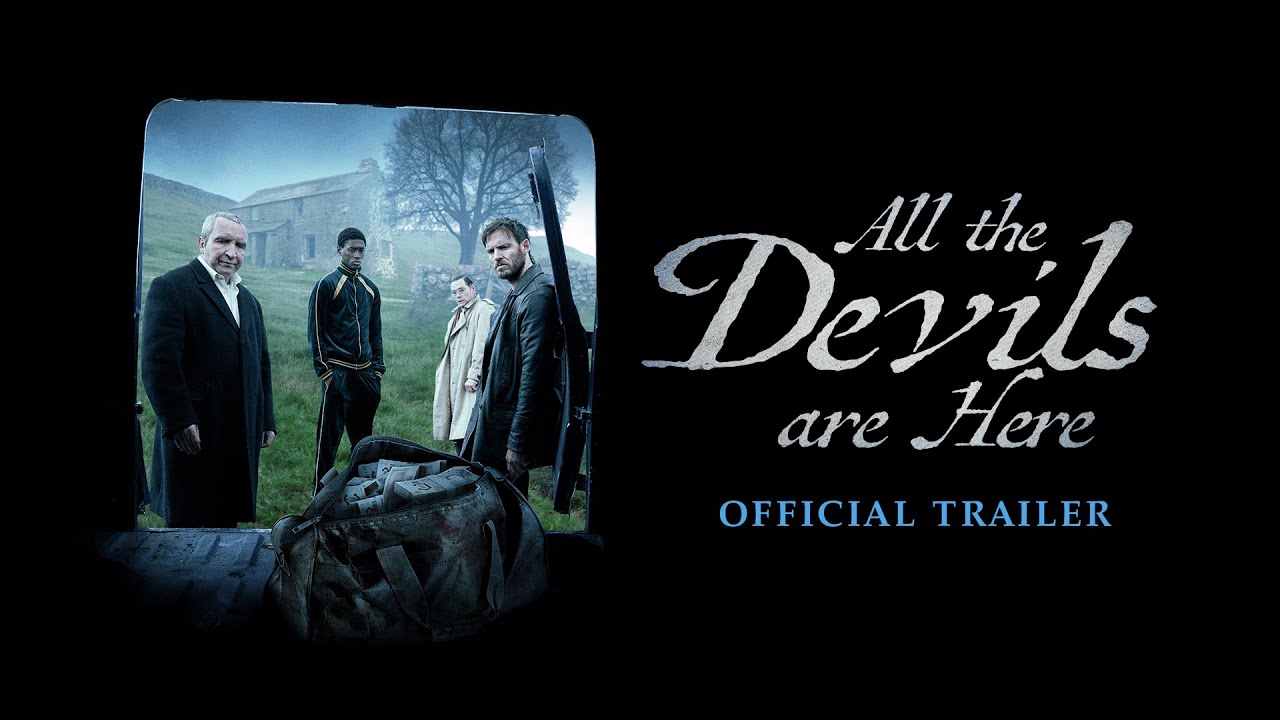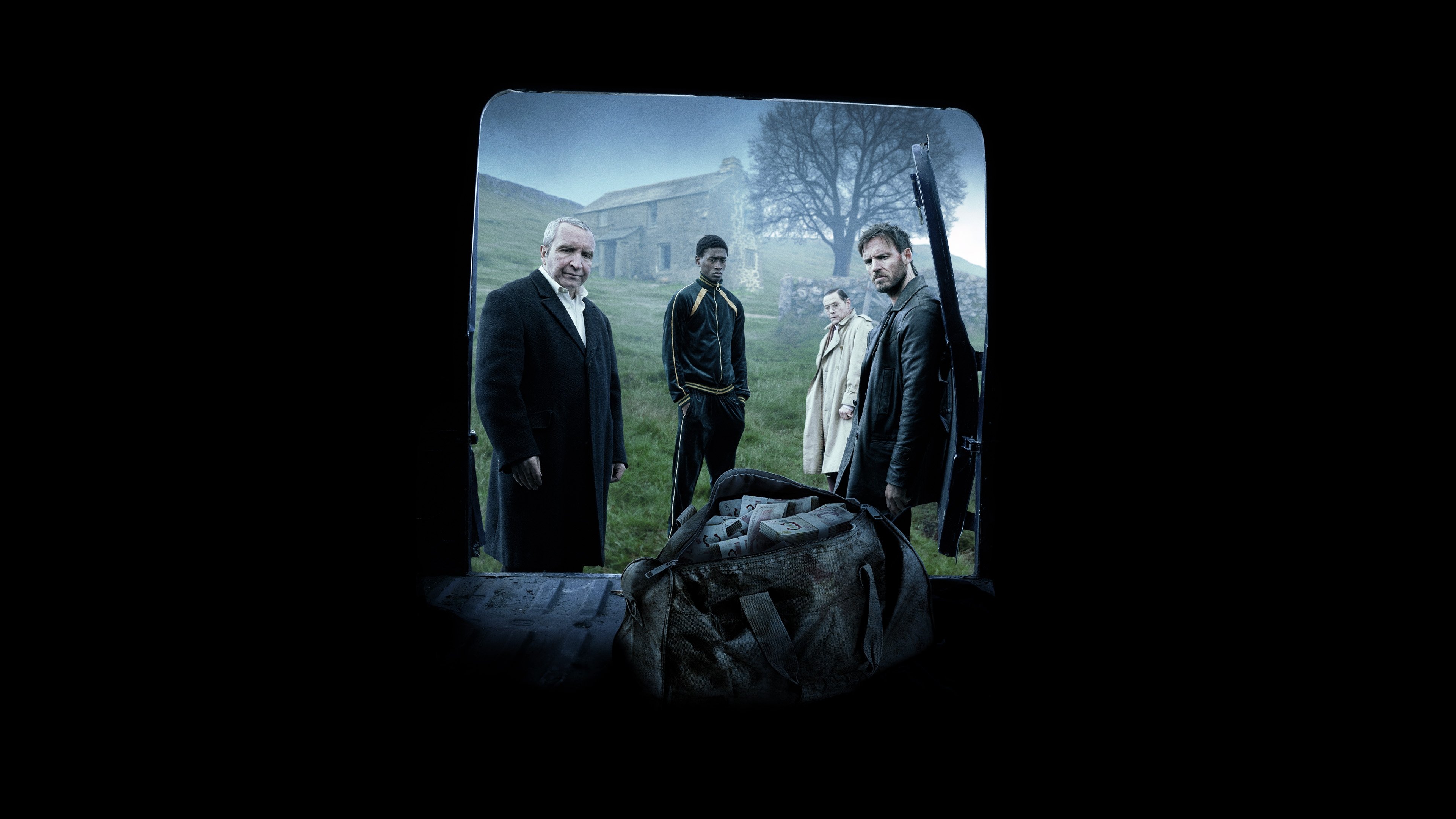
When All the Devils Are Here premiered at the Edinburgh International Film Festival back in August 2025, it announced itself as something quietly ambitious—a thriller that refused to play by the rulebook. Director Barnaby Roper crafted a film that sits in that peculiar space where familiar crime-drama ingredients somehow recombine into something altogether stranger and more unsettling. It’s the kind of movie that lingers because it doesn’t quite resolve into the shape you expected it to take.
What makes Roper’s vision compelling is his willingness to trust his audience’s intelligence while keeping them off-balance. In just 1 hour and 27 minutes—a runtime that feels almost deliberately lean for this genre—he manages to construct a narrative that feels more like a compressed short story than a feature film. There’s no wasted space here, no padding. Every scene does specific work, which means the pacing becomes part of the thriller’s DNA rather than just a technical consideration.
The cast he assembled carries the film’s weight with remarkable efficiency. Eddie Marsan, Sam Claflin, and Burn Gorman are the kind of actors who thrive in morally murky territory, and this project seems tailor-made for their particular skills:
- Eddie Marsan brings a simmering intensity that suggests depths beneath the surface
- Sam Claflin commands scenes with the kind of charisma that makes you question whose side you’re actually on
- Burn Gorman delivers the unsettling edge that keeps everything from settling into comfortable familiarity
The collaboration between these three creates a strange chemistry—not exactly trust, but something closer to mutual recognition among people who understand the game being played.
What you get with All the Devils Are Here is a strange mix of various familiar circumstances colliding to create the sum total of something not quite familiar. That’s not a flaw—it’s the entire point.
The film’s critical reception tells an interesting story about audience expectations versus what the film actually delivers. With a 6.1/10 rating from early viewers, it sits in that curious middle ground—not quite acclaimed, but clearly not dismissed. This isn’t the score of a conventional thriller that played it safe. It reads more like the score of a film that made specific artistic choices that won’t resonate with everyone, and Roper seems entirely uninterested in smoothing those edges for broader appeal.
The financial details remain opaque—both budget and box office figures haven’t been widely circulated—but there’s something fitting about that mystery surrounding a film that traffics in ambiguity and misdirection. Produced by T-Street and MRC, it arrived without the typical blockbuster machinery behind it, which only reinforces the sense that this is a project driven by creative conviction rather than commercial formula.
Looking at what Roper accomplished here reveals his particular strengths as a filmmaker:
- Structural economy – He understands that constraint breeds creativity, using his brief runtime to maximum psychological effect
- Character complexity – His characters don’t neatly resolve into heroes or villains; they occupy messy middle ground
- Tonal control – The film refuses to settle into any single genre lane, maintaining constant unpredictability
- Visual storytelling – What’s left unsaid often matters more than exposition
The film’s legacy likely won’t be measured in box office numbers or major award recognition, but rather in its stubborn refusal to be what audiences anticipated. In an era where thrillers often follow predictable beats designed to satisfy specific demographic expectations, All the Devils Are Here offers something considerably stranger. It premiered in September 2025 at a moment when audiences are increasingly hungry for films that trust them to sit with ambiguity and moral complexity.
What’s particularly interesting is how Roper positions his narrative within the broader crime-thriller landscape. There’s a through-line in contemporary cinema toward films that examine how ordinary circumstances can spiral into extraordinary darkness, and this film extends that tradition while refusing to offer the cathartic resolution viewers typically expect. The devils referenced in the title aren’t external threats—they’re embedded in the choices these characters make and the compromises they accept.
The performances create distinct gravitational fields that pull the narrative in different directions:
- Tension emerges not from plot mechanics but from how these men orbit each other
- Trust becomes the film’s central currency, constantly being negotiated and betrayed
- Betrayal feels inevitable yet somehow still catches you off-guard when it arrives
- The ending doesn’t resolve so much as it simply stops, leaving implications hanging
For viewers and critics willing to meet Roper on his own terms, All the Devils Are Here offers something genuinely rare—a modern thriller that values precision over spectacle, implication over exposition, and character over plot convenience. It’s not a perfect film, and it’s likely to frustrate as many viewers as it satisfies, but that friction itself feels like evidence of artistic integrity rather than failure.
The film won’t reshape the genre or generate the kind of cultural momentum that influences every thriller made afterward. But it will endure as a reminder that crime thrillers can still surprise us when filmmakers prioritize vision over formula. In that modest but meaningful way, All the Devils Are Here suggests that the thriller genre still has room for films willing to be genuinely unsettling rather than merely entertaining.