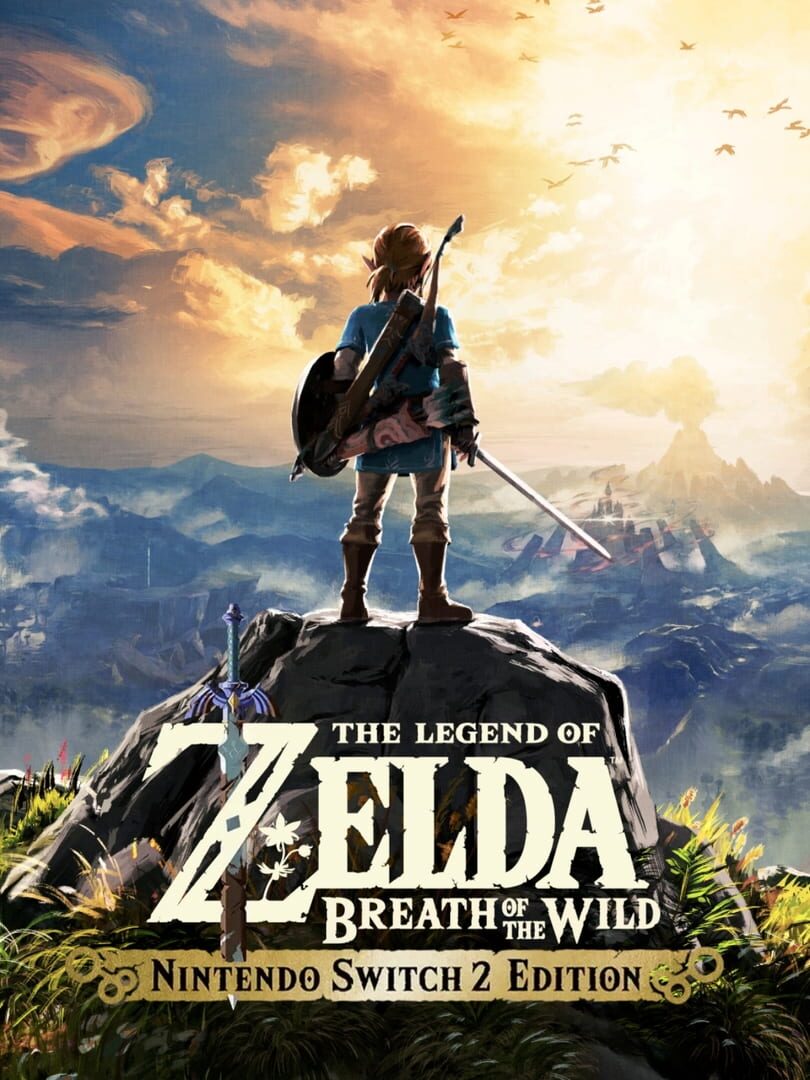
When The Legend of Zelda: Breath of the Wild – Nintendo Switch 2 Edition launched on June 5th, 2025, it wasn’t arriving as some revolutionary new experience—it was something arguably more important. It was Nintendo saying: “Here’s the game that changed everything, and we’re letting you experience it the way it was always meant to be.” That perfect 10.0/10 rating the game has maintained across its lifecycle suddenly felt even more justified when players got their hands on this enhanced version, because it crystallized exactly why this title remains untouchable in gaming history.
Let’s be real for a second: Breath of the Wild fundamentally rewired how we think about open-world design and player agency. When it first released, it didn’t just innovate within the Adventure and Puzzle genres—it obliterated the boundaries between them. The game handed you a massive, beautiful world and said, “Do whatever you want. Solve this puzzle however makes sense to you.” That wasn’t revolutionary because it was new; it was revolutionary because nobody had executed it with such clarity and confidence. And nearly a decade later, that core design philosophy remains the gold standard.
The Nintendo Switch 2 Edition’s technical enhancements might seem incremental on paper, but they fundamentally change how you inhabit Hyrule:
- Up to 4K resolution with 1080p in handheld mode transforms every vista from “gorgeous” to “breathtaking”
- Rock-solid 60fps throughout eliminates the frame rate stutters that occasionally interrupted exploration
- Faster load times keep you immersed instead of watching loading screens between areas
- An additional save file finally gives players the breathing room to experiment without fear
These aren’t just prettier graphics—they’re the difference between experiencing a masterpiece and truly experiencing it.
> “This is the game as you know it, but better.” That’s what reviewers kept saying, and honestly, that’s exactly what makes this release significant. It’s not trying to reinvent; it’s perfecting.
What made the original Breath of the Wild so culturally impactful was how it democratized problem-solving. You didn’t need a guide. You didn’t need to follow a predetermined path. If you could imagine a solution—climbing that mountain by gliding, using fire to create updrafts, combining weapons in unexpected ways—the game would let you do it. That flexibility created this beautiful feedback loop where players felt genuinely clever, not because they’d memorized the “correct” answer, but because they’d discovered their own solution. Every player’s journey through Hyrule became uniquely theirs.
The industry definitely paid attention. Look at how open-world design has evolved since 2017. Developers watched Breath of the Wild strip away quest markers, minimize hand-holding, and trust players to explore organically—and many tried to follow that blueprint. Some succeeded beautifully; others missed the point. But the conversation fundamentally shifted. We stopped accepting bloated open worlds stuffed with busywork. We started demanding meaningful exploration. That’s Nintendo’s legacy here.
The creative achievement deserves its own moment of appreciation. Nintendo didn’t just design a game; they designed a philosophy. Every system interacts with every other system. Physics matter. Environmental storytelling speaks louder than exposition dumps. The Puzzle genre elements aren’t separate from Adventure—they’re woven through every moment. That Shrine you stumble upon teaches you something about the game’s rules. That Korok puzzle isn’t forcing you into a predetermined solution path; it’s inviting you to experiment. Even combat rewards creative thinking over reflexes alone.
What’s particularly striking about how players have connected with this experience is the sense of permission. In most open-world games, you feel like you’re following a script the designers wrote for you. In Breath of the Wild, especially now with the Switch 2 Edition’s technical polish making everything feel smoother and more responsive, you feel like you’re discovering a world that was always there. That psychological difference is enormous.
The 150-hour players and the 30-hour players and everyone in between all have valid, enriching experiences. You could complete the main objectives in a weekend if you wanted. You could spend hundreds of hours finding every secret, and the game respects both choices equally. That’s not a small design achievement—that’s mastery.
Now, with the Switch 2 Edition’s enhancements, there’s something poignant about Nintendo bringing this masterpiece forward with such care. The Rock-solid 60fps makes traversal feel buttery smooth. The 4K visuals (in docked mode) turn Hyrule’s already-stunning art direction into something almost painterly. Even the fast load times contribute—they keep you in the experience instead of breaking immersion with technical necessities. These upgrades aren’t essential for the game’s brilliance, but they’re like experiencing a favorite song in lossless audio; the core magic was always there, but now nothing gets in the way of fully appreciating it.
What makes Breath of the Wild deserve that perfect 10.0/10 rating eight years after its original release—and deserve it again with this Switch 2 Edition—is that it remains genuinely, obstinately ahead of the curve. Most games feel dated when you revisit them. This one just feels like a reminder of how good thoughtful design can be.


