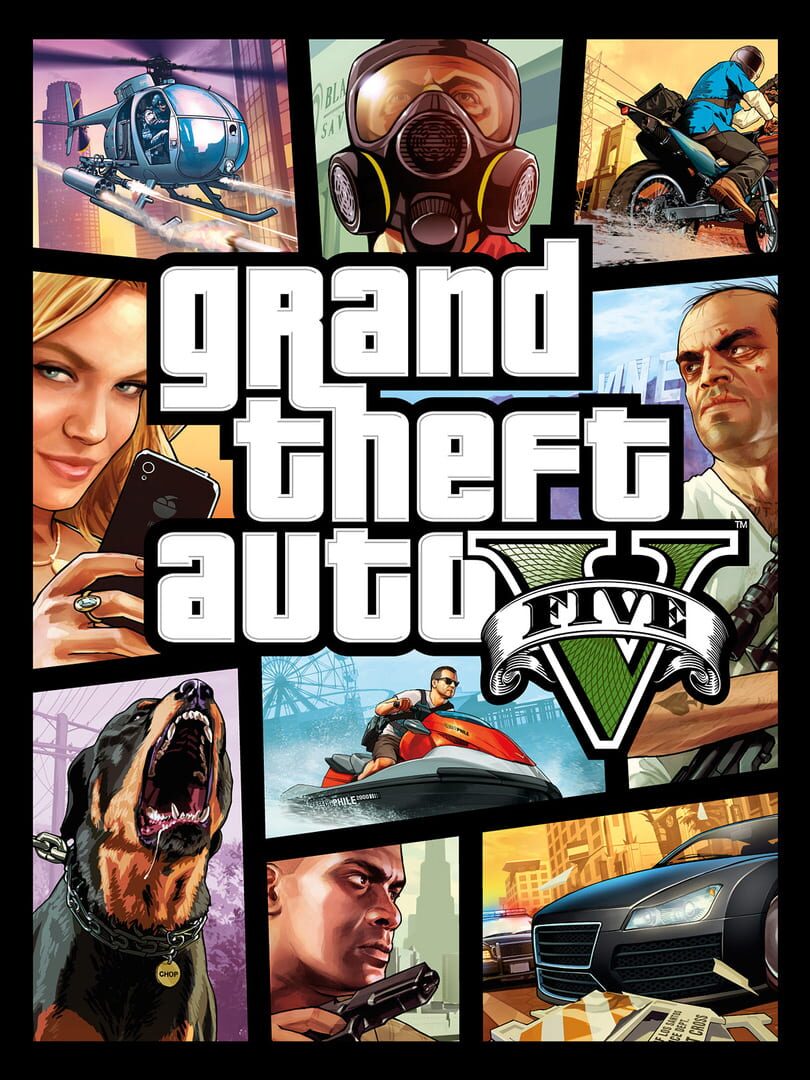
When Grand Theft Auto V launched on November 18, 2013 for PlayStation 3 and Xbox 360, nobody quite expected it would still be dominating conversations over a decade later. But here we are—and honestly, that’s a testament to what Rockstar Games and Take-Two Interactive achieved. This wasn’t just another entry in the long-running franchise; it was a landmark moment that redefined what open-world games could accomplish.
Let’s be real: the scope of what Rockstar packed into this experience was staggering. We’re talking about a living, breathing version of Los Santos that felt genuinely alive in ways previous sandbox games hadn’t quite managed. The city wasn’t just a backdrop for missions—it was the game. Every street corner, every radio station, every NPC with their own routines created this sense that the world continued whether you were there or not.
The genius of GTA V wasn’t just its size—it was the density of content packed into every square inch. Rockstar understood that an open world lives or dies based on how much there is to do and discover.
The triple-protagonist system deserves special mention here because it fundamentally changed how players engaged with the narrative:
- Michael De Santa – The retired criminal trying to go legit, representing the “have it all” protagonist
- Franklin Clinton – The ambitious street hustler eager to climb out of his circumstances
- Trevor Philips – The unpredictable wildcard who steals every scene he appears in
Switching between these three wasn’t just a gimmick—it allowed Rockstar to tell interconnected stories that felt genuinely distinct while building toward something greater. Each character had their own perspective on the same events, which was brilliant narrative design.
The gameplay mechanics were equally impressive:
- Shooter mechanics that finally felt responsive and intuitive, abandoning the clunky auto-aim systems of previous entries
- Racing elements integrated seamlessly into story missions and freeroam activities
- Stealth, combat, driving, and exploration all flowing together without feeling compartmentalized
- Dynamic mission design that gave you multiple approaches to objectives rather than forcing you down one path
The platform expansion told its own story about the game’s ambitions. Starting on PS3 and Xbox 360, then moving to PS4, Xbox One, and PC, GTA V demonstrated that Rockstar believed this experience was worth re-optimizing for newer hardware. Each version brought graphical enhancements and performance improvements that made the world even more immersive. That kind of commitment to the release speaks volumes.
When the 9.0/10 rating landed, it wasn’t surprising—it reflected what players were already screaming about online. But here’s the thing: ratings are just numbers. What mattered was that GTA Online launched alongside the single-player campaign, creating a living multiplayer space that kept people engaged long after the story credits rolled. That online component essentially became a second game entirely, complete with heists, businesses, properties, and an ever-evolving ecosystem of content.
The cultural impact extended far beyond gaming circles. GTA V became a cultural touchstone—referenced in mainstream media, discussed in sociology courses, debated by politicians and parents. Love it or hate it, the game started conversations about violence in media, representation, satire, and what interactive storytelling could tackle.
Rockstar’s approach to satire was surgical and sophisticated. They weren’t just throwing edgy content at the wall; every exaggeration, every ridiculous side mission, every absurd radio station served a purpose in their critique of American excess and contemporary culture.
What really resonates when you look back is how complete the experience felt. This wasn’t a game that launched with glaring omissions or systems that felt half-baked. Rockstar delivered a massive, polished, feature-rich world that worked. Sure, the multiplayer had its growing pains, but the foundation was solid.
The legacy speaks for itself. Countless games that came after learned from what Rockstar accomplished here—how to structure a three-act narrative in an open world, how to balance player freedom with compelling story moments, how to create systems within systems that give players genuine choice. Whether we’re talking about Red Dead Redemption 2, the evolution of other sandbox franchises, or indie developers drawing inspiration from GTA V’s design philosophy, this game’s fingerprints are all over modern game design.
Years later, the game still holds up because Rockstar focused on the fundamentals: excellent mission design, a genuinely interesting story with characters you cared about, a world that rewarded exploration, and systems that felt intuitive once you learned them. They didn’t rely on gimmicks or flash—they built something substantial.
That’s why we’re still talking about it, still playing it, and still considering it one of the defining games of its generation. Some games age poorly; GTA V aged like fine wine because it was built on solid principles rather than technological novelty alone.


