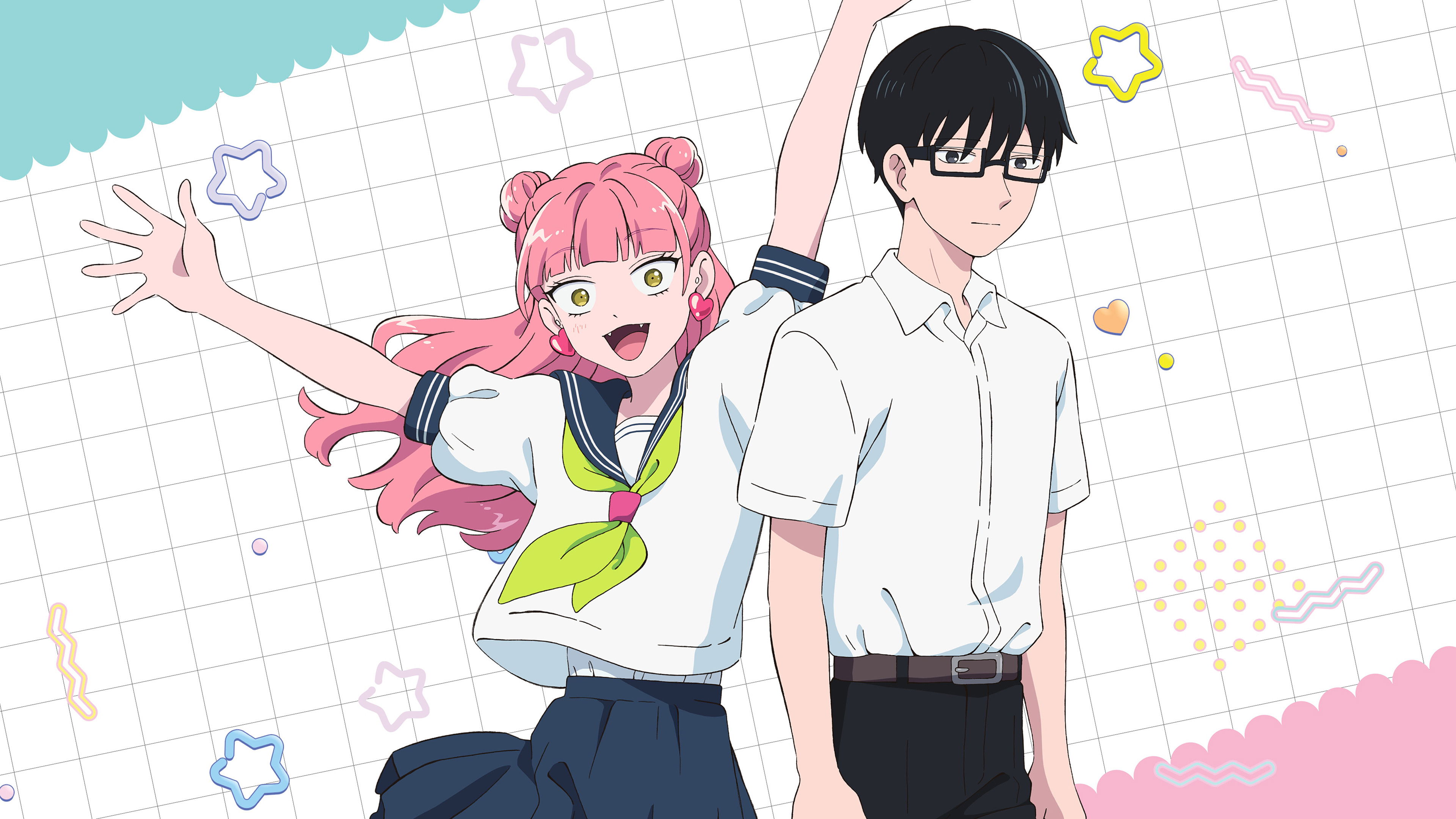
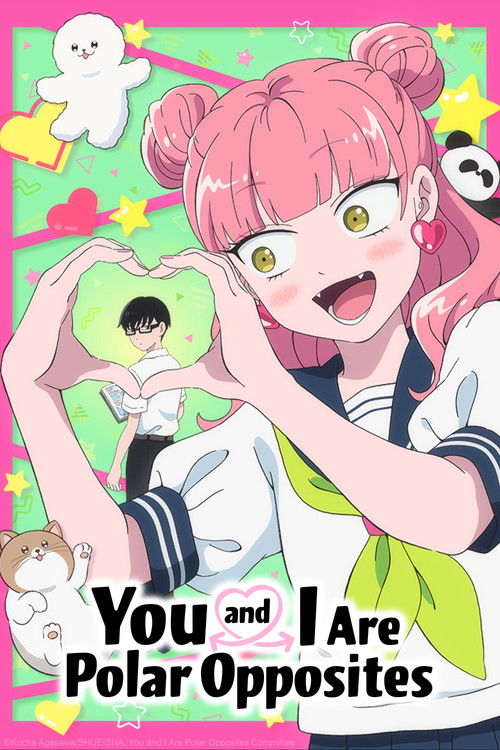
When You and I Are Polar Opposites premiered on January 11, 2026, it arrived quietly into a crowded animation landscape—yet somehow, it immediately captured something audiences didn’t know they were craving. This isn’t the kind of show that announces itself with grandiose ambitions or flashy marketing campaigns. Instead, it’s a study in understated brilliance, where the real magic happens in the spaces between punchlines and in the chemistry between characters whose fundamental incompatibility becomes their greatest strength. What makes this series remarkable isn’t just that it works, but how thoroughly it resonates with viewers who’ve rated it an impressive 9.3/10—a score that speaks to something genuinely connecting with audiences across the globe.
The premise itself—centering on two protagonists who exist at opposite ends of virtually every spectrum—could have been a one-note joke stretched across twelve episodes. Instead, what unfolded across this first season was something far more nuanced and ultimately more human. The 24-minute runtime proved to be a masterclass in comedic pacing. Rather than bloat the narrative with unnecessary subplots or force dramatic beats where they don’t belong, the creators wielded those 24 minutes like a precise instrument, building comedic momentum while still leaving room for genuine character development and unexpectedly tender moments.
What makes the show’s comedic approach so fresh is how it subverts audience expectations about what “opposites attract” really means. This isn’t a show that relies on tired tropes or surface-level observations about how different people complete each other. Instead, it dives deeper:
- The humor emerges organically from genuine philosophical differences, not just personality quirks
- Character growth happens through mutual understanding rather than one person changing for the other
- Conflict resolution reflects real compromise, not dramatic reconciliation
- Comedy and heart exist in surprising equilibrium throughout the season
The widespread availability across platforms—from Crunchyroll to various international networks spanning from MBS and TBS to NBC and beyond—speaks to how the show transcended typical anime audience demographics. This isn’t just anime fans talking about You and I Are Polar Opposites; it’s become a conversation spanning casual viewers, comedy enthusiasts, and critics who appreciate sophisticated storytelling. That kind of cross-pollination doesn’t happen by accident.
> “The show’s real achievement is making you care deeply about people who share almost nothing in common, and making that care feel earned rather than imposed.”
Season One’s twelve-episode arc created something that feels both complete and curiously expansive. Rather than feeling like a truncated season desperate for resolution, these twelve episodes function as a perfectly calibrated story that knows exactly when to reveal new layers and when to let moments breathe. The pacing suggests creators who understand that animation, as a medium, can afford to linger—can let a silent shot of a character’s expression tell an entire subplot’s worth of emotional truth.
The cultural conversation around the series has been particularly interesting to watch evolve. Early viewers found themselves defending the show against misreadings—people who thought it was shallow when it was actually quite thoughtful, or who expected a more conventional romance arc when the show was doing something more interesting with relationship dynamics. As the season progressed and more viewers discovered it, a consensus emerged: this was a show doing something genuinely original within the comedy-animation space.
What’s particularly striking is how the show respects its audience’s intelligence:
- It doesn’t explain jokes that don’t need explaining
- Visual gags land with precision because they’ve been set up with care
- Character motivations feel authentic rather than convenient
- The comedy never comes at the expense of genuine character moments
The announcement that the series is returning suggests the creators have more to explore with these characters and their dynamic—which is exciting precisely because Season One didn’t feel incomplete or cliffhanger-dependent. It felt like a satisfying chapter that simply opened the door for new stories. That’s the mark of confident storytelling: knowing you’ve delivered something meaningful, while also trusting that there’s more worth discovering.
In retrospect, You and I Are Polar Opposites has already begun reshaping conversations about what animated comedies can accomplish. It’s proven that the medium can explore relationship dynamics with nuance and sophistication while remaining genuinely funny. It’s shown that “opposites” doesn’t have to mean a simplistic yin-and-yang dynamic, but rather a complex negotiation between two fully realized people. And it’s demonstrated that sometimes the most meaningful television emerges not from trying to be everything to everyone, but from being precisely what a specific story needs.
For anyone who hasn’t caught up yet, Season One stands as an absolutely worthwhile investment—a tightly constructed, beautifully executed piece of television that knows exactly what it wants to be. With a 9.3/10 rating and growing cultural footprint, You and I Are Polar Opposites has already earned its place in contemporary animation. The real question now is where the creators take these characters next.


![Official Trailer 2 [Subtitled]](https://img.youtube.com/vi/jYlkjHDGO10/maxresdefault.jpg)
![Official Trailer [Subtitled]](https://img.youtube.com/vi/jZVJLee_2Bw/maxresdefault.jpg)
![3rd Trailer [Subtitled]](https://img.youtube.com/vi/WqLYp6na6NU/maxresdefault.jpg)
![2nd Trailer [Subtitled]](https://img.youtube.com/vi/idsxG0Bodoc/maxresdefault.jpg)