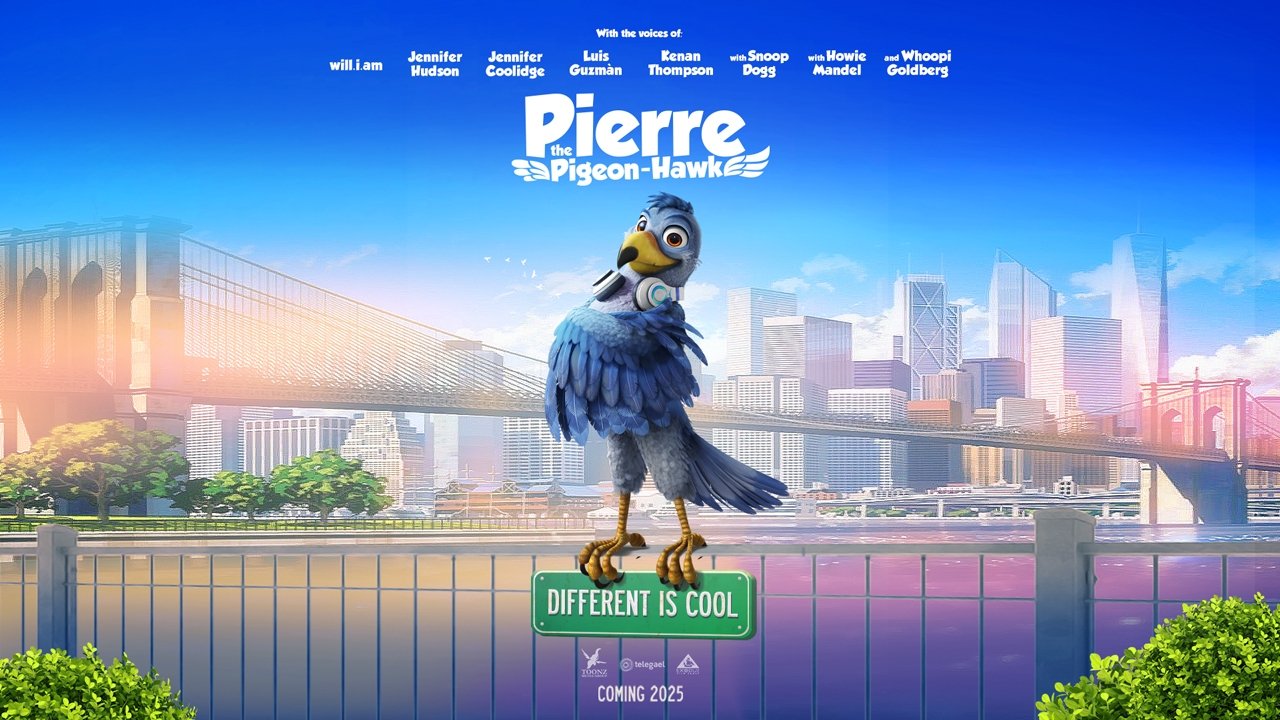
There’s something genuinely exciting happening in animation right now, and Pierre the Pigeon-Hawk is positioned to be a significant part of that conversation when it will be released on February 11, 2026. This isn’t just another family film sliding into the marketplace—it’s a project that’s been assembled with real intention, bringing together creative voices that don’t typically converge in animated storytelling.
At its core, the premise is deceptively simple: a mixed-breed pigeon-hawk—a creature literally born from two supposedly incompatible worlds—embarks on a journey of self-discovery. But that simplicity masks something more profound. The film’s tagline, “Different is Cool,” isn’t just marketing speak; it’s a thematic statement that feels increasingly vital in contemporary cinema. We’re living in an era where audiences, particularly younger ones, are hungry for narratives that celebrate individuality rather than conformity, and Pierre the Pigeon-Hawk is set to tap directly into that sensibility.
What makes this production particularly noteworthy:
- Director John D. Eraklis is crafting a musically-driven comedy that suggests genre fluidity—this won’t be a traditional talking-animal picture
- The voice cast reads like a masterclass in contemporary entertainment: will.i.am, Jennifer Hudson, and Snoop Dogg bring not just star power but genuine musical credibility
- The collaborative studio approach (Toonz Entertainment, Exodus Film Group, Telegael, and Sugar Water Entertainment) indicates a project that’s pooled resources and expertise across multiple creative centers
- The New York City setting grounds the story in a real, recognizable world rather than a generic fantasy landscape
What’s particularly fascinating is how this film represents a shift in how studios approach animated storytelling. By centering a narrative on acceptance and self-love around a protagonist who is, literally, a hybrid creature, Pierre the Pigeon-Hawk is engaging with questions of identity and belonging in ways that feel both contemporary and timeless. Pierre doesn’t just face external challenges—the story invites audiences to consider what it means when society’s categories don’t fit who you are.
The creative team deserves particular attention here. John D. Eraklis directing suggests a vision that likely balances whimsy with emotional authenticity. He’s not working with comedians playing it safe; he’s working with will.i.am, an artist who’s spent his career pushing boundaries across music and media; Jennifer Hudson, whose vocal and emotional range is genuinely unmatched in contemporary performance; and Snoop Dogg, whose cultural influence and comedic sensibility could bring an unexpected warmth to voice work. These aren’t casting choices made for name recognition alone—they represent an intentional artistic direction.
The real question isn’t whether Pierre the Pigeon-Hawk will entertain audiences when it releases in 2026—it almost certainly will. The question is whether it will spark the kind of cultural conversation we rarely see from animated films anymore.
Consider what we know about the production so far. The film is still in production, which means we’re in that tantalizing pre-release phase where anticipation can build organically. There’s no footage to over-analyze, no premature discourse about whether it lives up to expectations. Instead, what we have is the promise of something fresh: a musically-driven comedy about self-acceptance from a truly international creative team, featuring voices that bring their own substantial artistic legacies to their roles.
The fact that the tagline emphasizes coolness—not as superficial trendiness but as a genuine celebration of distinctiveness—signals that the filmmakers understand their audience. Kids today, and honestly adults too, are fatigued by narratives that demand conformity. They’re ready for stories where the “different” protagonist isn’t trying to become normal; they’re finding power and purpose in what makes them unique.
Looking at the bigger picture:
- This film arrives in a landscape where animated features are increasingly expected to deliver on multiple levels—humor for adults, heart for families, visual innovation for everyone
- The emphasis on musical storytelling positions it alongside recent successes in the genre while offering its own distinctive voice
- The international production team suggests a film that might resonate across cultural boundaries, not just within a single market
- The casting represents a deliberate effort to bring contemporary musical and cultural influence into the voice acting space
When Pierre the Pigeon-Hawk finally arrives on February 11, 2026, it will do so without pre-release hype fatigue or the baggage of viral discourse. It’s a film that can simply exist and be experienced. And based on what we know about its creative intentions, its assembled talent, and its thematic ambitions, it seems positioned to matter—not just as entertainment, but as a statement about what animated storytelling can accomplish when it takes both its audience and its message seriously.