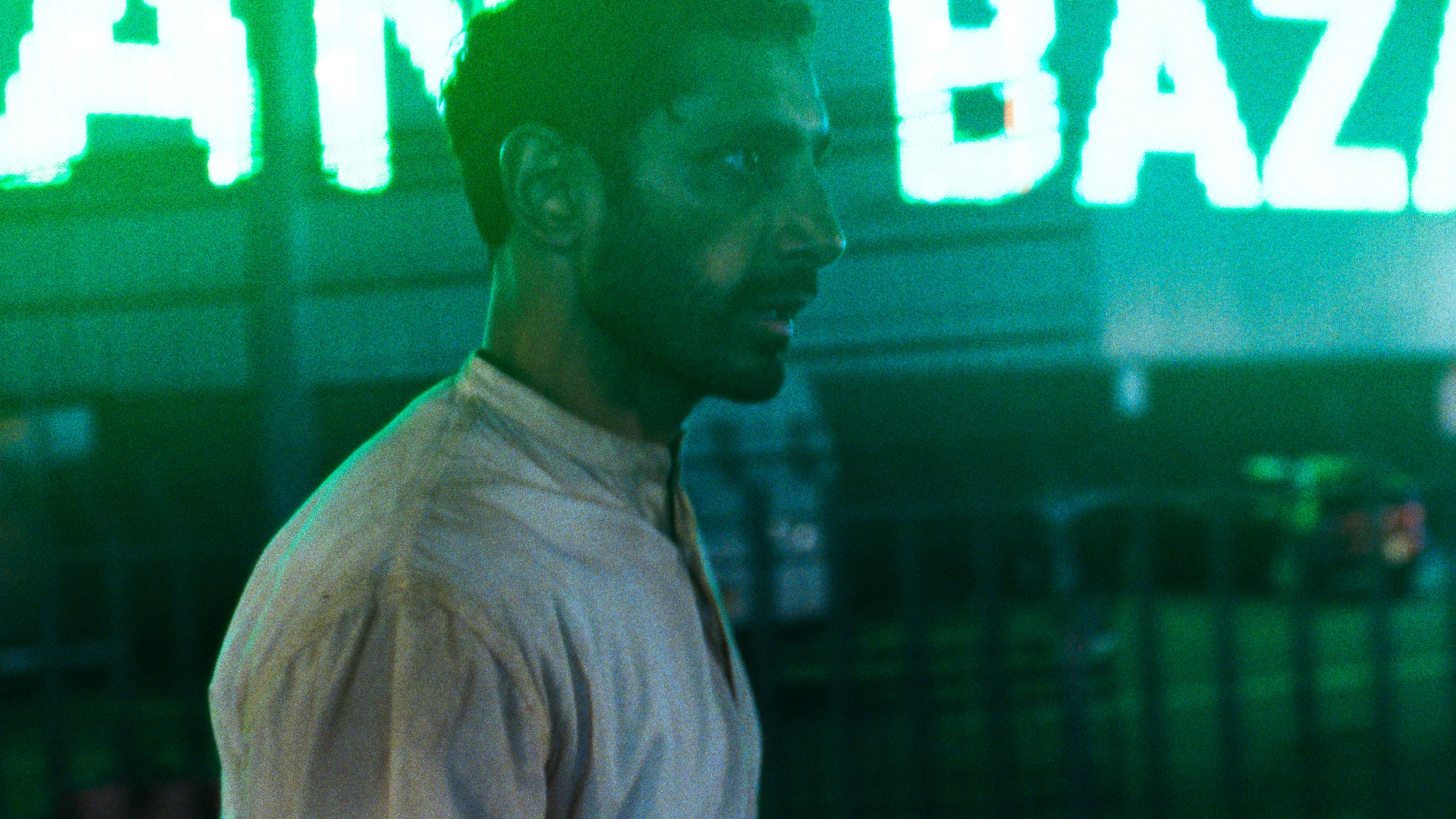
There’s something genuinely exciting brewing in the world of Shakespeare adaptations, and it has everything to do with what Aneil Karia is about to bring to the screen. When one of contemporary cinema’s most visionary directors turns their attention to Hamlet—arguably the most dissected, reinterpreted, and endlessly fascinating play in the English language—you know something interesting is about to happen. The film is scheduled for release on February 6, 2026, and honestly, the anticipation is already building in ways that feel different from typical Shakespeare adaptations.
Let’s start with the obvious: Riz Ahmed carrying the weight of the Danish prince is a casting choice that immediately signals ambition. Ahmed has proven himself time and again as an actor capable of extraordinary emotional depth and complexity—he brings an intensity and contemporaneity to every role he touches. Pairing him with Morfydd Clark, an actress of remarkable range and subtlety, and the always-brilliant Timothy Spall creates an ensemble that feels less like a traditional Shakespearean company and more like a collection of actors genuinely grappling with these characters’ psychological torment. This isn’t just star power for star power’s sake; it’s a collaboration designed to crack open the text in new ways.
What makes this adaptation particularly anticipated is the creative vision driving it. Aneil Karia comes to this project with a distinct visual language honed through his work in television and short films—his camera moves with purpose, his framing carries psychological weight, and he has an almost intuitive understanding of how to translate internal states into cinematic language. That sensibility applied to Hamlet, a play that’s fundamentally about a mind in crisis, feels genuinely revelatory. This isn’t going to be a period-piece exercise in dusty reverence.
The collaboration itself speaks volumes:
- Karia’s directorial vision merges intimate character study with formal cinematic ambition
- Ahmed’s intensity promises to strip away any romantic notions of melancholy
- Clark’s nuanced presence suggests Ophelia won’t be a cipher but a fully realized consciousness
- Spall’s character work implies depth in supporting roles that often get overlooked
- A 113-minute runtime suggests focused storytelling—this won’t be the exhaustive four-hour approach
The most compelling Shakespeare adaptations are those that treat the text not as sacred artifact but as living material—as plays that need to breathe and break and bleed for contemporary audiences.
There’s also something to be said about where this film fits in our current cinematic moment. We’ve had a recent glut of Shakespeare adaptations, some magnificent, some forgettable. What distinguishes Karia’s approach is the implicit question: Why tell this story now? Not as academic exercise, but as genuine artistic necessity. The film emerges from a collaboration between JW Films, Left Handed Films, Waypoint Entertainment, BBC Film, and Confluential Films—a coalition of production entities that suggests serious investment in the project’s artistic integrity, not just commercial viability.
The creative team behind the camera matters just as much as what happens in front of it. Michael Lesslie’s screenplay adaptation will be crucial in determining how accessible this Hamlet becomes without sacrificing Shakespeare’s language and wit. There’s an art to adapting the play for cinema—compressing its philosophical digressions while maintaining its psychological acuity, cutting some scenes while deepening others. Early reports suggest this version will be a focused, character-driven exploration rather than an attempt to film every word.
What conversations might this film spark? Consider what Hamlet has always been about at its core:
- Performative identity—how we construct ourselves for an audience, a concern deeply relevant to our social-media-saturated moment
- Mental health in crisis—the play’s portrait of depression and despair still cuts closer to lived experience than most contemporary drama
- Political corruption and complicity—Claudius’s crime resonates in an era acutely aware of institutional rot
- The paralysis of overthinking—Hamlet’s famous inability to act speaks directly to contemporary anxieties about agency and effectiveness
This adaptation will likely interrogate these themes with the specificity that contemporary cinema demands. Rather than presenting Hamlet as historical monument, Karia and his cast seem positioned to make it feel disturbingly now—to find in Shakespeare’s words something that speaks to the particular texture of 2026’s consciousness.
The fact that this film will be released February 6, 2026 through a theatrical distribution deal is itself notable. In an era when Shakespeare on screen often skews toward streaming services or festival circuits, securing a genuine theatrical release demonstrates confidence in the material and the filmmaking. This won’t be a marginal curiosity; it’s being positioned as a significant cinematic event.
What ultimately matters is whether this team succeeds in what every great Shakespeare adaptation must attempt: making us feel, not just intellectually, that these characters’ struggles are our struggles. If Karia, Ahmed, Clark, and Spall can achieve that—if they can crack open Hamlet and find something that feels urgent and immediate—then we’re looking at something that will genuinely matter in cinema history. We’re still months away from the release date, but all the early signals suggest this is worth waiting for.