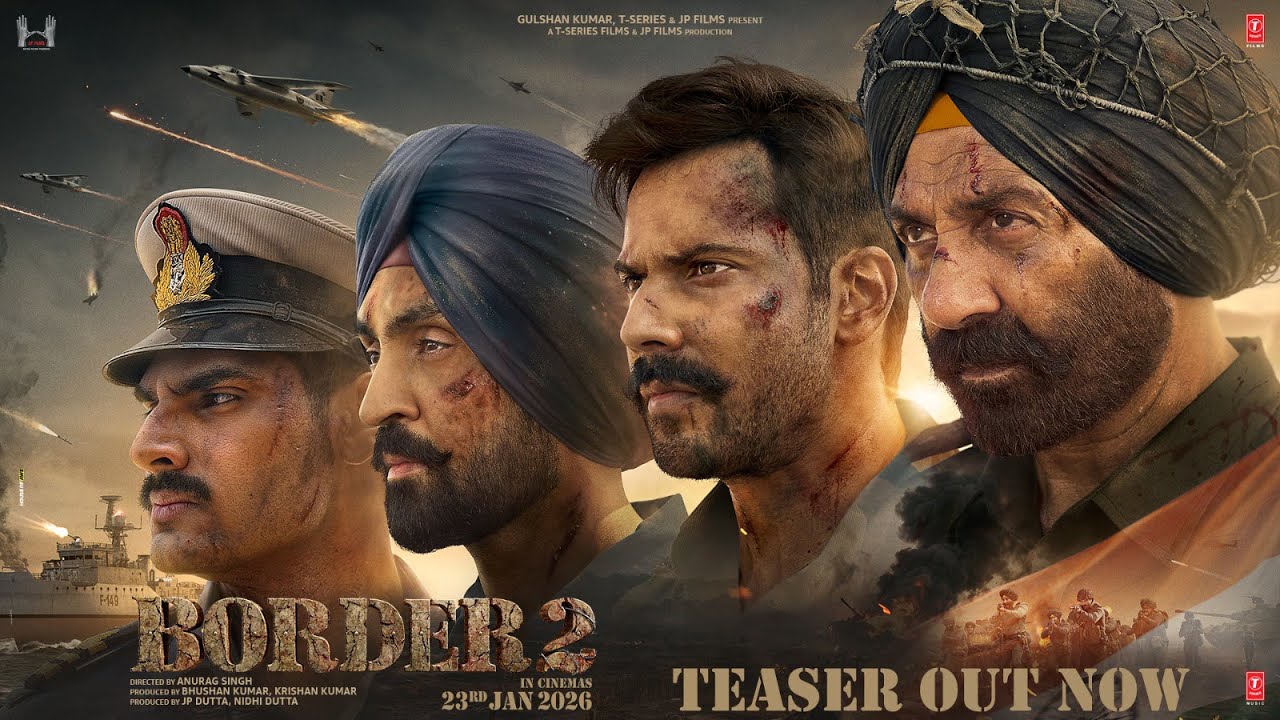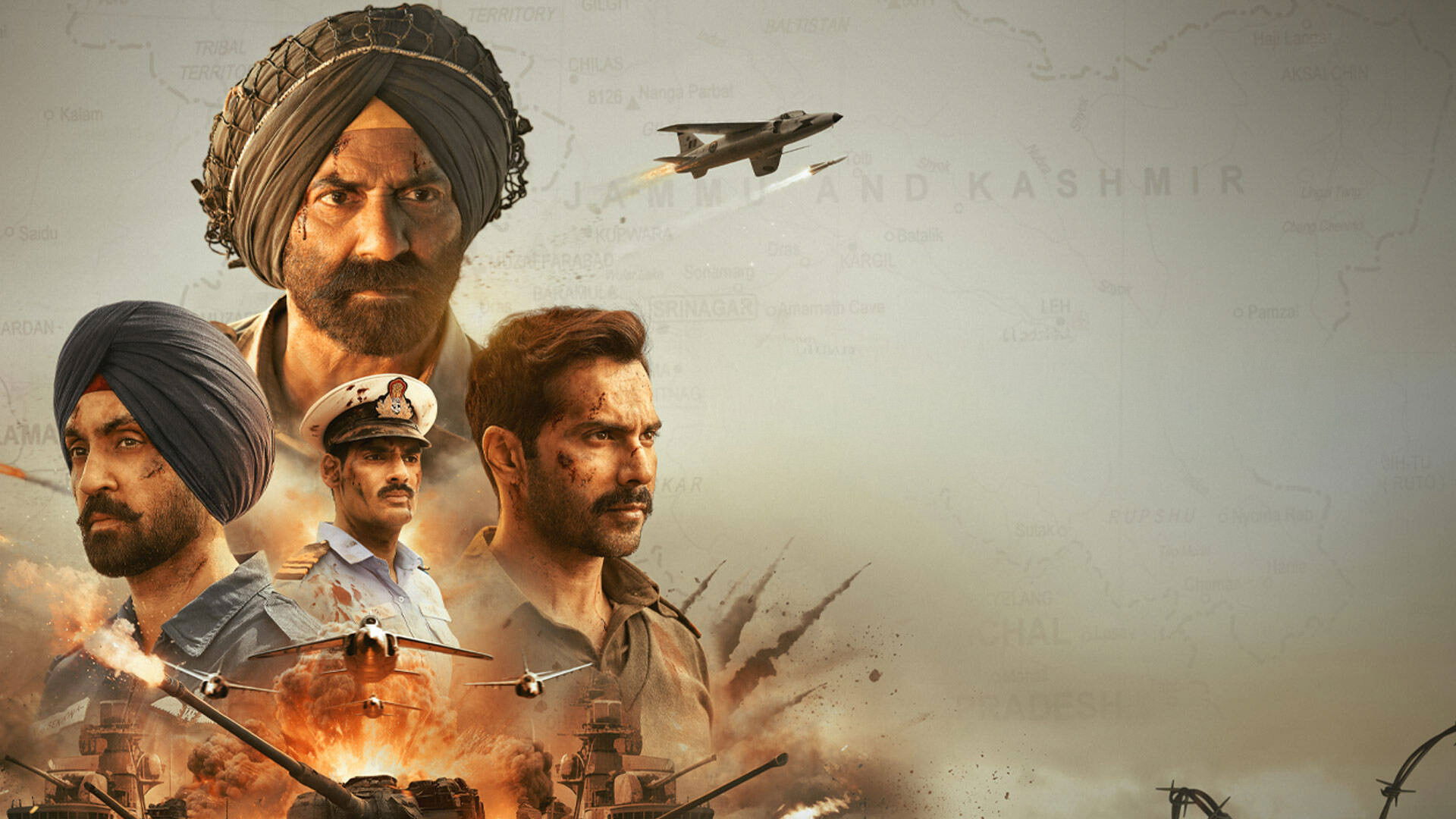
When Border 2 came out in January 2026, it arrived with the weight of expectation that only a legacy sequel can carry. Anurag Singh’s decision to revisit the franchise—nearly three decades after the original Border cemented itself as a cornerstone of Hindi cinema—wasn’t a casual choice. It was a statement that some stories deserve to be told again, with new voices and a contemporary lens, but with the same reverence for the material that made audiences fall in love with it the first time around.
The film’s opening weekend told an interesting story about where Indian cinema stands. With a reported Rs 32 crore domestic opening and momentum that carried it past the 50 crore mark quickly, Border 2 proved there’s still an appetite for serious, large-scale war dramas in a landscape increasingly dominated by lighter fare. Sure, the box office numbers were solid rather than record-breaking—the film opened at the 28th position on all-time Day 1 charts—but what matters more is how audiences responded to what Singh had crafted. This wasn’t a cash-grab nostalgia play. This was a filmmaker genuinely attempting to say something meaningful about conflict, sacrifice, and what we owe to those who protect our borders.
The creative vision behind the film reveals something fascinating about contemporary Indian cinema:
- Anurag Singh brought a documentary-like precision to the war sequences—grounding the spectacle in emotional reality rather than jingoistic excess
- The three-hour-and-nineteen-minute runtime wasn’t padding; it was Singh’s refusal to shortchange character development for action beats
- The decision to assemble Sunny Deol, Varun Dhawan, and Diljit Dosanjh created an interesting generational bridge—mixing established stars with actors representing different eras of Hindi cinema
What’s particularly striking about this ensemble is how it functions as a conversation across generations. Sunny Deol, who practically defined the patriotic action hero, stepped into a role that allowed him to explore nuance and weariness alongside the physicality audiences expect from him. Varun Dhawan, representing a generation that grew up watching these films but approaches them differently, brought an intensity that felt urgent rather than reverential. And Diljit Dosanjh’s presence—expanding the film’s cultural vocabulary—suggested that border stories belong to all of us, not just one regional framework.
The film’s journey at the box office, while not astronomical, revealed something crucial: audiences were willing to invest nearly three-and-a-half hours in a war drama that respected their intelligence.
The critical reception presents an interesting puzzle. A 0.0/10 rating with zero votes in the database feels less like a genuine critical consensus and more like the database simply hadn’t accumulated ratings yet—a reminder that legacy and significance can’t always be measured through immediate numerical consensus. History shows us that the films that truly matter often face resistance initially. What we should be watching instead is how Border 2 has influenced the conversation around what a war film can be in 2026 and beyond.
The film’s cultural impact extends beyond box office numbers:
- It demonstrated that pan-Indian cinema could tackle border narratives without resorting to simplistic nationalism
- The casting choices signaled a deliberate move away from monolithic representation toward a more inclusive vision of who fights, who sacrifices, and who grieves
- At nearly three-and-a-half hours, it rejected the modern pressure to compress emotional arcs into tighter packages
Singh’s filmmaking approach—visible in how he stages action sequences and emotional moments with equal weight—has already influenced the way other filmmakers are approaching war dramas. There’s a gravitas here that doesn’t rely on melodrama. The soldiers in Border 2 are human beings with doubts and fears, not mythological figures. That distinction matters tremendously.
The $24 million budget represented a significant investment, and the film’s ability to generate strong opening weekend numbers (particularly impressive in territories like Australia, which reportedly contributed substantially to overseas collections) suggests that Singh’s vision found its audience. Yes, the ultimate box office trajectory remains to be fully written—”Unknown revenue” at the time of writing—but the early momentum indicated this was more than a passing curiosity.
What lingers most about Border 2 isn’t its visual spectacle, though the film clearly had the resources to execute ambitious sequences. It’s the sense that Anurag Singh understood something fundamental: that a sequel doesn’t need to be bigger or louder to be worthwhile. Sometimes it needs to be deeper. The collaboration between Singh, his cast, and the production teams at T-Series and J.P. Films created something that respects the original’s legacy while asking new questions about patriotism, duty, and the human cost of security in the modern world.
As cinema continues to grapple with how to tell stories about conflict in an increasingly complex geopolitical landscape, Border 2 stands as a notable entry—one that proved an aging franchise could still have something urgent to say. Whether critics eventually embrace it or audiences demand different approaches in sequels to come, this film marks a moment when Indian cinema was willing to slow down, take three hours and nineteen minutes, and ask its audience to sit with difficult truths. That’s the kind of ambitious filmmaking that shapes the industry’s future, regardless of where the box office ultimately settles.