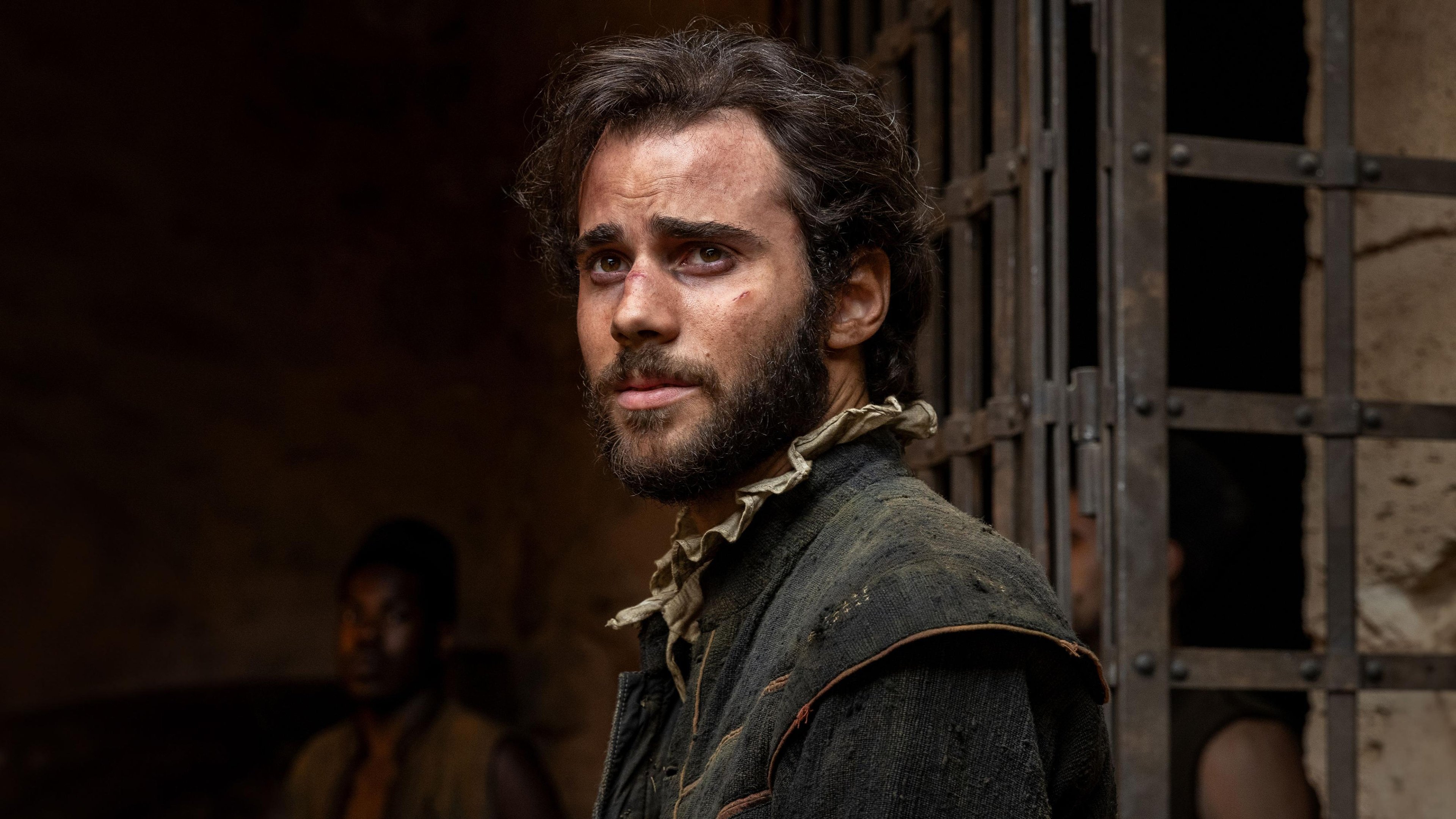
When The Captive premiered at Toronto International Film Festival in September 2025, Alejandro Amenábar arrived with something unexpected in his filmography: a full-fledged historical adventure. Known for his psychologically intense dramas like The Sea Inside and Regression, Amenábar stepping into the world of swashbuckling adventure stories felt like a deliberate creative pivot—one that would prove surprisingly natural for a director obsessed with exploring the human condition under extreme circumstances. The premise alone is irresistible: what if we could glimpse the formative trauma that shaped Miguel de Cervantes, author of Don Quixote, before he became a literary legend? What if his captivity in Algiers wasn’t just history, but the crucible where imagination itself was forged?
The film’s tagline captures this perfectly—”The author of Don Quixote left an incredible story untold. His own.” It’s the kind of hook that makes you sit forward in your seat, and Amenábar clearly understood the thematic richness hidden in plain sight. Cervantes’s imprisonment in 1575, his five years held by Hassan, Bajá of Algiers, waiting for a ransom that might never come—these aren’t just biographical details. They’re the raw material of desperation, resilience, and the power of imagination to transcend captivity.
What makes this film cinematically significant
With a runtime of 2 hours and 14 minutes, Amenábar doesn’t rush through his material, and that deliberate pacing becomes part of the film’s strength. This is historical cinema that takes time to breathe, to sit with its characters in their cells and their moments of unexpected connection. Rather than treating historical adventure as a formula to be checked off, Amenábar approaches it as an exploration of how art emerges from suffering—a theme that’s distinctly his, even when the setting is exotic and the genre expectations lean toward spectacle.
The creative team he assembled was equally thoughtful. Julio Peña carries the emotional weight of the film as Cervantes, a young man thrust into circumstances that would break most people, yet finding something redemptive in the process. Alessandro Borghi as Hassan brings complexity to what could have been a one-dimensional villain, creating instead a portrait of power and its contradictions. Miguel Rellán rounds out the ensemble, and the chemistry between these actors suggests Amenábar fostered an environment where historical accuracy and intimate human drama could coexist. This wasn’t a cast assembled to simply look the part; these are actors capable of mining emotional depth from period dialogue.
> The film’s greatest achievement may be understanding that Don Quixote didn’t emerge from a vacuum—it came from a man who knew imprisonment, loss, and the transformative power of storytelling.
Critical reception and audience response
The 7.5/10 rating from early audiences reflects something nuanced about the film’s reception. It’s not a unanimous masterpiece, but it’s clearly a film that people took seriously, that demanded engagement rather than passive consumption. With 24 votes at the time of writing, the sample size is small enough that we’re still in the early stages of cultural assessment, but that rating suggests the film resonates without overwhelming everyone who sees it—which is often the mark of ambitious, challenging work.
On a budget of $10,720,500, The Captive represents a medium-to-large scale production, substantial enough to realize Amenábar’s vision but not so bloated that it needed to compromise artistic choices for commercial imperatives. The box office performance remains unreported as of now, but in a cinema landscape where Spain’s 2025 attendance dipped 8%, theatrical releases needed to offer something distinctive to draw audiences away from their screens. The Captive offered exactly that: a prestige historical drama from a respected auteur, elevated by international co-production (Spain, Italy, and multiple production companies across both countries) and the kind of filmmaking that respects audience intelligence.
Why this story matters now
There’s something particularly resonant about telling Cervantes’s story in 2025. His experience—displacement, captivity, the question of what makes us human when circumstance strips everything else away—feels startlingly contemporary. Amenábar has always been interested in extreme psychological states, and framing a historical adventure through that lens gives the film a thematic coherence that sets it apart from standard heritage cinema.
The collaboration between Spanish and Italian production companies (Himenóptero, Misent Producciones, Propaganda Italia, and Mod Producciones) also signals something important about European cinema in the 2020s: the willingness to invest in ambitious, character-driven historical narratives that demand 134 minutes of viewer attention. This isn’t a film engineered for maximum global box office penetration. It’s a film made because the story deserves telling, because Amenábar had something to say about imagination, captivity, and the birth of literary genius.
The lasting significance
The Captive joins a growing tradition of biopics that treat their subjects’ defining struggles as creative crucibles rather than mere obstacles. What lingers after watching is not just the historical spectacle—though Amenábar clearly commands that language—but rather the quieter moments when imagination pushes back against imprisonment. By the film’s end, you understand something fundamental: that Don Quixote wasn’t written despite Cervantes’s captivity, but because of it. That’s the kind of insight cinema does best, and it’s why The Captive matters.