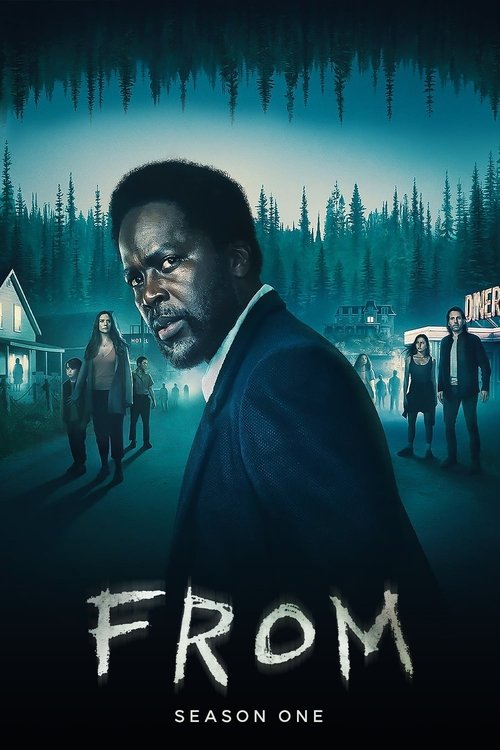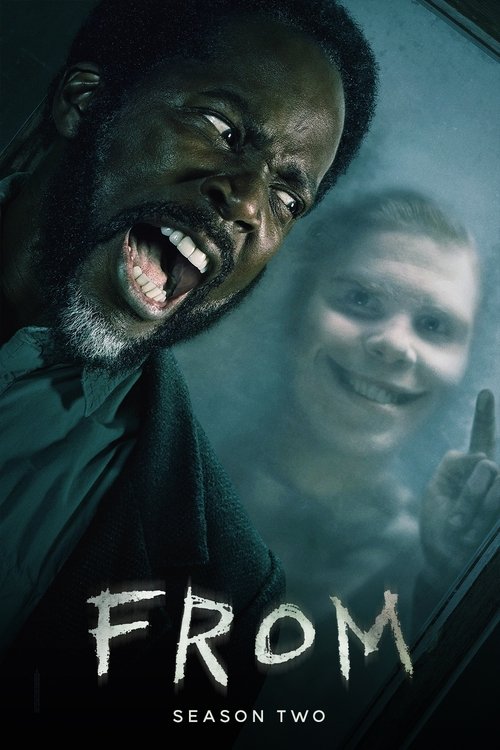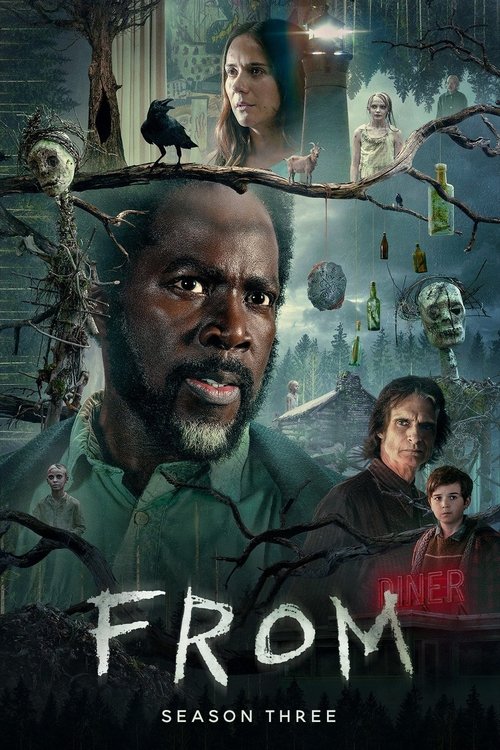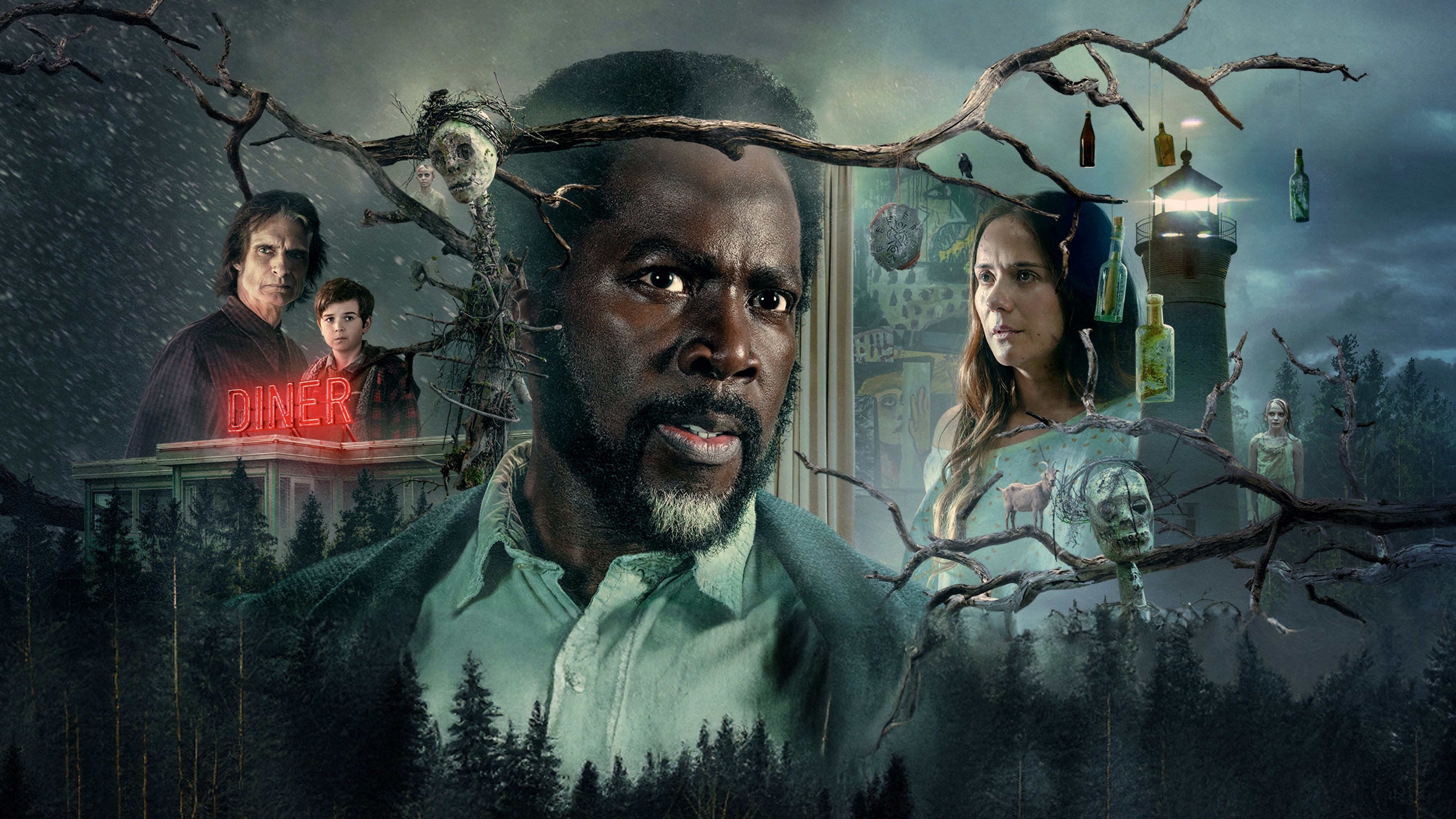
If you’ve been sleeping on From, it’s time to wake up and pay attention. When this show premiered back in February 2022 on Epix, it arrived with the kind of premise that immediately hooks you: a town that shouldn’t exist, people who can’t leave, and a mystery that deepens with every passing episode. What John Griffin created was something increasingly rare in prestige television—a genuinely unpredictable narrative that refuses to play by the rules audiences have grown comfortable with. Over four seasons and 30 episodes, From has become that show you recommend to friends with an almost evangelical fervor, not because it’s flawless, but because it understands something fundamental about tension and uncertainty that most television has forgotten.
The show’s genius lies in its willingness to sustain mystery without feeling like it’s spinning its wheels. That’s harder than it sounds. Most shows that rely on a central puzzle either crack the code too early and struggle to maintain momentum, or they drag things out so long that audiences feel manipulated. From has found an elegant middle ground—it reveals just enough to keep you theorizing while introducing new layers faster than you can solve the existing ones. The 8.2/10 rating speaks to this balance, reflecting an audience that appreciates ambition even when execution isn’t always perfect.
What’s particularly striking is how the show uses its format to its advantage. Those 30 episodes across four seasons aren’t padded; they’re strategically paced. The unknown runtime of individual episodes actually becomes part of the experience—some episodes will wrap up in under 45 minutes while others stretch longer, mimicking the disorientation of the characters trapped in this inexplicable town. Griffin clearly understood that rhythm matters as much as plot in building dread.
> “The best mysteries aren’t about the answer—they’re about what the search reveals about the people asking the questions.”
From embraces this philosophy wholeheartedly. The true engine of the show isn’t finding out why people are trapped in this town; it’s watching how desperation, hope, and community fracture under impossible circumstances.
The Human Element
What elevates From above standard genre fare is its commitment to character work. Yes, the supernatural elements are compelling—the creatures that hunt at night, the town that defies geography, the eerie beauty of a place that seems designed to torture its inhabitants. But what really grabs you is watching people like Boyd struggle with leadership when the situation is fundamentally unmanageable, or observing how Julie and Ethan navigate forming connections in a place where bonds feel either impossibly precious or dangerously fragile.
The show’s arc across its four seasons has mirrored the psychological journey of its characters: early confusion giving way to desperate investigation, which hardens into something more like dark adaptation. By the time we reach the later seasons, Boyd watches “the town slipping away from him as the weather grows colder and the residents more desperate”—and we feel that leadership crumble with him. That’s not just good drama; that’s thematic precision.
Building a Cult Following
Despite premiering on Epix—not exactly the most visible platform—From has accumulated a genuinely passionate fanbase. The show’s availability across multiple streaming services (MGM+, fuboTV, Philo, and various Roku and Amazon channels) has helped it find audiences, but what’s really driven its cultural footprint is word-of-mouth from people who’ve experienced it. In an era where viral moments and discourse drive viewership, From has done something old-fashioned: it’s earned loyalty through consistent storytelling and genuine surprises.
The rating distribution tells an interesting story. While most viewers cluster around the positive end of the scale, there’s a meaningful percentage who’ve given it lower ratings—not because the show fails technically, but because it deliberately withholds satisfaction. Some viewers find that frustrating. Others find it brilliant. There’s something to be said for a show polarizing audiences over whether its ambition justifies its mystery-box approach.
Why This Matters
In a television landscape increasingly dominated by adaptations, reboots, and pre-sold IP, From represents something vital: an original concept that networks were willing to fund and that audiences were willing to embrace. John Griffin bet everything on the strength of premise and character, and that bet has paid off enough to earn a fourth season and a returning series status that suggests more is coming.
The show’s journey from niche Epix debut to genuinely discussed television event demonstrates how quality storytelling still breaks through, even in the fractured streaming landscape. From proved you don’t need a superhero franchise or a beloved book series to capture imaginations—sometimes all you need is a single question asked with enough conviction: What if you couldn’t leave?
That’s the show’s lasting achievement. It’s not just a mystery to solve or a creature feature to enjoy. It’s a philosophy about what television can do when it trusts its audience to sit with uncertainty, to care about characters even as the world around them becomes increasingly irrational, and to keep watching because the journey—not the destination—is what matters.