
When 100 Meters premiered at the Annecy International Animation Film Festival earlier this year, it arrived quietly—no massive marketing push, no pre-existing franchise baggage. What it did carry was something more valuable: a singular vision from director Kenji Iwaisawa that asked audiences a deceptively simple question: why do we run? The film was released in September 2025, and what followed was a slow-burn success story that ultimately revealed something important about what contemporary audiences hunger for in animated cinema.
The premise sounds almost frustratingly minimal on the surface. A 100-meter sprint. But Iwaisawa understood that constraints breed creativity, and within that narrow distance, he constructed an entire meditation on human motivation, perseverance, and the microscopic moments that define our lives. The tagline—”Mark the distance”—isn’t just marketing speak; it’s an invitation to reconsider how we measure meaning.
What Makes This Film Stand Out
At 1 hour and 47 minutes, 100 Meters doesn’t overstay its welcome, which is precisely its strength. In an era where animated features routinely stretch past two hours, Iwaisawa’s disciplined runtime feels almost radical. Every frame serves the narrative. The film explores the same 100-meter race repeatedly, each iteration peeling back another layer of psychology, emotion, and circumstance. It’s the kind of structural innovation that sounds experimental on paper but feels perfectly natural when experienced.
The voice cast—featuring Tori Matsuzaka, Shota Sometani, and Yuma Uchida—brought nuanced humanity to their roles. These aren’t characters defined by bombastic traits or melodramatic arcs. Instead, they’re rendered with the kind of psychological realism that animation, when done right, can capture even more effectively than live-action. Matsuzaka’s performance in particular carries a weight that lingers; there’s vulnerability beneath every word, hesitation beneath every decision.
> The film’s approach to its subject matter represents a philosophical shift in how anime tackles sports narratives—less about spectacle, more about introspection.
The Business of Art
Here’s where things get interesting from a film industry perspective. With an unknown budget and a final box office haul of $3,033,000, 100 Meters might seem like a commercial disappointment to casual observers. But the film’s journey tells a different story. It reached Netflix’s global top 10 for non-English content, achieved a perfect 100% on Rotten Tomatoes, and generated approximately 600 million yen in domestic Japanese box office revenue alone. That’s not just solid performance—that’s the kind of word-of-mouth resonance that speaks to genuine cultural impact.
The collaboration between studios—Pony Canyon, Asmik Ace, TBS, Rock’n Roll Mountain, and GKIDS—created an international distribution framework that allowed the film to find audiences beyond Japan’s borders. GKIDS, in particular, has built a reputation for championing animated films with artistic merit over commercial calculation, and 100 Meters fits perfectly into that mission. The 7.7/10 rating from 56 votes might seem modest, but it’s worth noting that critical consensus often consolidates and strengthens over time for films of this caliber.
The Creative Vision
What separates Iwaisawa’s direction from standard sports anime is his refusal to dramatize competition into catharsis. There are no impossible comebacks here, no mystical power-ups, no narrative miracles. Instead, what emerges is something more profound: the recognition that sometimes, the most important race is the one happening inside your own head. The film asks its audience to sit with discomfort, to witness failure without judgment, and to understand that the moment before the gunshot fires might be more important than the sprint itself.
The animation itself serves this thematic purpose. Rather than deploying flash and technical virtuosity for their own sake, Iwaisawa’s team used visual storytelling to externalize internal states. The way a character’s posture changes as doubt creeps in, the subtlety of eyes betraying thoughts the voice doesn’t express—this is animation operating at its most sophisticated level.
Why It Resonates
What audiences discovered in 100 Meters:
- A meditation on pressure that feels immediate and personal
- Characters who lose and must reckon with that loss
- The acknowledgment that not every struggle ends in triumph
- Beauty found in repetition and small variations within constraint
- A film that trusts its audience’s intelligence completely
The film’s global reach via Netflix proved that there’s genuine appetite for this kind of introspective, formally adventurous animation. In an industry increasingly focused on tentpole franchises and IP exploitation, 100 Meters demonstrated that original stories exploring universal human experiences still find their audience—they just need the right distribution and time to build momentum.
The Lasting Significance
What makes 100 Meters significant isn’t just what it accomplished commercially or critically, but what it represents for the future of animated storytelling. Iwaisawa proved that you don’t need spectacular action sequences or high-concept plots to create compelling cinema. You need clarity of vision, respect for your material, and absolute confidence in your audience’s willingness to engage with psychological complexity.
The film arrived at exactly the right cultural moment—when anime fandom had matured beyond spectacle-chasing, when audiences actively sought substantive narratives, and when filmmakers felt empowered to take formal risks. 100 Meters will likely influence a generation of animators to trust constraint over elaboration, psychology over plot mechanics.
Years from now, when historians look back at 2025’s animation landscape, 100 Meters won’t be remembered as a box office phenomenon. It’ll be remembered as the film that reminded us why we make cinema in the first place: to explore the depths of human experience, one carefully measured moment at a time.



![Official Trailer [Subtitled]](https://img.youtube.com/vi/GNgK75OZ0mQ/maxresdefault.jpg)
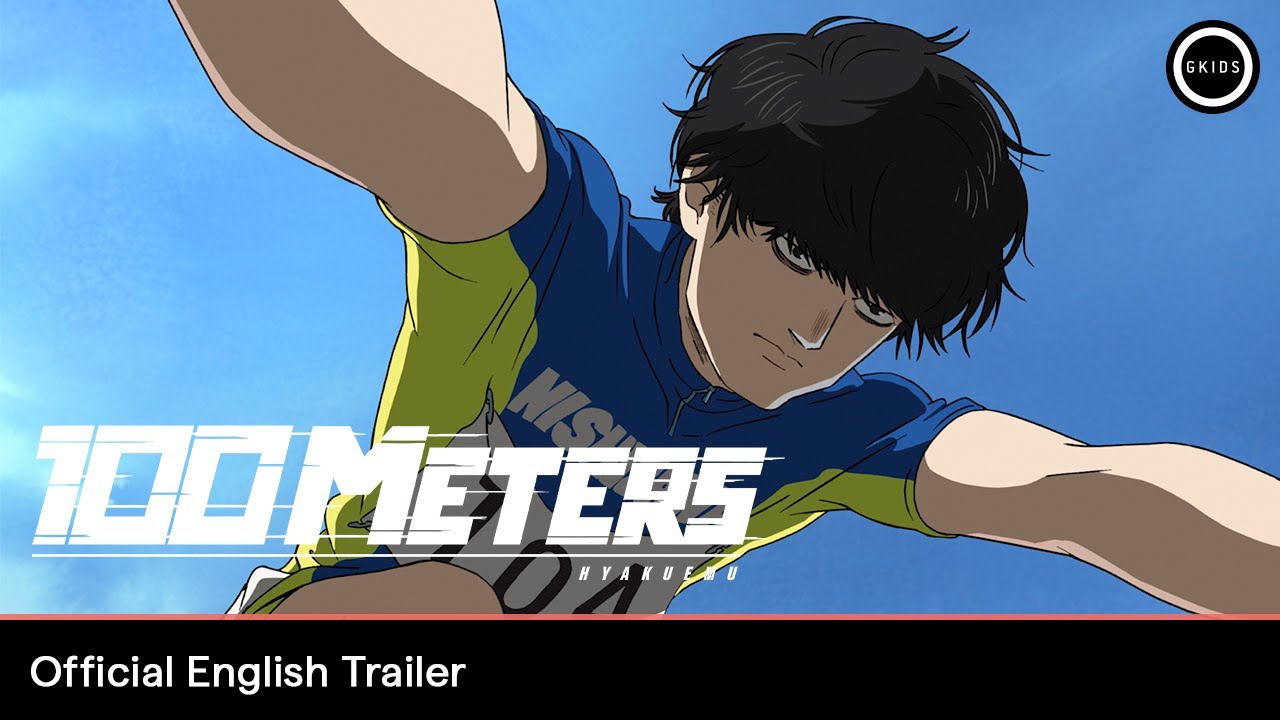
![Official Trailer [Subtitled]](https://img.youtube.com/vi/oXeYSCXSFhs/maxresdefault.jpg)
![Official Teaser Trailer [Subtitled]](https://img.youtube.com/vi/eFhUfxL7Cmg/maxresdefault.jpg)