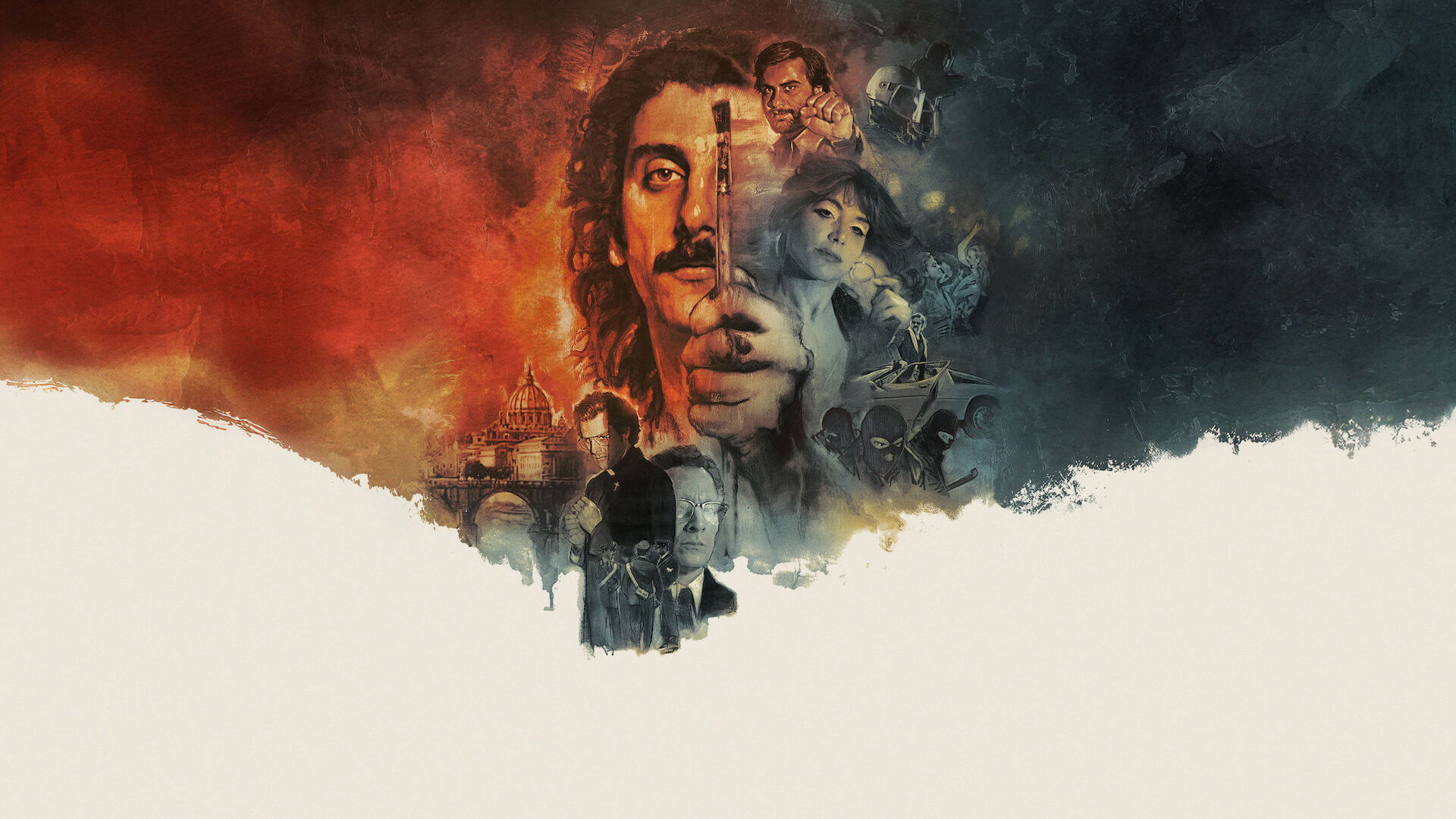
When The Big Fake premiered in January 2026, it arrived with the kind of quiet ambition that often gets overlooked in crowded streaming schedules. Director Stefano Lodovichi took on a project that could have easily become a forgettable crime procedural, but instead crafted something that lingers—a meditation on aspiration, deception, and the blurred lines between art and fraud. The film’s central conceit is deceptively simple: follow Toni Chichiarelli, a man whose legitimate dream of becoming a painter gets tangled up in something far more dangerous. It’s the kind of premise that demands more than surface-level execution, and for the most part, Lodovichi delivers.
The casting choices reveal a director thinking carefully about tone and credibility. Pietro Castellitto carries the film with a performance that walks the tightrope between sympathy and culpability—you understand Toni’s desperation while watching him make increasingly questionable choices. Opposite him, Giulia Michelini brings complexity to what could have been a one-dimensional role, and Andrea Arcangeli rounds out the core ensemble with the kind of supporting work that grounds the narrative in something resembling reality. These aren’t flashy performances designed to win festivals; they’re committed, grounded work that trusts the material.
The film’s greatest strength lies in how it refuses easy answers about morality and ambition. Crime doesn’t announce itself with dramatic music—it whispers through compromises.
The runtime of 1 hour and 50 minutes proves both asset and constraint. There’s an efficiency to the storytelling that keeps momentum building, yet some critics pointed out that the pacing occasionally felt rushed—that the emotional beats arrived a beat too quickly for full resonance. It’s a fair criticism. The first act especially moves with such urgency that character establishment sometimes feels thin. Yet this briskness also prevents the film from becoming self-indulgent, a real danger in the crime-drama genre where filmmakers often mistake runtime for depth.
What makes The Big Fake significant isn’t necessarily its critical reception—a 5.9/10 rating with limited votes reflects the kind of modest, divided response that often comes with ambitious mid-budget thrillers. Rather, it’s what the film attempts within Italian cinema and the broader European crime drama landscape:
- A fresh angle on art-world corruption that doesn’t settle for clichés about galleries and collectors
- Character-driven storytelling that prioritizes psychology over plot mechanics
- Thematic depth exploring how talent, circumstance, and moral flexibility intersect
- Production value that suggests Lodovichi knows how to use a frame and build atmosphere
The film’s financial performance remains opaque—neither budget nor box office figures have been widely publicized—which itself says something about where The Big Fake exists in the contemporary film landscape. It’s a project that came and went through Netflix with relatively little fanfare, the kind of international crime drama that streams have quietly greenlit in recent years as part of their strategy to build non-English prestige programming.
Yet there’s something to be said for ambition that doesn’t require massive commercial validation to matter. Lodovichi clearly studied the rhythms of European crime cinema—you feel echoes of Paolo Sorrentino‘s moral ambiguity and the procedural rigor of better Nordic noir, but filtered through a distinctly Italian sensibility. The production design and cinematography work together to create an environment where desperation feels like weather—it’s everywhere, and nobody remarks on it anymore. That’s the kind of atmospheric storytelling that rewards patient viewers.
Pietro Castellitto deserves particular mention for the way he embodies a specific archetype of modern Italian masculinity: educated enough to know better, charismatic enough to rationalize anything, trapped enough to make dangerous choices seem inevitable. His Toni isn’t a villain or a victim—he’s something more interesting, a man watching himself make mistakes in real time and lacking the willpower or self-awareness to stop. That’s difficult work, playing moral ambiguity without making the character unlikeable.
What’s remarkable about The Big Fake in retrospect is how it operates as a time capsule for 2026 cinema. It’s a film that understands streaming distribution, that knows it won’t get theatrical runs in most markets, and yet refuses to compromise on narrative sophistication or visual presentation. It doesn’t condescend to its audience or oversimplify its themes. In an era where many films are either massive tentpoles or low-budget prestige pieces, there’s something quietly radical about a mid-tier crime drama that just tries to be good.
The film’s legacy may ultimately be modest, but that’s not nothing. It’s a reminder that cinema doesn’t need universal acclaim or blockbuster returns to matter. The Big Fake exists as proof that European filmmakers are still finding ways to tell stories about corruption, ambition, and moral compromise with intelligence and style. Whether audiences discover it next month or three years from now, the film will be there—efficient, thoughtful, and uncompromising about what it is.


![Official Trailer [Subtitled]](https://img.youtube.com/vi/OMeOauwYjRs/maxresdefault.jpg)
![Official Teaser [Subtitled]](https://img.youtube.com/vi/pOtME1Ah6dI/maxresdefault.jpg)