When James Vanderbilt set out to make Nuremberg, he was tackling one of history’s most consequential moments—the trials that followed World War II’s devastation. What emerged was something quietly remarkable: a film that proved you don’t need a bloated budget to create something that resonates deeply with audiences. With just $11.8 million to work with, Vanderbilt crafted a courtroom drama that ultimately grossed over $37 million worldwide, becoming one of those rare films that understands the power of restraint in storytelling.
The film’s initial box office trajectory in the United States was modest—a $3.8 million opening weekend followed by a relatively contained domestic run of around $15 million. But here’s where the real story kicks in. Nuremberg didn’t peak and fade. Instead, it became what industry observers started calling a “hidden gem,” finding its audience internationally and through sustained interest rather than opening weekend spectacle. In Italy alone, it grossed over $8 million, outperforming major awards contenders like Conclave. This kind of long-tail success speaks to something important: audiences are hungry for substantive historical drama, even when it arrives without massive marketing campaigns or franchise recognition.
> Judgment is coming. The tagline promised accountability, and the film delivered something rare—a meditation on justice that feels urgent precisely because it’s examining questions we’re still grappling with today.
What makes Nuremberg significant in the landscape of contemporary cinema is its refusal to simplify its subject matter. The 2 hour 28 minute runtime allows Vanderbilt to explore the moral complexities of prosecuting Nazi leadership without resorting to melodrama. The directing approach privileges dialogue and performance over spectacle, a choice that feels almost countercultural in 2025. There’s a deliberate pace here, a respect for the audience’s intelligence that’s become increasingly rare.
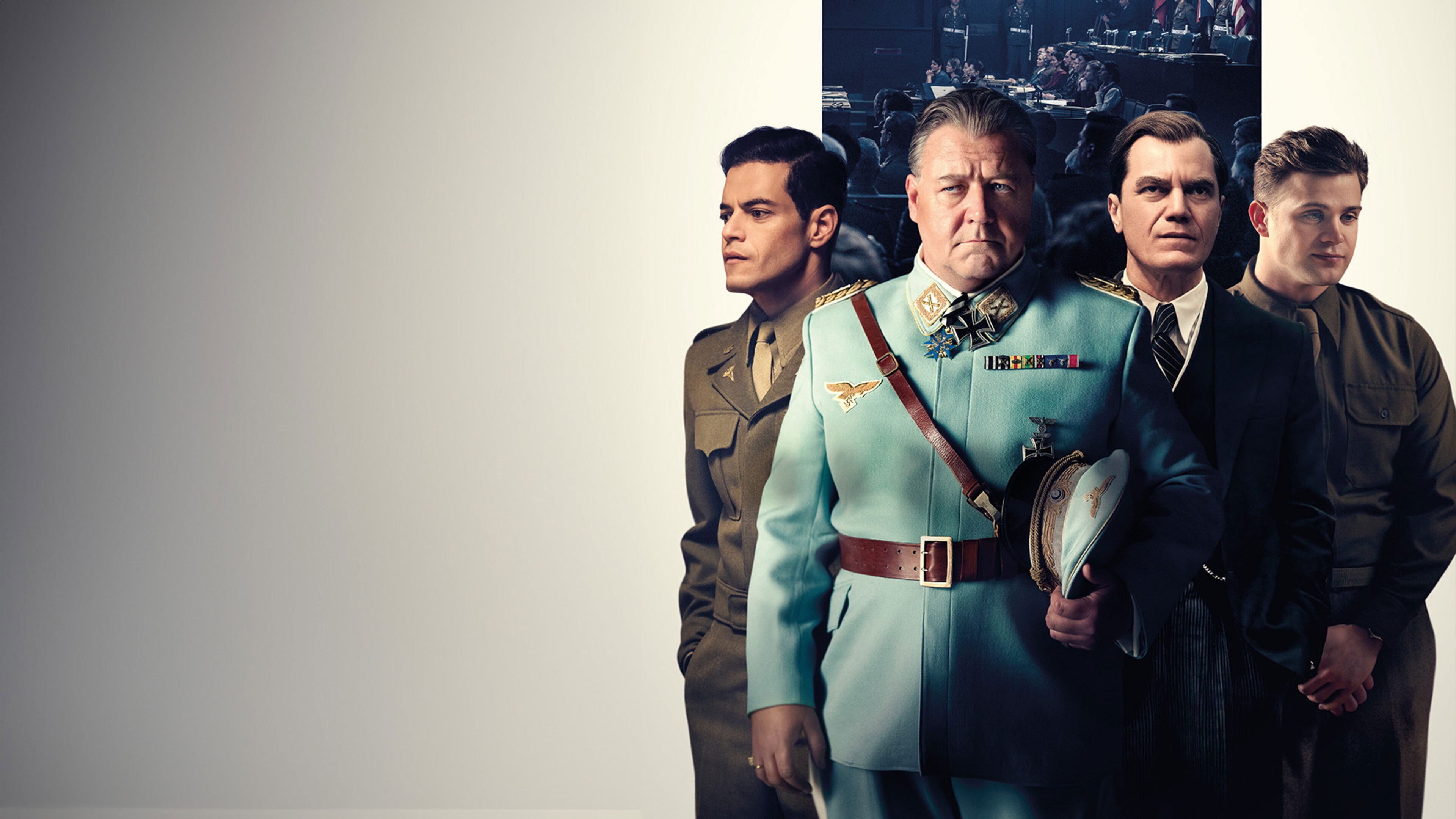
The ensemble cast carries the film’s thematic weight with precision:
- Russell Crowe grounds the narrative as a man navigating the impossible task of seeking justice after unimaginable atrocity
- Rami Malek brings intellectual rigor and moral conviction to scenes that could easily become didactic
- Michael Shannon embodies the film’s exploration of how ordinary people participate in extraordinary evil
The chemistry between these performers creates a tension that’s cerebral rather than physical. This isn’t a courtroom thriller in the conventional sense—there are no last-minute revelations or dramatic cross-examinations designed for applause. Instead, Vanderbilt trusts his actors to find humanity in the proceedings, to show us how justice gets forged through meticulous argument rather than righteous fury.
The critical reception—a solid 7.4/10 from nearly 450 votes—reflects something interesting. It’s not the kind of score that generates Oscar buzz or generates think pieces about snubs, but it suggests consistent quality. Viewers recognized what Vanderbilt accomplished: a film that takes its subject seriously without becoming a textbook, that entertains while educating, that provokes without preaching.
What’s particularly striking about the film’s cultural moment is its relevance:
- It arrived when questions about war crimes accountability, international justice, and how societies reckon with atrocity feel contemporary rather than historical
- The film demonstrates that historical drama can achieve both commercial viability and artistic integrity
- It proved that mid-budget prestige projects can still find audiences without franchise attachment or star power in traditional blockbuster mode
The collaboration between Vanderbilt and his creative team at Bluestone Entertainment, Walden Media, Filmsquad, Mythology Entertainment, and Titan Media produced something that punches above its budgetary weight. This is smart filmmaking—knowing what to spend money on (the actors, the script, the time to get performances right) and what to minimize (unnecessary production design, rushed schedules). The result is a film that feels substantial without feeling expensive.
In terms of legacy, Nuremberg may prove to be one of those films that gets rediscovered and reassessed as time passes. It didn’t dominate the awards conversation or generate the kind of immediate cultural saturation that defines “important” films in our current moment. But it did something arguably more valuable: it made a serious film about a difficult subject that audiences wanted to see. It demonstrated that there’s still an appetite for cinema that trusts viewers to sit with moral ambiguity and historical complexity.
The film’s international success, particularly its strong performance outside North America, suggests that Vanderbilt’s approach resonated across different cultural contexts. A story about accountability and justice apparently matters in Italy, across Europe, and anywhere people are thinking about how societies process historical trauma. That’s the kind of reach that usually signals something has genuinely connected rather than merely entertained.
What Nuremberg ultimately represents is a kind of filmmaking that’s increasingly precious: intelligent, modestly-budgeted historical drama that respects both its subject matter and its audience. In an industry often fixated on opening weekends and franchise potential, a film that built its success slowly, internationally, and through word-of-mouth feels like a small victory for cinema itself.