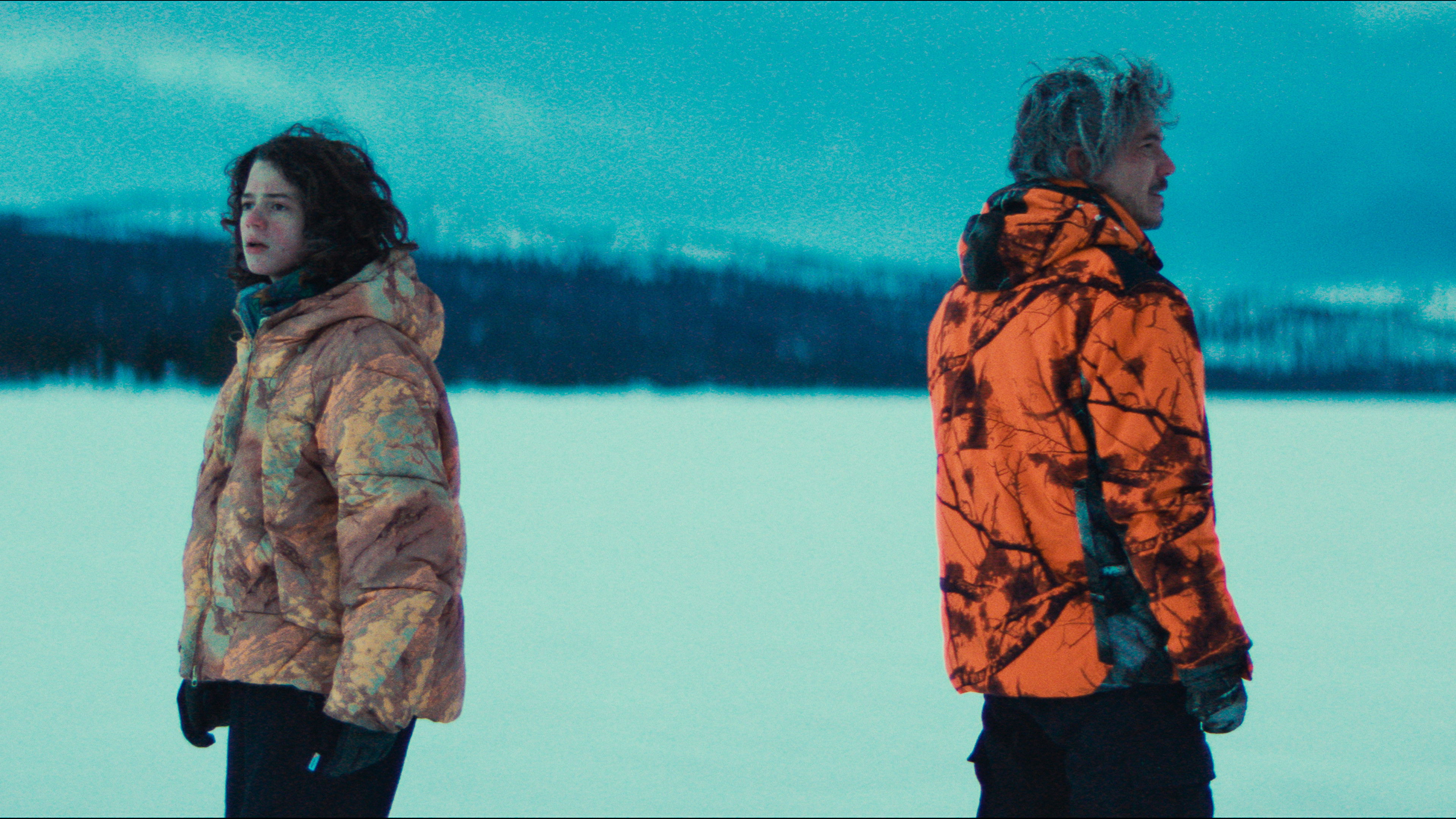
There’s something quietly compelling about a film that chooses to sit with uncomfortable silences rather than fill them with exposition. Vladimir de Fontenay’s Sukkwan Island is shaping up to be exactly that kind of movie—the type that will haunt viewers long after they leave the theater when it’s scheduled to release on February 4th, 2026. While we’re still months away from seeing it in cinemas, the buzz around this Franco-Norwegian co-production tells us we’re dealing with something genuinely meaningful.
At its core, Sukkwan Island explores one of cinema’s most resonant themes: the fractured relationship between fathers and sons, and the possibility—or impossibility—of repair. The premise itself carries weight: a haunted young man returns to a remote island to reconnect with his father and confront a traumatic experience they shared a decade earlier. It’s a deceptively simple setup that suggests depths we’ll only understand once the film unfolds on screen.
The creative team assembled here gives real reason for anticipation:
- Vladimir de Fontenay directing with a clear artistic vision focused on atmosphere and psychological complexity
- Swann Arlaud bringing his characteristic intensity and vulnerability to the lead role
- Woody Norman as the younger co-lead, continuing his momentum from acclaimed work in recent years
- Alma Pöysti rounding out the cast with her nuanced, understated approach to character work
- An international production team (Haut et Court, Maipo Film, Versus Production, Good Chaos, Aurora Studios) signaling serious ambition and resources
What’s particularly intriguing is how this film is being positioned as a survival thriller—but one where the real survival isn’t against the elements. Critics from Sundance have already noted how Arlaud and Norman “battle the elements,” yet the true struggle clearly exists in the emotional and psychological space between these two characters. That’s where the real danger lies.
The wilds and waters of Sukkwan Island remain unknowable to the last—a quality that transforms what could be a straightforward reconciliation narrative into something far more complex and troubling.
The setting itself functions almost as a character. Remote islands have long served as proving grounds in cinema, places where civilization’s rules dissolve and people are forced to confront their rawest selves. De Fontenay appears to be using the Norwegian landscape not as mere backdrop but as an active force—beautiful but indifferent, scenic but isolating. It’s a choice that immediately distinguishes Sukkwan Island from more conventional father-son dramas that unfold in domesticated spaces.
What makes this particularly relevant to cinema in 2026:
-
The return of intimate character studies – In an era increasingly dominated by franchise filmmaking, films that trust their audiences to engage with complex emotional landscapes remain vital and increasingly rare
-
International collaboration as artistic strength – The combination of French, Norwegian, and pan-European production companies suggests a film unbound by the constraints of any single national cinema’s expectations
-
Quiet filmmaking as counterculture – There’s almost radical intent in making a film that refuses easy answers or redemptive arcs, that leaves mysteries “unknowable to the last”
-
The psychological thriller as vehicle for truth – Rather than relying on plot mechanics, this appears to use thriller elements to access deeper emotional truths
The runtime of 1 hour 53 minutes is notably deliberate—long enough to breathe, short enough to maintain tension without ever feeling bloated. De Fontenay clearly understands that the power of this story doesn’t depend on excessive running time, but on emotional precision. Every scene will need to earn its place.
Currently sitting at a 0.0/10 on IMDb simply due to lack of votes (it hasn’t been released yet), Sukkwan Island arrives unmarked by audience reception—which is precisely where it should be. This is a film we’ll discover together, without the weight of consensus shaping our expectations. That’s increasingly rare and genuinely valuable.
The film’s road to February 2026 has already involved significant institutional support. The UK Global Screen Fund backing, with over £448,000 in international distribution funding awarded, suggests that gatekeepers and advocates within the industry recognize something worth protecting and promoting here. This isn’t a film that snuck through; it’s one that earned its place.
What we’re really anticipating with Sukkwan Island is a conversation—about fathers and sons, about trauma and whether distance can ever truly heal it, about what we owe to those who shaped us, and what happens when we return to the scenes of our deepest wounds. In a cinematic landscape often obsessed with answers, De Fontenay seems interested in questions that don’t resolve neatly. That’s exactly the kind of film we need to be watching for.