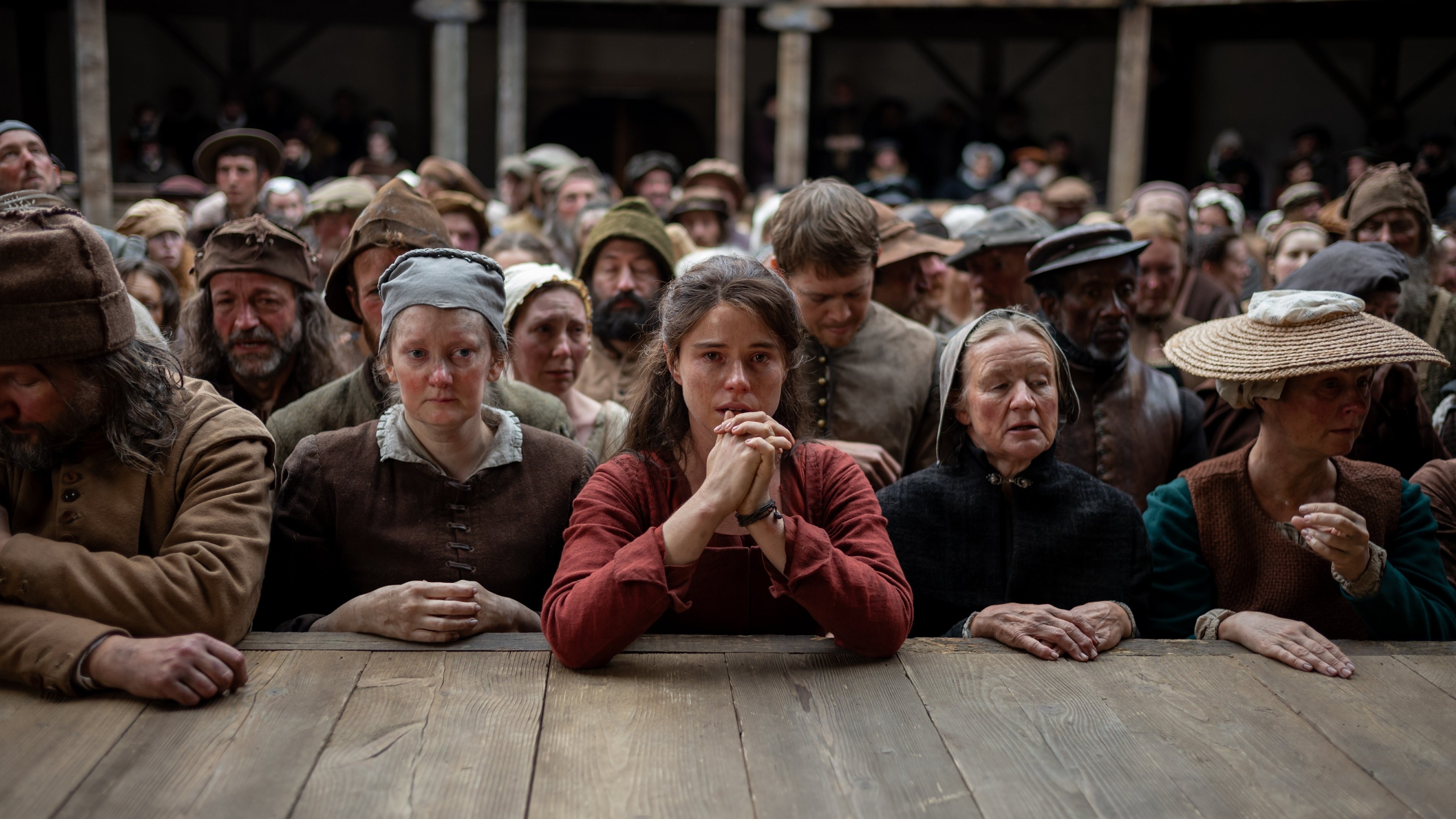
When Chloé Zhao’s Hamnet premiered in late November 2025, it arrived carrying the weight of considerable expectations—a $30 million investment, the backing of Steven Spielberg through Amblin Entertainment, and the artistic pedigree of a director who’d already won an Oscar. But what makes this film matter isn’t just its prestigious credentials. It’s the deeply human story it tells about love, loss, and creative legacy, told with a visual and emotional delicacy that feels increasingly rare in contemporary cinema.
The narrative centers on the personal tragedy behind Shakespeare’s greatest works, imagining the relationship between the playwright and his wife Anne Hathaway, and the devastating loss that would haunt him forever. It’s intimate, ambitious, and achingly tender—a portrait of artistic genius filtered through the lens of ordinary grief. At its core, Hamnet asks a question that resonates far beyond the Elizabethan setting: what happens to love when it becomes art?
The performances anchor everything here. Jessie Buckley brings a fierce, intelligent presence to Anne, refusing to let her become merely a muse or supporting character in someone else’s story. She’s grieving, powerful, and fully alive—a woman with her own inner world that the film takes seriously. Paul Mescal, meanwhile, captures Shakespeare not as the towering historical figure but as a man struggling with guilt, ambition, and the terrible knowledge that he cannot write his way out of loss. Emily Watson rounds out the ensemble with characteristic grace, lending the film an additional emotional depth in her supporting role. The chemistry between these actors feels earned and genuine, creating moments that linger long after the credits roll.
Zhao’s directorial vision is what ultimately distinguishes Hamnet from conventional period drama. Her approach—developed through films like Nomadland and The Eternal Memory—favors intimate observation over spectacle. The film’s 2 hour 6 minute runtime never feels padded; instead, it moves with purpose, allowing scenes to breathe and characters to fully inhabit their emotional truth. She shoots the English countryside with the same documentary-inflected realism she’s brought to contemporary settings, grounding the supernatural elements and symbolic moments in tangible human experience. The tagline—”Keep your heart open”—feels like Zhao’s artistic statement: Hamnet is fundamentally a plea for emotional vulnerability in an increasingly guarded world.
> “This is filmmaking that trusts its audience to sit with complexity and ambiguity, that doesn’t feel obligated to explain or simplify the messy reality of grief and creativity.”
The box office reality, however, tells a more complicated story. With $18 million in global returns against a $30 million budget, Hamnet underperformed commercially—a sobering reminder that even prestigious projects with stellar casts and acclaimed directors can struggle to find their full audience in theatrical releases. This gap between artistic ambition and commercial viability has become one of the defining tensions of contemporary cinema, and Hamnet found itself caught in that difficult middle ground. It wasn’t a prestige picture quiet enough for the arthouse circuit, nor spectacular enough for mainstream audiences seeking escapism.
Yet critically, the film has found its defenders. The 7.7/10 rating reflects a certain measured appreciation rather than universal acclaim, but the nomination landscape tells a different story. Hamnet secured a Best Picture nomination at the 2026 Academy Awards, affirming its place within the conversation about significant cinema. Chloé Zhao herself became only the second female director to earn multiple nominations in this category, a historic achievement that speaks to the industry’s gradual recognition of women’s voices in auteur-driven storytelling.
What makes Hamnet culturally significant extends beyond traditional awards recognition:
- It demonstrates that there remains an appetite for intimate, character-driven drama on the big screen, even when box office numbers suggest otherwise
- The film engages meaningfully with questions of artistic legacy, particularly how male creators have historically overshadowed the women who sustained and inspired them
- Its visual language—blending naturalism with subtle magical realism—has already influenced how subsequent filmmakers approach historical material
- It affirms that Chloé Zhao, despite her Oscar wins, remains an artist willing to take unconventional approaches to well-known stories
The legacy of Hamnet will likely be one of those interesting cases where initial commercial disappointment gives way to deeper critical reassessment over time. Future filmmakers will study how Zhao constructed emotional authenticity within a period framework. Audiences discovering it on streaming platforms or in retrospective screenings will find a work that repays close attention and repeated viewing. The collaboration between Zhao, her cinematographer, her designers, and her extraordinary cast created something that doesn’t easily fit into existing categories—and maybe that’s exactly what cinema needs.
Hamnet reminds us that art made with genuine emotional conviction, even when it doesn’t immediately connect with mass audiences, possesses a kind of durability. In an era of franchise saturation and algorithmic content, here was a major studio backing a meditative, melancholic exploration of love and artistic creation. That alone makes it worth remembering.