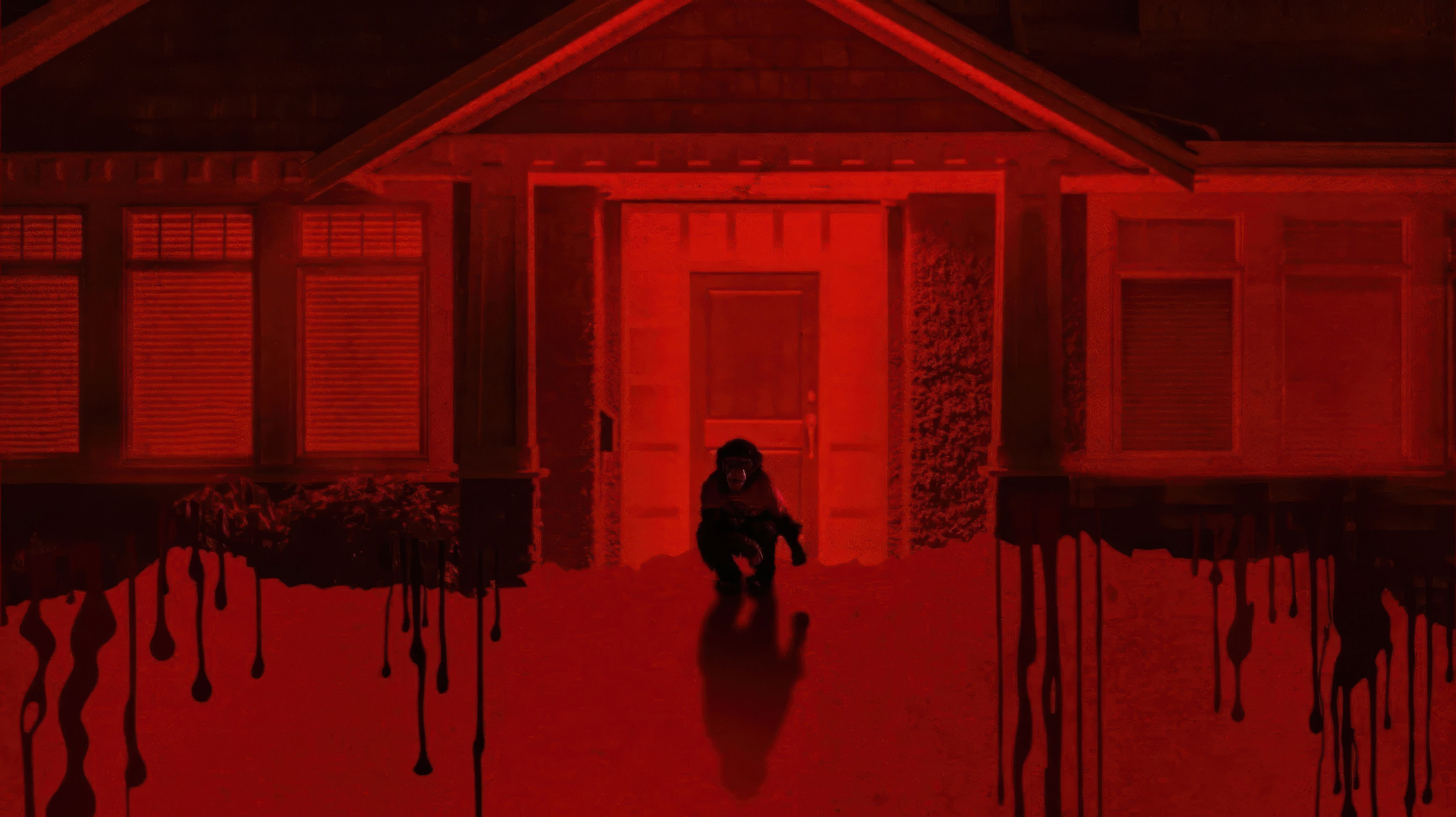
When Johannes Roberts released Primate in early 2026, it arrived during a particularly crowded moment in cinema—sandwiched between the juggernaut momentum of Avatar: Fire and Ash and a marketplace still figuring out what audiences actually wanted. The film’s tagline, “Something’s wrong with Ben,” promised something unsettling, something intimate. What Roberts delivered was a lean, claustrophobic thriller that proved you don’t need a massive budget to create genuine unease. With only $21 million to work with, Primate managed to scrape together $18.095 million at the box office—a result that, on paper, looks like a modest disappointment. But that’s the wrong way to look at what actually happened here.
The real story isn’t about money. It’s about how Roberts, working with cinematographer partners and a cast led by Johnny Sequoyah’s unsettling central performance, crafted something that lingered in viewers’ minds long after its brisk 89-minute runtime ended. Roberts has always understood that horror thrives in constraint—whether temporal, spatial, or budgetary. His track record shows a director who weaponizes limitation, and Primate is perhaps his most refined application of that philosophy.
What made Primate genuinely distinctive came down to several creative choices that elevated it beyond standard thriller territory:
- The confined setting that gradually becomes a cage for both character and audience
- Johnny Sequoyah’s unnerving performance as Ben, shifting from sympathetic to deeply disturbing
- Troy Kotsur’s understated presence, bringing gravitas to what could have been a secondary role
- Jessica Alexander’s emotional anchor, grounding the escalating chaos in genuine human terror
The cast deserves real credit here. Sequoyah, in particular, delivered something that critics described as profoundly unsettling—a performance that made audiences question what they were rooting for, when they should have been rooting for anyone at all. It’s the kind of character work that doesn’t always translate into award recognition, but it absolutely reshapes how viewers process the film on a second viewing. And that’s where Primate found its real audience: in the conversations after, in the rewatches, in the Reddit threads parsing exactly what went wrong with Ben.
The film’s critical reception—a 6.7/10 rating based on early votes—tells us something interesting: Primate wasn’t universally beloved, but it wasn’t dismissible either. It was divisive. It generated discussion.
This matters more than raw scores suggest. Horror and thriller audiences have become increasingly sophisticated about what they reject versus what they champion. A middling score for an unconventional thriller often means it attempted something risky, succeeded for some viewers, and failed to connect with others. That’s not a failure of the film; that’s a success of artistic intent.
Roberts’ visual approach in Primate showcased why his eye for dread has become increasingly important in contemporary horror.
Rather than relying on jump scares or creatures lurking in shadows, he built tension through:
- Negative space—what’s not shown becomes more terrifying than what is
- Sound design choices that make mundane environments feel hostile
- Camera placement that positions the audience as unwilling observers rather than passive spectators
- Pacing that respects the runtime—no wasted scenes, every minute earning its place
The decision to keep things under 90 minutes wasn’t a limitation; it was a stylistic statement. Roberts rejected the modern thriller convention of bloat, instead delivering something that felt like a punch to the gut precisely because it didn’t overstay its welcome.
From a cultural standpoint, Primate arrived at an interesting moment in horror cinema. The genre was (and remains) dominated by elevated horror commentary on class, race, and trauma—think Get Out, His House, Master. Primate didn’t ignore these dimensions, but it was less interested in explicit social messaging than in the raw mechanics of psychological deterioration. This actually made it more challenging for some audiences to categorize and appreciate. It was closer to Hereditary in its commitment to dread-building than to the more thesis-driven horror of its contemporaries.
The ensemble deserves individual recognition beyond simply praising the cast as a whole. Troy Kotsur, who has become such a vital presence in contemporary cinema, brought a specific kind of authenticity to his role that many actors would have overlooked. His scenes contained a gravity that made the film’s escalating tension feel grounded in emotional reality rather than plot mechanics. Jessica Alexander, similarly, resisted the urge to play victim; instead, she created a character actively trying to solve an unsolvable problem, which generates its own particular species of horror.
The financial performance of Primate—while not hitting the stratospheric numbers needed for a blockbuster—actually demonstrates something healthy about the film marketplace. It found its audience despite massive competition. It opened against Avatar: Fire and Ash‘s continued dominance and held its own with viewers specifically seeking something different. That’s not a flop; that’s a film understanding its lane and executing within it. In an era of franchise saturation, Primate proved there’s still room for original thriller concepts with serious creative intent backing them up.
What we’ll remember about Primate five years from now isn’t its box office haul or critical score. It’s those moments when Roberts’ camera held on Sequoyah’s face just a beat too long. It’s the sound of something shifting in a room you thought you understood. It’s the creeping realization that the protagonist might be the actual threat.
That’s cinema that works. That’s craft. That’s why Primate matters.