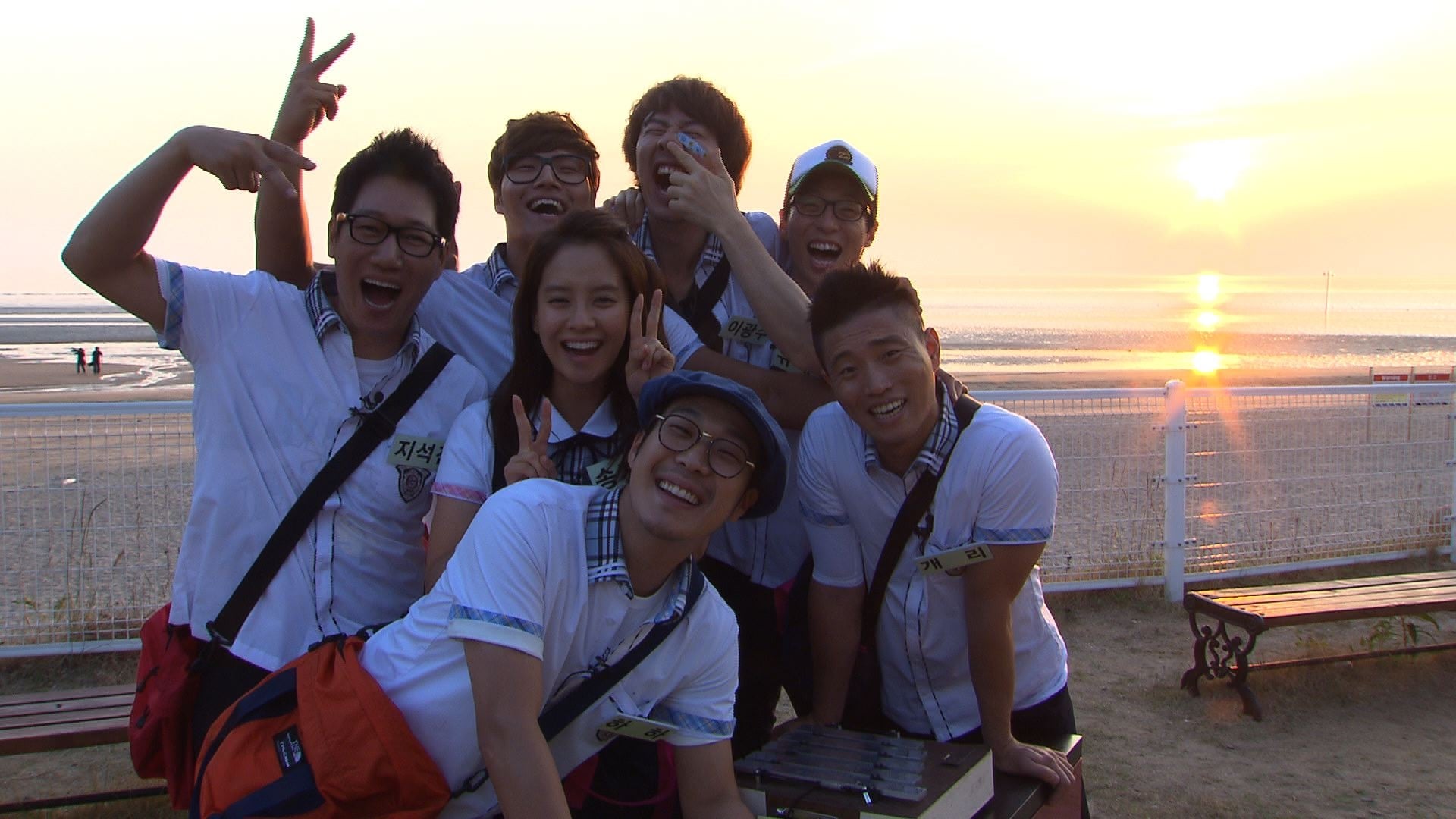
When Running Man premiered on July 11, 2010, very few people predicted it would become one of the most enduring television phenomena in modern entertainment history. What started as an experimental variety show on SBS has quietly become a cultural institution—a show that doesn’t just occupy a time slot, but genuinely redefined what reality-comedy television could be. Over a decade later, with 788 episodes under its belt and a consistent 8.3/10 rating that speaks to its loyal fanbase, this is a series that deserves serious critical attention.
The genius of Running Man lies in its deceptively simple premise. Creators Jo Hyo-jin, Kim Joo-hyung, and Lim Hyung-taek took a straightforward concept—celebrities competing in games and missions—and stripped away the pretense. There’s no overwrought narrative. There’s no manufactured drama. Instead, what emerges is something far more valuable: authentic human interaction under pressure. The 85-minute runtime became the perfect vessel for this approach, allowing episodes to breathe, for jokes to develop naturally, and for genuine relationships between cast members to become the real entertainment.
What makes Running Man such a landmark achievement is that it managed to stay fresh across nearly 800 episodes by understanding a crucial truth about television: people watch people, not concepts. The show’s format—physical games, mental challenges, unexpected twists—became almost secondary to the personalities involved. Whether it’s the competitive fire of certain members, the comedic timing of others, or the surprising vulnerabilities that emerge, viewers found themselves invested in these individuals as characters in an unfolding story.
The cultural footprint of this series cannot be overstated. Here’s what positioned it as genuinely significant:
- Established a new gold standard for Korean variety television that influenced countless shows that followed
- Created iconic moments that fans reference and revisit constantly, building a generational connection to the material
- Proved that episodic reality-comedy could sustain audiences for over a decade without gimmicks or manufactured controversies
- Developed a global fanbase that extends far beyond Korea through streaming platforms like Rakuten Viki, OnDemandKorea, and Kocowa
The show didn’t just entertain—it became a conversation starter about how television could balance spontaneity with structure, competition with camaraderie, humor with genuine stakes.
What’s particularly impressive about Running Man’s longevity is that it resisted the temptation to fundamentally alter its formula. While other shows chase trends, this series trusted its foundation. The creators understood that consistency is a feature, not a limitation. Cast members could come and go, game formats could evolve, special episodes could introduce celebrity guests, but the core remained intact: real people, genuine competition, and unscripted reactions.
This approach paid dividends in audience loyalty. The show maintained its presence in the cultural conversation not through shock value or manufactured drama, but through the simple act of delivering what it promised, week after week. That kind of reliability became increasingly rare in television, which made Running Man feel like a trusted friend—something you could always count on to deliver entertainment.
The technical and creative execution deserves recognition too. With each episode running approximately 85 minutes, the pacing requires careful calibration. Too loose, and the show drags. Too tight, and you lose the character moments that make it special. The production team consistently nailed this balance, creating episodes that feel like natural stories rather than edited-together footage. You can sense the intelligence behind what to show, what to linger on, and what to cut away from.
The game designs themselves showcase remarkable creativity. Rather than relying on technological flash or expensive set pieces, the show often derived its entertainment from simple, elegant challenges that exposed human nature. A memory game becomes hilarious when competitive instincts clash with inevitable cognitive limitations. A physical challenge becomes gripping when it reveals which members have actual athletic ability versus which ones only thought they did.
Beyond the mechanics, Running Man became significant because it created a shared universe of inside jokes and recurring elements that deepened viewer engagement. Fans didn’t just watch episodes in isolation—they experienced an ongoing narrative where character dynamics evolved, where certain running gags returned in unexpected ways, where the chemistry between cast members became as compelling as any scripted drama relationship.
The show’s influence on the television landscape has been substantial, though often uncredited. It demonstrated that:
- Reality-comedy television could achieve critical respect (an 8.3/10 rating maintained across 788 episodes is genuinely exceptional)
- Spontaneity could be structured without losing its essential nature
- Longevity through consistency could outperform flashy shows built for short viral moments
As the series maintains its “Returning Series” status, it’s worth acknowledging that Running Man achieved something increasingly rare: cultural staying power through sheer quality and consistency. It’s a show that earned its audience’s trust, episode by episode, and never squandered it. That’s not just good television—that’s a genuine achievement in an industry often chasing the next trend.



![[RUNNINGMAN BEGINS] [EP 1 TEASER] | Ten Years Ago, On This Day, They Begun To Run! (ENG SUB)](https://img.youtube.com/vi/v90RObJapJI/maxresdefault.jpg)