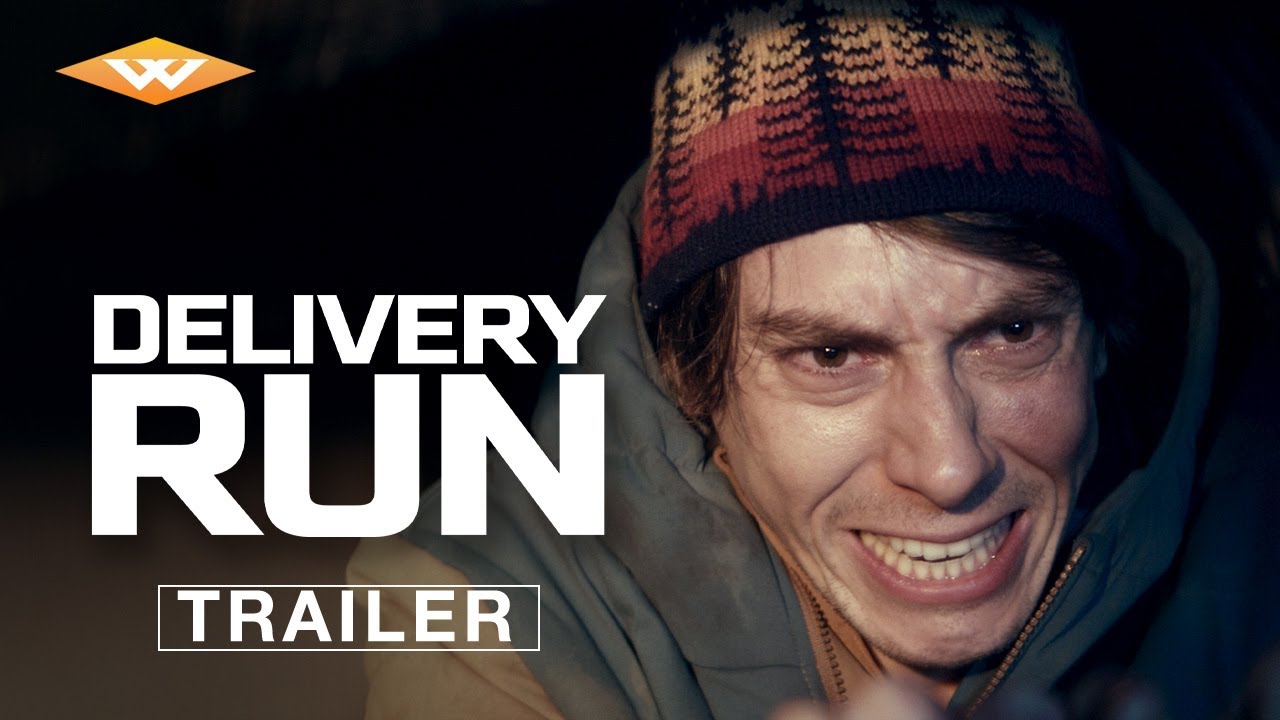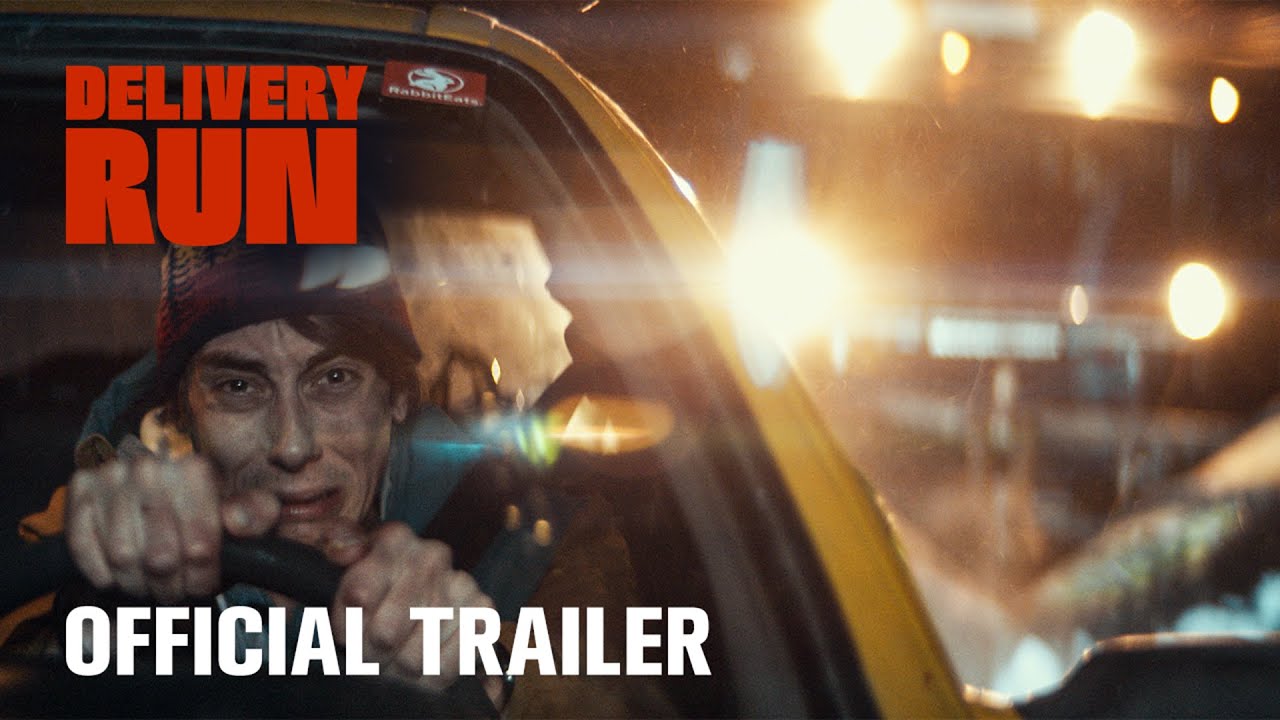
When Joey Palmroos released Delivery Run in September 2025, he handed us something deceptively simple on the surface: a food delivery driver named Leland “Lee” Shaw caught in a nightmarish chase across the frozen Minnesota wilderness.
But what makes this film worth talking about isn’t just the premise—it’s what Palmroos does with those 84 minutes, squeezing genuine tension and character complexity out of a high-concept thriller that could’ve easily collapsed into B-movie territory.
The setup is immediately relatable, which is precisely why it works. Lee Shaw is drowning in debt, hounded by a loan shark, and just trying to survive another shift delivering food in snowy Nisswa, Minnesota. Then something goes catastrophically wrong.
He’s pursued by a crazed snowplow driver for reasons that remain frustratingly unclear—and that ambiguity is intentional. It’s the engine that drives everything forward. There’s no grand villain monologue explaining motivations, no convenient exposition dump. Just a man running for his life across an unforgiving landscape, trying to outsmart an opponent who seems to understand the terrain better than anyone alive.
“Outsmart or be overtaken” — The tagline isn’t just marketing speak; it’s the film’s entire philosophy. There’s no room for heroic action sequences or clever dialogue. This is pure survival instinct.
What Palmroos understood about modern thriller filmmaking is something a lot of bigger-budget productions get wrong. He didn’t need a massive studio backing or a bloated runtime to create sustained tension. Instead, he worked within constraints and let those constraints become creative strengths.
Here’s what that approach gave us:
- Relentless pacing that never gives the audience time to question the premise
- Economic storytelling that respects the audience’s intelligence
- Environmental storytelling where Minnesota’s frozen landscape becomes as much a threat as the antagonist
- Character grounding that makes Lee’s desperation feel authentic, not manufactured
The casting of Alexander Arnold in the lead role proved to be the right choice for this kind of stripped-down thriller. Arnold brings a weariness to Lee Shaw that grounds the entire film—this isn’t a hero waiting for his moment, it’s an ordinary person in extraordinary circumstances, and that distinction matters enormously. With Liam James Collins and Joe Gallina rounding out the cast, the ensemble created a lived-in world that felt genuine despite the high-concept premise.
When a film with an unknown budget went head-to-head against major releases without the backing of a major studio, its 5.8/10 rating from early voters tells an interesting story. It wasn’t universally loved, but it clearly resonated with specific audiences.
That’s actually more interesting than universal acclaim. Universal acclaim is forgettable. Polarizing films—films that some audiences find electrifying and others find frustrating—those are the ones that stick in the cultural conversation. And Delivery Run definitely landed in that space.
The film premiered at Grimmfest in early October 2025 before rolling out to select theaters and digital platforms by mid-October, which is exactly the right release strategy for a micro-budget thriller that doesn’t need massive box office numbers to justify its existence.
The significance of Delivery Run within the action-thriller landscape has less to do with breaking new ground and more to do with proving that constraint breeds creativity. In an era where streaming platforms have completely democratized film distribution, we’re seeing a new generation of filmmakers who understand something fundamental: you don’t need $100 million to make something that grips an audience. You need clarity of vision, effective casting, and respect for the audience’s time.
What makes this film’s legacy worth considering is the template it provides. Here’s what future filmmakers can learn from it:
- Tight runtime isn’t a limitation—it’s a feature that forces every scene to earn its place
- Ambiguity about motivation can be more unsettling than clear-cut villainy
- Location as character works in thrillers as well as in character dramas
- Unknown or limited-name casts can actually build audience investment rather than distract from it
The broader cinematic landscape in 2025 is increasingly fractured between massive franchise tentpoles and intimate, low-budget productions. Delivery Run exists firmly in the latter category, and it demonstrates that there’s genuine appetite for thrillers that operate on a smaller scale. Not every thriller needs to be about saving the world. Sometimes the highest stakes are simply personal survival.
Arctic Renegades, the production company behind Delivery Run, showed real judgment in how they positioned this film. They didn’t oversell it. They didn’t add unnecessary exposition. They let the premise and the execution speak for themselves.
The critical reception being mixed—sitting at that 5.8/10 rating—actually reinforces the film’s legitimacy as a serious work rather than a crowd-pleasing entertainment. It suggests a film with edges, with choices that won’t work for everyone. And in a streaming-dominated landscape where algorithmic recommendations tend toward the blandly inoffensive, films that polarize audiences are doing important cultural work.
What endures about Delivery Run isn’t going to be memorability in the conventional sense. No one’s going to quote it at parties or dress as the characters for Halloween. But filmmakers, critics, and engaged viewers will remember it as evidence of something important: that in 2025, when anyone with a camera can theoretically make a film, the ones that break through are the ones that marry clear artistic vision with disciplined execution. Palmroos gave us a taut 84-minute thriller that understood its own DNA and never apologized for what it was.
In the long shadow cast by this film, we might see other micro-budget thrillers leaning into similar territory—using real locations, building tension through character vulnerability rather than spectacle, and trusting their audiences to handle ambiguity. That’s the kind of lasting influence that matters more than any box office number.