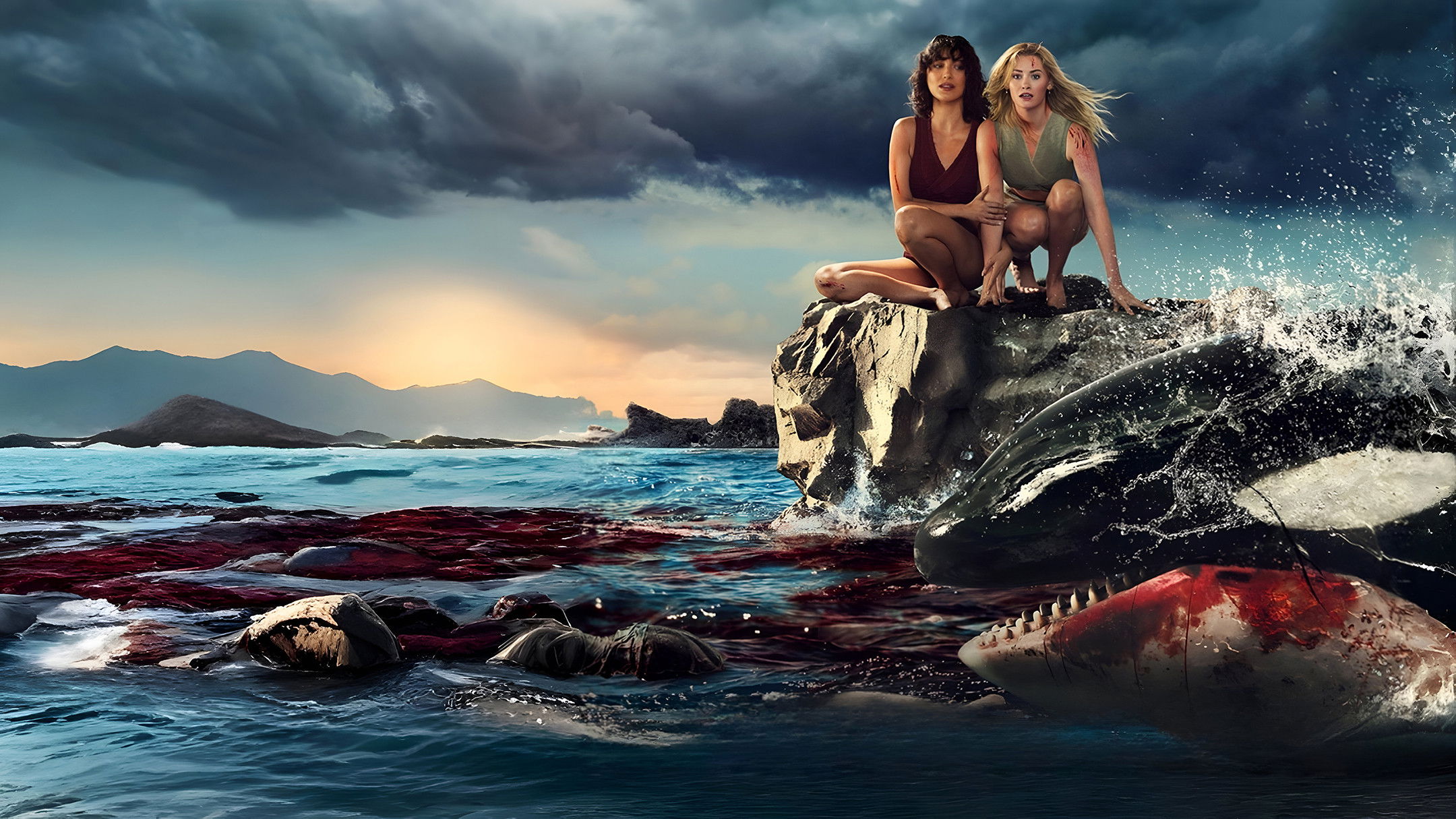
When Killer Whale came ashore on January 16, 2026, it arrived with a simple but effective premise: what happens when humanity’s trauma meets nature’s fury? Director Jo-Anne Brechin took what could have been a straightforward creature-feature thriller and attempted something more psychologically ambitious.
The result was a lean, ninety-minute plunge into murky waters—both literally and emotionally—that would spark genuine conversations about how we tell stories involving wildlife, survival, and the ghosts we carry with us.
The film’s journey through critical waters wasn’t without turbulence. With a 6.1/10 rating across 27 votes, Killer Whale occupied that peculiar space where audiences recognized what Brechin was attempting, even if the execution didn’t always land smoothly. It’s worth noting that this middle-ground reception actually tells us something important: the film was divisive in a way that matters more than unanimous dismissal ever could.
The core premise revolves around Trish, a woman grappling with devastating personal loss, who finds herself in the presence of an apex predator. It’s feeding time for more than just the orca.
What makes Killer Whale significant isn’t that it reinvented the animal-attack thriller—a genre that’s been swimming since Jaws first traumatized audiences. Rather, Brechin brought an introspective sensibility to a traditionally visceral subgenre. The collaboration between Virginia Gardner, Melanie Jarnson, and Mitchell Hope created something that felt more akin to character study than jump-scare spectacle.
The production itself reflected an interesting moment in global cinema. The international consortium behind the film—drawing together studios like Jaggi Entertainment, Head Gear Films, Asia Pacific Film Group, and Screen Queensland—represented the kind of cross-continental collaboration that’s become increasingly common in mid-budget thriller production. This wasn’t a massive studio tentpole, nor was it an indie passion project. It occupied the middle ground where interesting risks actually get taken.
Virginia Gardner carried the emotional weight of the narrative on her shoulders, and it’s here where the film’s ambitions become clearest. Rather than playing a typical “scream queen” or resourceful survivor, Gardner’s Trish becomes a vessel for examining how grief transforms us.
She brings a vulnerability and interiority to the role that elevates what could have been stock dialogue and familiar beats. There’s something genuinely haunting about watching an actor convey the moment when external threat forces internal reckoning.
The film’s critical reception, while mixed, revealed something worth understanding about contemporary audiences:
- Critics felt the tension never quite crystallized into something truly terrifying
- The orca itself remained more concept than threat in viewers’ minds
- Yet something about the emotional core lingered with those who engaged seriously with it
- The short runtime worked against building the sustained dread the genre typically demands
- Audiences recognized Brechin’s ambition even when her execution faltered
What’s particularly interesting about Killer Whale is what it attempted during a moment when the thriller genre was being pulled in multiple directions. The early 2026 marketplace was crowded with everything from elevated horror to nostalgic creature features. In the shadow of Brechin’s predecessors and contemporaries, she chose to pursue something more introspective and melancholic than the marketing tagline—“It’s feeding time”—might suggest.
The box office performance remains undisclosed, which in itself tells us something about the film’s trajectory. When studios don’t publicize numbers, it usually indicates moderate returns rather than spectacular failure or success. Killer Whale seems to have found its audience across theatrical, digital, and VOD platforms without becoming a cultural touchstone. That’s not necessarily a failure—it’s the story of countless films that matter artistically without becoming commercially triumphant.
What endures about Killer Whale isn’t its place in the creature-feature canon, but rather what it represents: a sincere attempt to weaponize genre conventions in service of emotional truth.
The collaboration between Brechin and her cast created something that feels distinctly different from contemporary thrillers, even if that difference occasionally worked against commercial appeal. There’s a restraint in the filmmaking that modern audiences often interpret as slowness.
There’s a philosophical bent that some viewers found intrusive rather than enriching. And there’s a commitment to ambiguity about who or what the real predator is—both literally and metaphorically—that resists easy resolution.
Looking back at Killer Whale now, its significance lies not in revolutionary technique or cultural dominance, but in its honest failure to achieve something difficult. Brechin reached for something beyond the genre’s typical boundaries, even if her grasp occasionally exceeded her reach.
That’s the kind of filmmaking that deserves remembering—not because it succeeded completely, but because the attempt itself mattered. In an era of algorithmic content, Killer Whale represents a director willing to trust her audience’s intelligence and emotional availability, betting that viewers would engage with subtext as much as spectacle.
The film may not have revolutionized anything, but it proved that the thriller genre still contained room for genuine artistic ambition, even when that ambition didn’t translate into universal acclaim.