There’s something particularly thrilling about watching Emerald Fennell take on one of literature’s most combustible love stories. After the provocative success of Promising Young Woman, Fennell is set to release her Wuthering Heights adaptation on Valentine’s Day weekend—February 13, 2026—and honestly, the timing feels almost too perfect.
This isn’t just another period drama getting dusted off for contemporary audiences. This is Fennell, a filmmaker who understands obsession, toxicity, and desire on a molecular level, applying her distinctive sensibility to Emily Brontë’s fever dream of a novel.
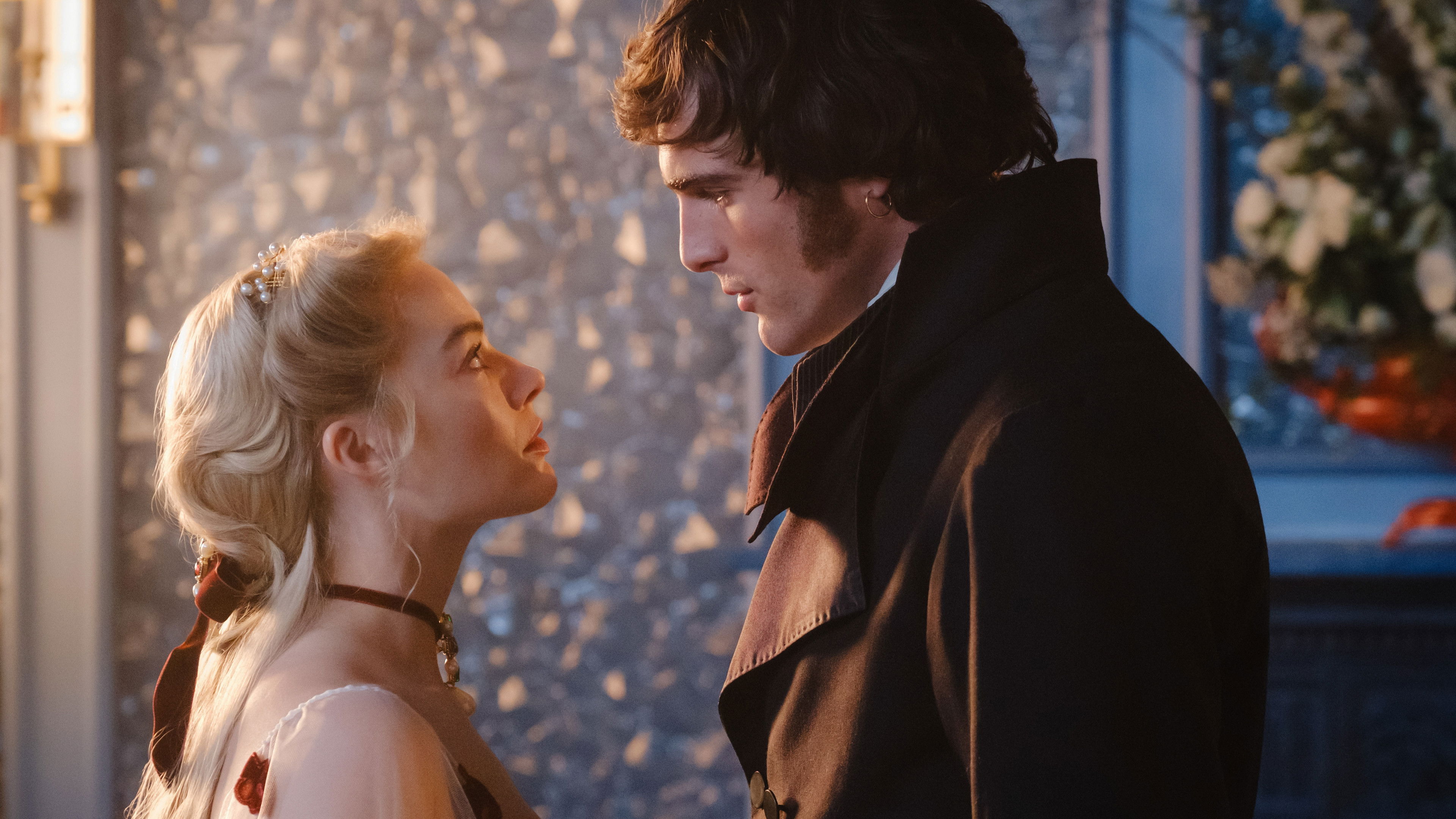
The reason everyone’s already talking about this project, even months before its theatrical release, comes down to the creative firepower involved. Margot Robbie and Jacob Elordi are set to anchor this story as Cathy and Heathcliff, two names that have become synonymous with destructive passion itself.
Then there’s Hong Chau, an actress of remarkable depth and nuance, joining what promises to be an ensemble of serious acting talent. The budget of $80 million—substantial for a literary adaptation—signals that Warner Bros. and the production companies behind this (MRC, LuckyChap Entertainment, Lie Still, and Domain Entertainment) are betting big on Fennell’s vision.
What makes this collaboration genuinely exciting is understanding who these actors are and what they bring to material this demanding:
- Margot Robbie’s range has only deepened since her earlier work; she knows how to embody complexity without apology
- Jacob Elordi has proven he can carry serious dramatic weight while maintaining an almost dangerous charisma
- Hong Chau consistently delivers performances that reveal emotional layers most actors never find
- The ensemble structure suggests Fennell isn’t simplifying Brontë’s sprawling narrative but actually expanding on its psychological depths
The tagline—”Come undone”—tells you everything about Fennell’s approach. She’s not interested in romance as redemption. She’s interested in passion as destruction.
Here’s the thing that makes Fennell such a perfect match for this material: she doesn’t sentimentalize dysfunction. Promising Young Woman could have been a revenge fantasy, but instead it was a film about systems, complicity, and the ways trauma rewires a person’s entire consciousness.
Apply that sensibility to Wuthering Heights, and suddenly you’re not getting the CW version of a gothic romance. You’re getting something that examines why Heathcliff and Cathy’s bond is so magnetic precisely because it’s poisonous. You’re getting the why beneath the what.
The production scope deserves mention too. Fennell has curated this project with real precision—we know it will screen at BFI IMAX with laser prints starting February 13, 2026, which suggests the cinematography has been shot with theatrical immersion in mind.
At 2 hours and 16 minutes, this isn’t a bloated adaptation; it’s tightly constructed. That runtime suggests Fennell respects her audience’s time while refusing to cut the emotional sinew from Brontë’s text.
Consider what this film will likely spark in film conversations:
- How contemporary feminism reframes gothic literature—Fennell’s lens inevitably transforms how we read Cathy’s agency and complicity
- The limits of romantic love as narrative justification—this won’t feel like a love story you’re meant to root for
- Male vulnerability and rage in modern cinema—what does Heathcliff become when directed by someone fascinated by masculine toxicity?
- Class, aspiration, and destructive ambition—themes that feel urgently relevant to 2026
- How literary adaptations can be transformative rather than mere translation
The current 0.0/10 rating with zero votes tells you that we’re genuinely in uncharted territory. This film doesn’t exist yet in the cultural consciousness—it’s pure potential, pure anticipation. That’s actually valuable. We’re not dealing with nostalgia or predetermined expectations. We’re dealing with genuine mystery about what Fennell will do with material this rich.
What’s particularly bold is that Fennell could have made a conventional period piece with this budget. Instead, everything about the production suggests she’s making something deliberately unsettling. The pairing of Robbie and Elordi implies she’s interested in exploring attraction that operates outside conventional beauty—something more primal and destabilizing. The involvement of Hong Chau suggests the supporting players will be fully realized rather than decorative.
The cinematic landscape needs this right now. We’re in a moment where literary adaptations often aim for prestige through fidelity rather than interpretation. They’re reverent. Fennell’s Wuthering Heights, by contrast, will likely be confrontational—with Brontë’s text, with her audience, with conventional storytelling about romance itself. That’s the kind of filmmaking that matters beyond opening weekend, beyond critical consensus. That’s the kind of work that reshapes how audiences think about the stories they love.
The February 13, 2026 release date isn’t arbitrary—it’s a statement. Romance and chaos, intertwined. That’s Emerald Fennell’s entire project as a filmmaker, and that’s Wuthering Heights in a nutshell. Whatever happens when this film finally reaches audiences, it won’t be forgotten easily.