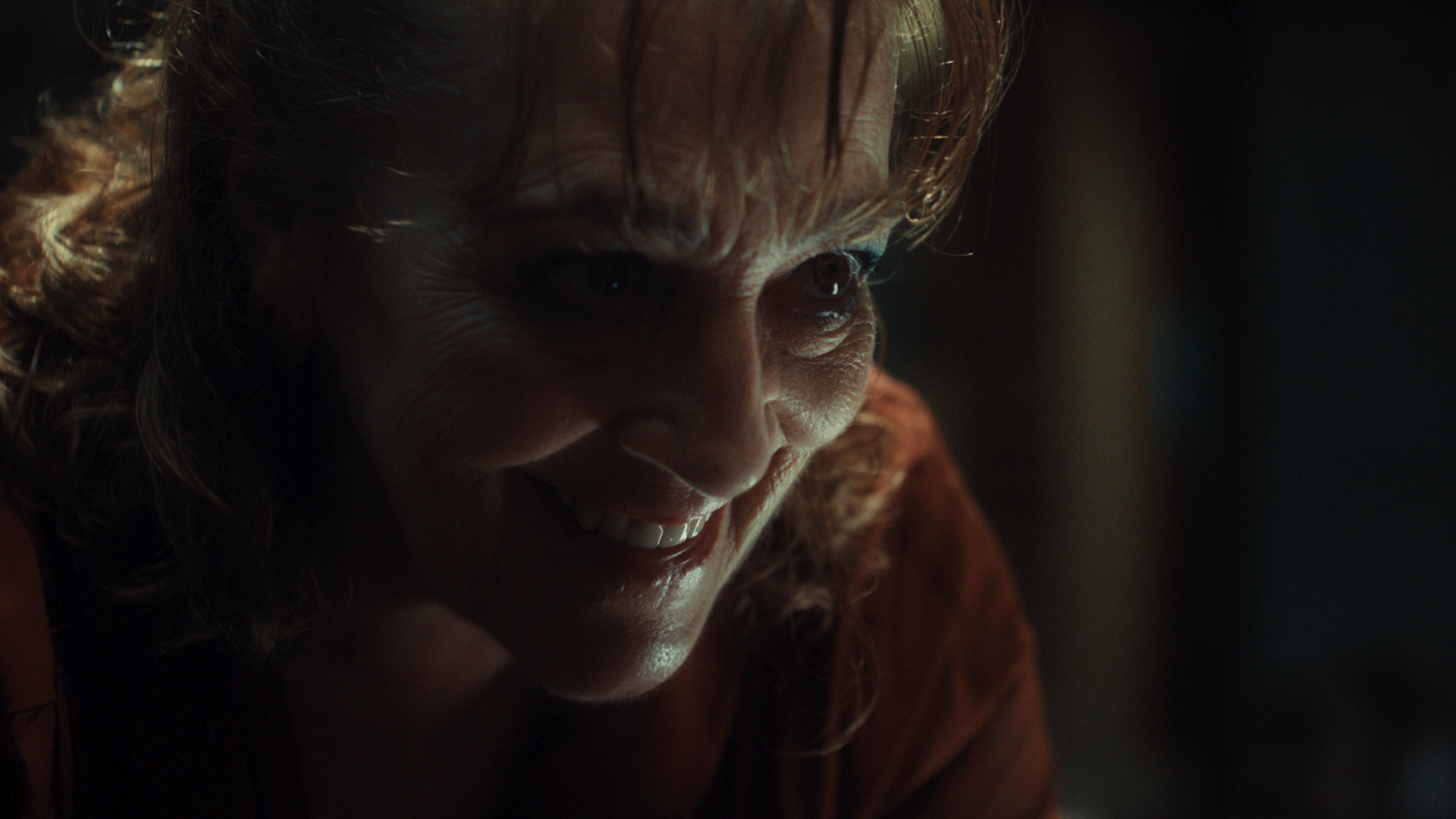
When Martín Mauregui’s Crazy Old Lady premiered at Fantastic Fest 2025, it arrived as something genuinely unsettling—the kind of film that doesn’t play by the rules of horror-comedy comfort. The film was released on October 10th, 2025, and what followed was a peculiar kind of recognition: critical indifference mixed with genuine intrigue, a 5.8/10 rating that somehow doesn’t capture what makes this 91-minute fever dream actually matter.
This isn’t a film that’s going to break box office records or win over casual audiences looking for easy scares and cheap laughs. Instead, Crazy Old Lady represents something rarer in contemporary cinema—a genuinely uncomfortable exploration of entrapment and control that refuses to let its audience settle into a comfortable viewing experience.
The premise sounds deceptively simple on paper: a man agrees to temporarily care for his ex-girlfriend’s senile mother, Alicia. But the “simple” dissolves the moment Carmen Maura enters the frame. What could have been a forgettable home-invasion thriller transforms into a psychological power play, and Maura’s performance is precisely why this distinction matters.
She doesn’t play a typical antagonist—she’s something messier, more human, more real in her cruelty and confusion. The dynamic between her character and Daniel Hendler’s increasingly trapped protagonist becomes the film’s central nervous system.
Mauregui earned Best Director recognition at Fantastic Fest 2025 for a reason: he understands that the real horror isn’t about jump scares or gore. It’s about losing agency in your own space, about the slow realization that politeness and obligation have become chains.
What makes Crazy Old Lady resonate beyond its middling critical reception is how it weaponizes the very things audiences expect from genre cinema:
- Expectation subversion – You think you know where this is going. You don’t.
- Performance-driven tension – Maura and Hendler create an unsettling dance of power dynamics that grows increasingly suffocating
- Claustrophobic storytelling – The 91-minute runtime never feels rushed; instead, each minute feels stretched, uncomfortable
- Genuine unpredictability – The film refuses to tip its hand about what kind of movie it really wants to be
Daniel Hendler deserves particular credit here. He’s best known for bringing warmth and vulnerability to his roles, but Crazy Old Lady demands he become a vessel for frustration and helplessness. His character’s polite disintegration—the way he slowly realizes he cannot leave, that every boundary he sets is dismissed or violated—creates something genuinely claustrophobic.
Agustina Liendo rounds out this triangle, and her presence adds another layer of complication to the power dynamics at play. The collaboration between these three actors and Mauregui creates an ensemble that understands the comedy of horror and the horror of comedy aren’t opposites—they’re two sides of the same coin.
The production itself, brought together by La Trini, Primo Content, Bambú Producciones, La Unión de los Ríos, and StudioCanal, represents the kind of mid-budget European filmmaking that’s increasingly rare. Without spectacular set pieces or star power carrying the project, the film lives or dies on its conceptual strength and creative execution.
That these Spanish and European studios trusted Mauregui’s vision speaks to a commitment to challenging cinema over commercial calculation.
- Why the middling rating actually tells us something important – A 5.8/10 often means a film doesn’t satisfy traditional audience expectations, which is precisely its strength
- The festival circuit validation – Premiering at Fantastic Fest and earning directorial recognition matters more than broad audience consensus
- The tonal consistency – For a film juggling horror, thriller, and comedy elements, maintaining coherence across 91 minutes is genuinely difficult
- The cultural specificity – There’s something distinctly Spanish (or at least European) about this particular brand of domestic nightmare
Where Crazy Old Lady finds its lasting significance isn’t in box office numbers or mainstream recognition—those were never the point. Instead, this film matters because it expands what horror-comedy can do when it abandons the need to be likable or entertaining in traditional ways.
It asks uncomfortable questions about obligation, family duty, and the places we get trapped in not through violence but through social convention. That’s a more unsettling proposition than any knife-wielding villain, and Mauregui seems entirely aware of this.
The film’s legacy will likely be defined by a specific kind of viewer: those who recognize that the best genre cinema often emerges from rejecting generic expectations. Crazy Old Lady does exactly that.
In an era where genre filmmaking often chases algorithm-friendly accessibility, Mauregui’s film stands as a reminder that challenging, uncomfortable, and ultimately memorable cinema doesn’t require massive budgets or easy resolutions.
It just requires trust in your material, faith in your cast, and the willingness to make something that lingers in the margins of critical consensus rather than dominating the conversation. Crazy Old Lady may never be beloved by mainstream audiences, but for those who connect with its particular brand of suffocating unease, it’s become essential viewing—a film that proves sometimes the scariest stories are the ones that refuse to play by anyone’s rules but their own.