When Rental Family premiered in November 2025, it arrived with modest expectations—a dramedy with an unknown budget competing against blockbuster juggernauts. Yet what director HIKARI delivered was something quietly subversive: a film that asked what family actually means in an age where everything, including intimacy, has become commodified.
With its opening weekend pulling in $3.2 million and eventually accumulating over $10.7 million at the box office, the film proved that audiences were hungry for stories about connection, even when the premise seemed absurd on its surface.
The premise itself is deceptively clever. In a near-future Japan (implied but never explicitly stated), families can be rented—assembled from strangers to fulfill whatever emotional role you’re missing. It’s a Westworld concept applied to human relationships, and HIKARI treats it with genuine tenderness rather than dystopian horror.
The tagline, “Happiness tailored to you!” drips with corporate optimism masking something more melancholic underneath. This is what makes the film’s relatively modest $10.7 million domestic gross somewhat misleading—it’s not that audiences rejected the film, but rather that this kind of intimate, character-driven story operates on a different scale than tentpole releases.
What makes Rental Family significant isn’t flashy spectacle—it’s the radical empathy embedded in its screenplay and performances. This is a film about loneliness that never condescends to lonely people.
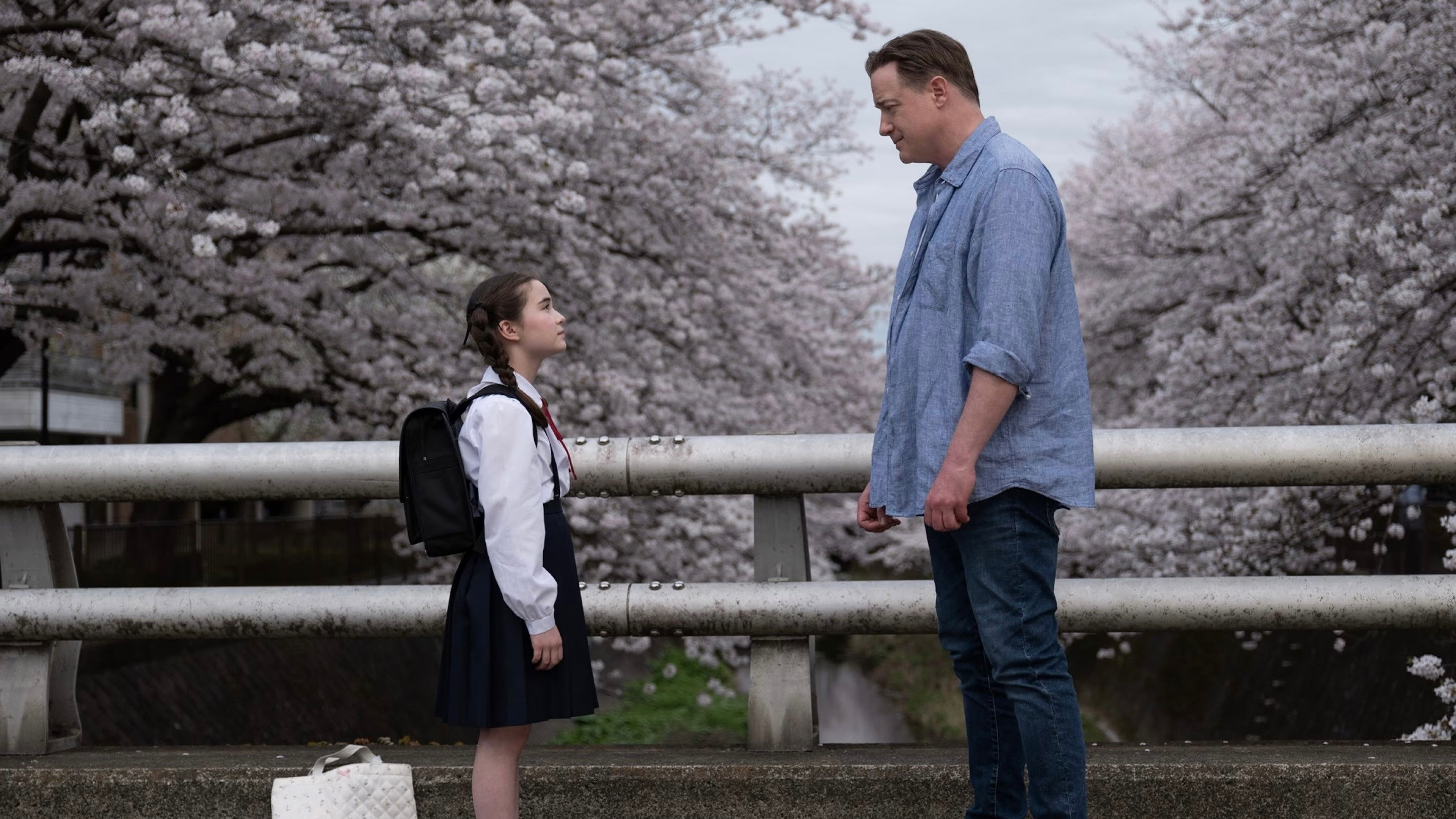
The ensemble cast became the film’s greatest asset. Brendan Fraser, continuing his remarkable career resurgence, brought a weathered humanity to his role as a divorced father seeking companionship. Fraser has always excelled at suggesting depth beneath surface-level charm, and here he mines genuine pathos from a man awkwardly navigating artificial intimacy.
Opposite him, Takehiro Hira and Mari Yamamoto created a dynamic that felt lived-in despite the couple’s artificial construction. What could have been a gimmick—actors playing hired family members—became an exploration of how authenticity emerges through repetition and vulnerability.
The 110-minute runtime became a virtue rather than a limitation. HIKARI’s direction never wastes frame time; every scene breathes, allowing actors space to communicate in glances and silences. In an era of bloated three-hour epics, Rental Family‘s disciplined approach felt almost radical.
There’s a scene midway through where Fraser’s character simply sits at a dinner table with his “rental family,” and nothing particularly dramatic happens—yet it’s devastating.
- The film’s central tension: What happens when temporary arrangements develop genuine emotional weight?
- HIKARI’s visual language: Deliberately flat, corporate-clean interiors that gradually warm with personal touches
- The performances: Each actor playing someone playing a role, yet finding authenticity within that artifice
- The emotional payoff: Arriving not through plot mechanics but through accumulated moments of connection
The critical reception—a solid 7.8/10 from 59 votes—understates what critics were actually saying about the film. This wasn’t “pretty good for an indie film.” Reviews highlighted how the movie operated in a register entirely its own: neither heartwarming tearjerker nor biting satire, but something more philosophically grounded.
The Critics Choice Award for Best Young Actor/Actress (Shannon Mahina Gorman) and CSA Artios Award recognition for Outstanding casting suggested that gatekeepers recognized the film’s careful construction. You don’t assemble a cast this calibrated by accident.
HIKARI created a film that asks: If we’re all performing for each other anyway, what’s the difference between hired performance and authentic love?
What’s particularly interesting about Rental Family‘s legacy is how it positions itself within contemporary cinema’s fixation on artificial systems. Coming in 2025, amidst endless discussions about AI replacing human connection, the film’s exploration of outsourced intimacy feels urgently relevant.
It’s not didactic about this—HIKARI never preaches—but the film quietly insists that human messiness, vulnerability, and actual presence remain irreplaceable.
The Searchlight Pictures and Sight Unseen Pictures partnership proved crucial to the film’s success. Searchlight has built a reputation discovering films that operate outside traditional genre categories, and Rental Family represents exactly that sensibility: a film that’s technically a comedy-drama but resists neat categorization.
The involvement of Domo Arigato Productions (a Japanese production company, based on the name) ensured the film’s cultural specificity remained intact rather than being smoothed over for Western audiences.
Commercially, the film’s $10.7 million domestic gross might seem modest, but contextualize it appropriately: this was a film with no franchise recognition, no IP pedigree, and a premise that requires genuine cultural conversation to appreciate.
That it held up at the indie film box office through November and December, competing against Wicked: For Good‘s cultural tsunami, speaks to genuine audience loyalty rather than opening-weekend hype.
- The film’s lasting impact: It proved that audiences still crave intimate character studies
- Its influence on future films: Expect more Japanese-influenced comedies about social systems and human connection
- The performances as reference point: Fraser, Hira, and Yamamoto created a template for ensemble acting rooted in authenticity
- HIKARI’s arrival as significant director: This isn’t a debut that will be forgotten in five years
What lingers most about Rental Family is its refusal to resolve everything neatly. It’s not cynical about capitalism or human nature—it’s something more sophisticated: gently heartbroken about how we’ve organized society while hopeful about our capacity to connect despite those arrangements.
In a cinematic landscape often divided between maximalist spectacle and minimalist despair, HIKARI found a third path. That alone makes it worth remembering.