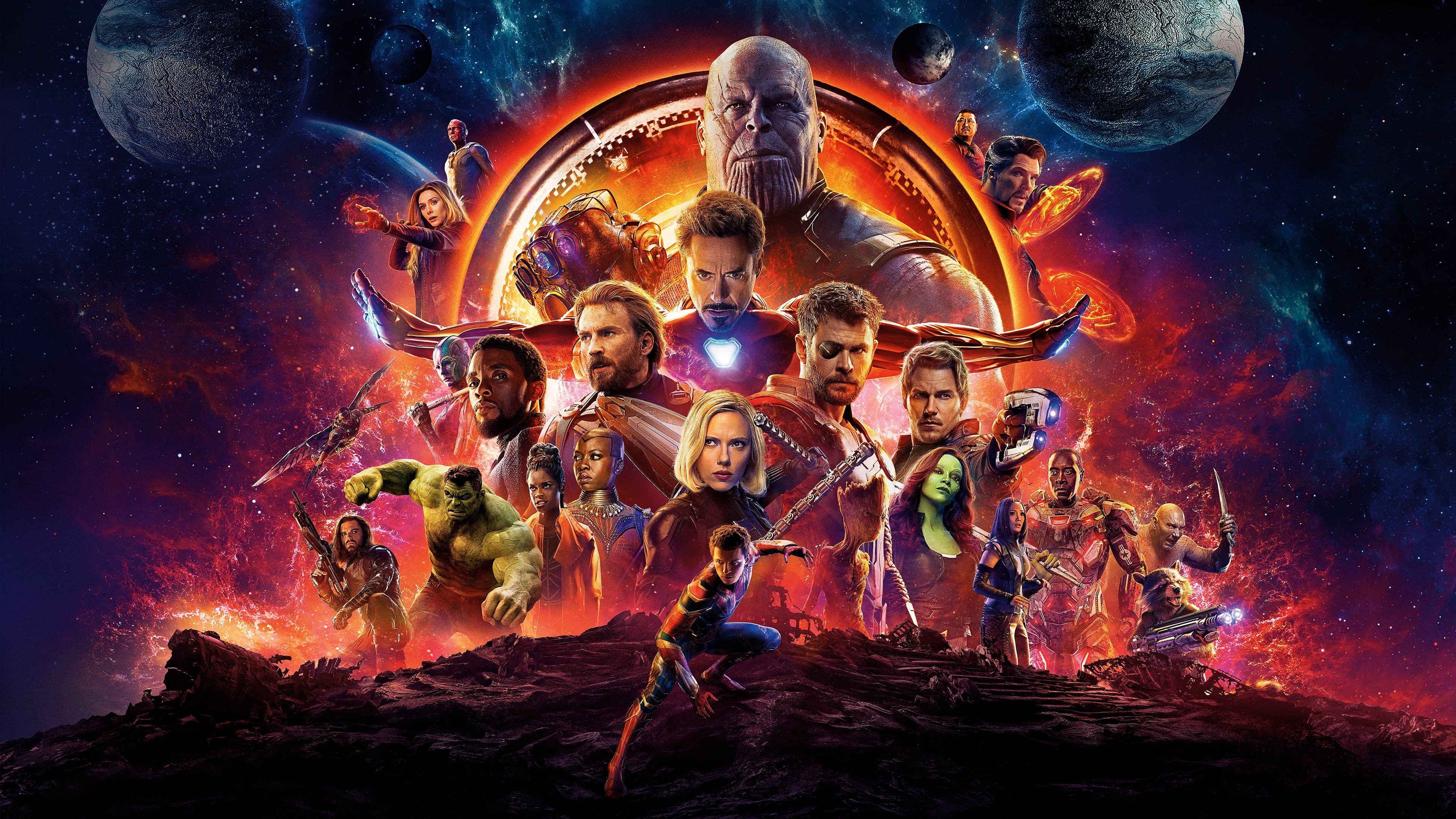
There’s a moment in Infinity War where everything you’ve invested in across eighteen films suddenly feels fragile. The Russo Brothers understood something fundamental about storytelling at scale: that audiences didn’t just want spectacle, they wanted genuine stakes. When Thanos snaps his fingers and half the universe dissolves into ash, it wasn’t just a cliffhanger. It was a statement about what blockbuster cinema could do. Released in 2018, this 149-minute epic became more than just a superhero film. It became a cultural event that redefined what audiences expected from franchise filmmaking.
The numbers tell part of the story, though not the whole one. On a 300-million-dollar budget, Infinity War earned over 2 billion dollars worldwide, making it only the fourth film in cinema history to cross that threshold and the first superhero entry to do so. Those figures matter because they represent something unprecedented: a mainstream audience so invested in complex, interconnected storytelling that they showed up in record numbers to watch their heroes lose. The film didn’t apologize for its runtime or its dense plotting. Instead, it asked audiences to bring everything they’d learned across the MCU and trust the Russo Brothers to deliver something genuinely surprising.
What Joe Russo and Anthony Russo accomplished here was orchestrating the most ambitious ensemble cast in modern cinema. Robert Downey Jr.’s Tony Stark, Chris Evans’ Captain America, and Chris Hemsworth’s Thor represented just three entry points into a narrative that somehow balanced twenty-plus characters without feeling scattered. Each actor brought their A-game precisely because they understood the assignment: this wasn’t about individual heroics. It was about failure on a cosmic scale. Downey Jr. especially delivered some of the most nuanced work of his career, playing a version of Tony who’d finally met a problem he couldn’t solve with genius or money.
The critical reception, hovering around 8.2 out of 10, reflected something interesting about the film’s place in cinema. It wasn’t universally beloved, but it commanded respect. Some critics felt the structure favored spectacle over character, and they weren’t entirely wrong. Yet the Russo Brothers made a deliberate choice: compress traditional narrative arcs in favor of momentum, atmosphere, and genuine consequence. They understood their audience had spent years with these characters and didn’t need to be reminded why they cared. What they needed was to see whether those characters could actually change anything.
What makes Infinity War remain relevant isn’t just its box office dominance or its technical achievements. It’s that the film asked a question that hadn’t been asked before in blockbuster cinema: what if the villain actually wins? That ending, arriving at the two-hour-twenty-nine-minute mark, fundamentally altered how franchises approach storytelling. Studios realized audiences didn’t just want guaranteed victories. They wanted earned consequences. The film opened doors for darker, more complex narratives within the superhero space.
The cultural legacy of Infinity War extends beyond awards and accolades. It influenced how studios approach world-building, how they structure their interconnected universes, and what risks they’re willing to take with their properties. The Russo Brothers proved that audiences hungry for serialized storytelling would embrace formal experimentation if the emotional core remained intact. In a landscape increasingly dominated by franchise films, Infinity War became the template for how to make those franchises feel essential rather than obligatory.
Looking back now, what strikes you about Infinity War is its confidence. The Russo Brothers took a massive budget, an overwhelming cast, and complex source material, then chose to end on a note of ambiguity and loss. They trusted their audience completely. That trust was rewarded with one of the most significant box office performances in cinema history, but more importantly, with a film that still sparks genuine conversation about storytelling, consequence, and what popular cinema can accomplish. That’s what makes it matter.